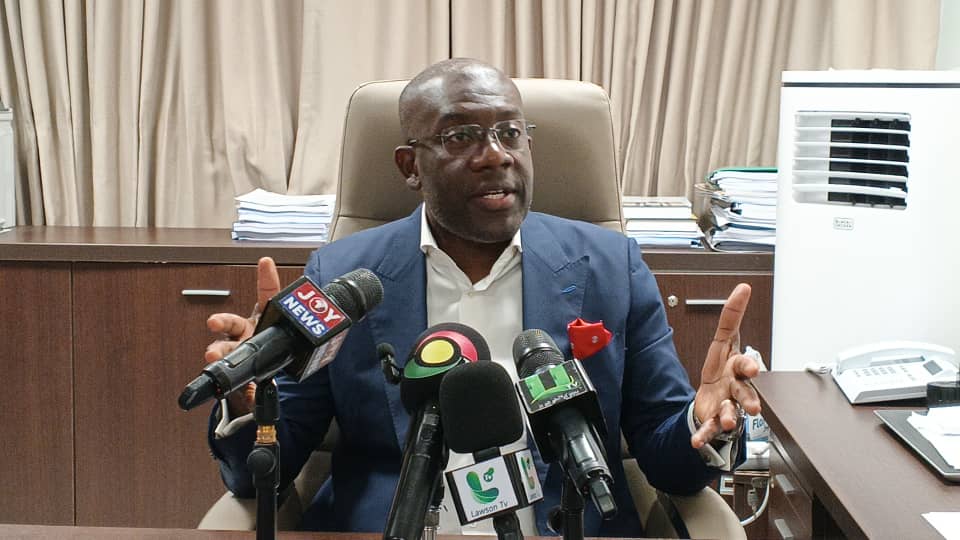
The Ghanaian government's decision to continue the Saglemi Housing Project using a Public-Private Partnership (PPP) model has validated this approach for housing delivery. Kojo Oppong Nkrumah, Member of Parliament for Ofoase/Ayirebi, stated this position. He believes the model should become a standard practice for addressing Ghana's significant housing deficit.
Mr. Oppong Nkrumah highlighted that the major challenge for the stalled Saglemi project was raising between $60 million and $100 million for its revival. To overcome this, the previous New Patriotic Party (NPP) administration adopted a Private Sector Participation (PSP) model. This model involved a private partner providing capital and expertise to complete the project in phases. This approach avoids relying solely on public funds or sovereign debt.
This initiative fits into Ghana's broader economic strategy to leverage private sector efficiency for public infrastructure. The government aims to reduce the burden on taxpayers and national budgets. The Saglemi project, despite its past controversies, now serves as a test case for this financing mechanism. It aligns with the NPP's 2024 manifesto, which prioritizes private sector involvement in public service delivery.
Mr. Oppong Nkrumah, a former Minister of Works and Housing, explained the framework. "Under the framework, the completed houses would be sold via mortgage to offtakers, allowing both government to retrieve its equity plus margin and the private partner to retrieve its investment plus margin, without additional burden on the taxpayer," he said. This ensures financial sustainability for all parties involved.
The implications are significant for Ghana's housing sector and public finance. The successful implementation of the Saglemi project could pave the way for more PPPs in affordable housing. Decision-makers will closely watch the delivery of the first 700 housing units and the planned additional 2,000 units. This model could stimulate construction activity, create jobs, and expand home ownership opportunities across the country.
The transaction for the Saglemi project was concluded efficiently between April and December 2024. A leading international accounting firm acted as a transaction advisor. This ensured speed and compliance with global standards. Despite initial criticisms from the then-opposition regarding transparency, Mr. Oppong Nkrumah affirmed the process was transparent. He stated it adhered to international best practices.
The former Minister expressed satisfaction that the current administration adopted the same model. He noted that this adoption is a testament to the PSP model's effectiveness. He urged for its mainstreaming instead of perpetually waiting for taxpayer money or sovereign debt. This shift in approach could unlock significant private capital for development projects.
Mr. Oppong Nkrumah also pointed to uncompleted affordable housing projects from the Kufuor administration. These projects, located in Koforidua and parts of the Ashanti Region, could benefit from a similar PPP approach. This suggests a broader application of the model to existing stalled projects. It offers a potential solution to long-standing infrastructure challenges.
Affordability remains a key concern for housing projects. Mr. Oppong Nkrumah stressed the importance of maintaining the agreed pricing mechanism between the government and the private operator. This mechanism ensures that ordinary Ghanaians can acquire homes. It operates through an open bidding and mortgage system on a public portal. This commitment to affordability is crucial for social impact.
A comprehensive framework for affordable housing through PPPs has been developed and left at the Ministry. This framework involves government support to make it cheaper for the private sector to build and sell at lower prices. This strategic support reduces risks for private investors. It also ensures that housing remains accessible to a wider population segment.
Linking this to policy, Mr. Oppong Nkrumah mentioned the NPP's 2024 manifesto. This manifesto, led by Dr. Mahamudu Bawumia, clearly outlines plans to mainstream private sector participation. This strategy applies to the delivery of public goods and services. It aims to achieve this without overburdening taxpayers. This policy direction provides a strong foundation for future PPP initiatives.
If the current administration does not fully implement this framework, a future NPP administration would prioritize it. This commitment aims to stimulate construction activity and create jobs. It also seeks to expand home ownership opportunities. This long-term vision underscores the importance of the PPP model for national development.
Mr. Oppong Nkrumah urged political actors to support beneficial national initiatives regardless of their origin. He criticized the tendency to smear good projects with unfounded allegations. He emphasized that if a model benefits Ghana, it should be continued. This call for political consensus is vital for sustained national progress and project continuity.
Finally, the former Minister called for reforms to accelerate PPP approval processes. He noted that pre-feasibility and feasibility approvals at the Public Investment Division of the Ministry of Finance can take up to a year. Strengthening institutional capacity within the public service is essential. This will enable more infrastructure delivery through partnerships without additional taxpayer burdens. Streamlining these processes will enhance efficiency and attract more private investment.