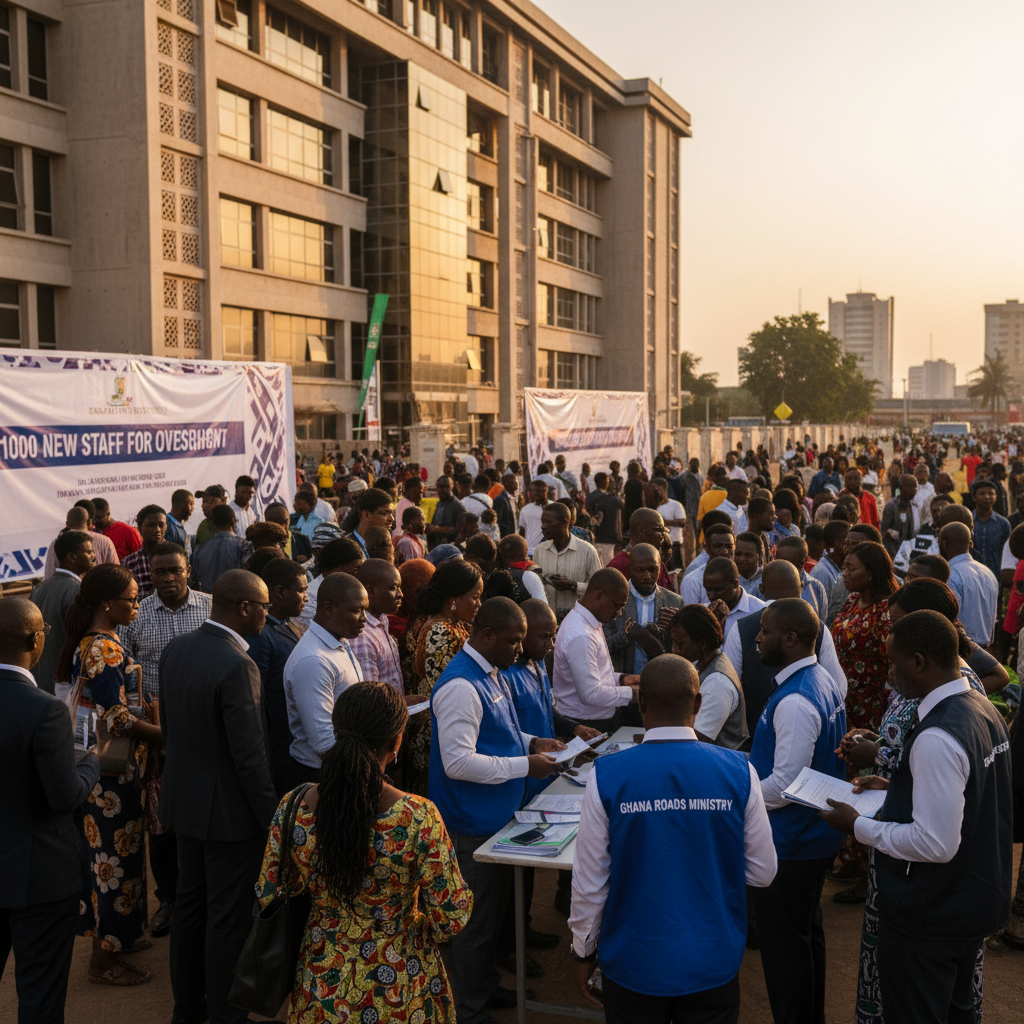
Ghana's Ministry of Roads and Highways has formally requested to recruit 1,000 new staff members. This major recruitment drive aims to address significant staffing shortages within agencies operating under the Ministry. The goal is to strengthen operational capacity and improve the oversight of critical road infrastructure projects across the nation.
Minister for Roads and Highways, Kwame Governs Agbodza, confirmed this request before Parliament’s Select Committee on Economy and Development. He explained that increasing pressure on existing staff and expanding responsibilities for road agencies prompted the appeal. The creation of six new administrative regions without corresponding staff increases has exacerbated the deficit.
This initiative aligns with Ghana's ongoing push for substantial infrastructure development. The government is investing heavily in road construction and rehabilitation projects. These projects aim to enhance connectivity and stimulate economic activity by improving transportation networks. However, inadequate staffing could compromise the quality and timely completion of these vital projects.
Minister Agbodza stated, “The staffing level of the agencies is far less than what it should be. Part of the reason some of the projects suffer quality assurance is simply because we don’t have enough people to monitor these projects.” He highlighted that critical roles, such as engineers and quality assurance officers, are particularly lacking. These roles are essential for ensuring projects meet required standards and are delivered efficiently.
The current staffing shortfall hinders effective monitoring and supervision of road construction. This affects project quality control, potentially leading to substandard infrastructure development. Without adequate personnel, the substantial public funds allocated for roads may not yield their intended value.
The Ministry has already secured approval to recruit 137 staff for the Ghana Highways Authority. This includes engineers and quality, safety, and environmental officers. However, this addresses only a fraction of the broader staffing needs across all agencies. The Chief Director submitted the larger request for 1,000 additional personnel to cover the wider deficiencies.
The outcome of this recruitment request will significantly influence Ghana's infrastructure development trajectory. A successful recruitment will enhance project monitoring, raise quality assurance standards, and improve overall service delivery in the road sector. Lawmakers and financial markets will closely watch how the government addresses these human resource needs. Stronger oversight could lead to more efficient use of public funds and better road networks. This, in turn, will support Ghana's economic growth and foster regional development.