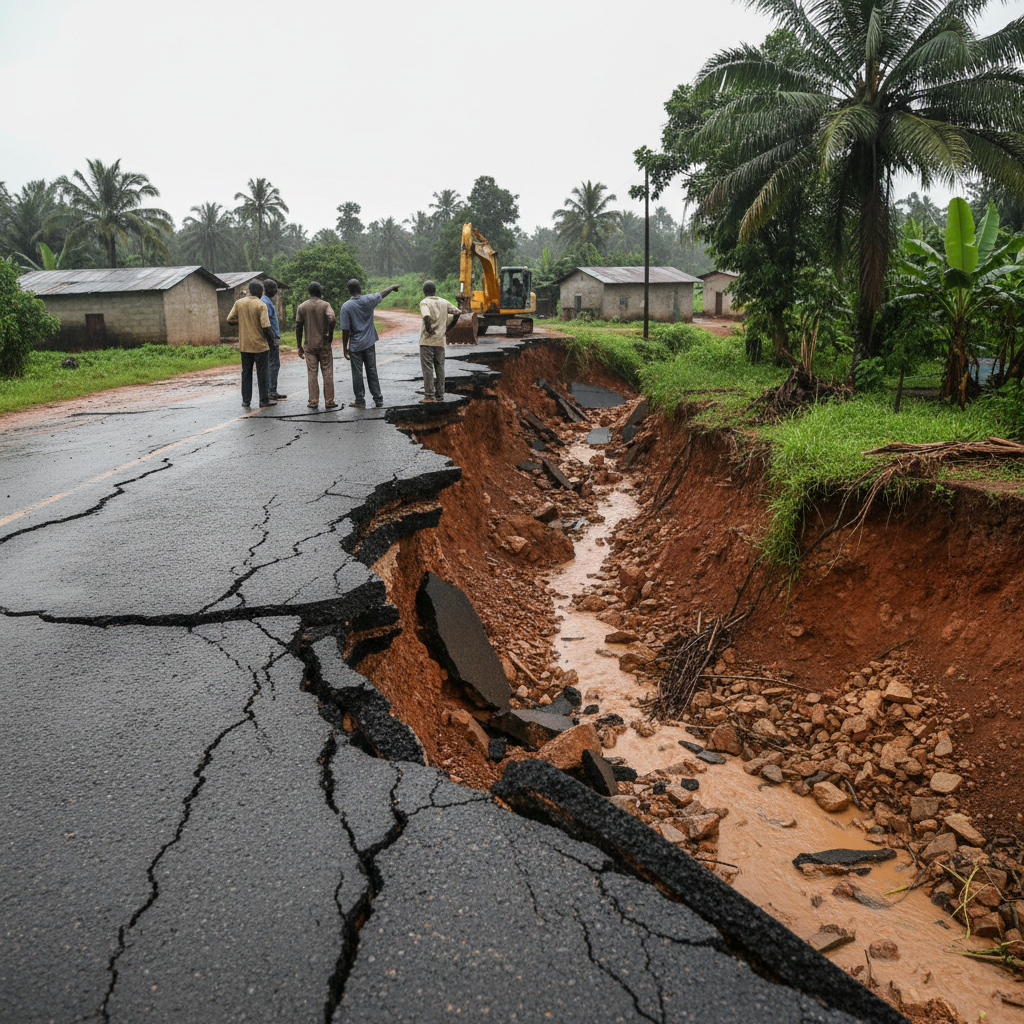
Ghana's Minister for Roads and Highways, Governs Kwame Agbodza, reported that heavy rains exposed poor road construction quality across the country. These rains highlighted deficiencies, especially concerning inadequate drainage systems.
Mr. Agbodza stressed the critical need for contractors to build proper drainage within road designs. This infrastructure must effectively channel floodwaters to prevent roads from deteriorating prematurely. The Minister stated that rainfall is a natural occurrence that road infrastructure must be built to withstand, not an unexpected event.
This situation underscores Ghana's ongoing infrastructure challenges and the government's commitment to improving public works quality. Data shows consistent issues with road longevity, often attributed to construction standards. The ‘Big Push’ projects aim to accelerate infrastructure development, but their success hinges on robust execution and oversight.
“The rains this year have exposed the way we used to do things in the past,” Mr. Agbodza said during a monitoring tour in the Volta Region. He insisted contractors ensure every aspect of road construction, including drainage design, earthworks, and compaction, meets specifications.
The ministry will implement stricter measures in the next phase of the Big Push program. Contractors will be prevented from taking on new projects before completing existing ones. This aims to curb delays and ensure timely, high-quality project delivery. Decision-makers and markets will closely watch how these stricter policies affect contractors' performance and the overall pace of infrastructure development.
Mr. Agbodza noted that one contractor, Dwawill Limited, significantly improved its work on the Atimpoku–Asikuma Junction road. The company had initially faced a threat of contract termination due to slow progress. Following the ultimatum, Dwawill Limited accelerated its work, exceeding its target of 30 percent completion to approximately 40 percent.
The Minister clarified that the ministry’s tough approach is not about victimisation or favouritism. It is to ensure public infrastructure projects meet expected quality and timelines. He warned that excuses for delays would no longer be tolerated, reminding contractors that material and labor costs are uniform across the country.
Mr. Agbodza indicated that contractors who previously received warnings for poor performance would be reassessed. The government will replace underperforming contractors if improvements are not shown. The positive turnaround by Dwawill Limited demonstrates that contractors can meet expectations if they commit necessary resources.
The Roads Minister also announced tighter regulations for awarding future road contracts. The government seeks to eliminate the practice of contractors accepting multiple projects while making insufficient progress on them. This signals a tougher procurement environment for firms unable to demonstrate consistent delivery.
These new measures reflect a broader government effort to enhance accountability in public spending and ensure value for money on infrastructure projects. The long-term impact on road network quality and maintenance costs could be substantial. The ministry intends to make successful completion and handover of ongoing projects a mandatory requirement for future contract eligibility. This policy shift is expected to streamline project execution and improve overall infrastructure quality.