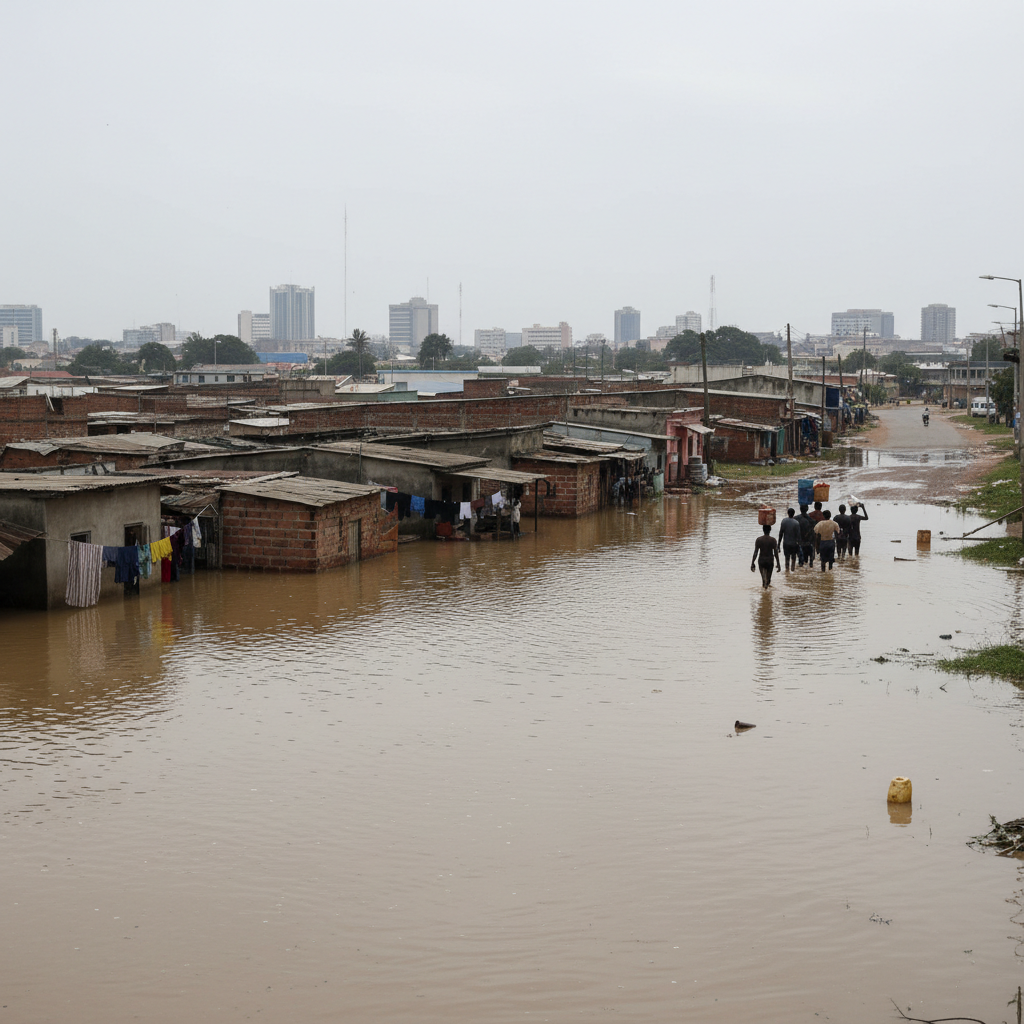
The Private Newspapers and Online News Publishers Association of Ghana (PRINPAG) has urged for widespread urban planning reforms and a change in behavior to address persistent flooding. The June 29 floods affected 38,802 people and displaced 7,761 households across the Greater Accra Region.
These recent floods led to 34 reported deaths and disrupted economic and social activities for thousands of residents. PRINPAG highlighted the need for government to replan cities, enforce building codes rigorously, and intensify public education campaigns.
This call follows a pattern of recurrent flooding incidents that impact Ghana's economy and social fabric. Data from previous years shows significant financial losses and displacement due to inadequate urban planning and infrastructure. The June 29 devastation brought into sharp focus the vulnerabilities of Accra's infrastructure to heavy rainfall and uncontrolled development. The Ga East Municipality was particularly hard hit, with 2,000 people displaced from 400 households and five confirmed deaths.
Mr. David Tamakloe, President of PRINPAG, stated, “The [June 29] devastation should serve as a catalyst for comprehensive urban renewal. Government must move beyond temporary fixes and commit to a holistic strategy that includes zero tolerance for construction on waterways and flood-prone zones.” He also urged citizens to respect environmental and spatial planning laws. Mr. Alhaji Muntaka Mohammed-Mubarak, Minister for the Interior, confirmed the flood's impact on 25 communities across 18 Metropolitan, Municipal and District Assemblies (MMDAs).
Decision-makers must now consider these reforms seriously to prevent future economic and human losses. Investing in modern drainage infrastructure and engaging urban planners will be crucial steps. Stricter enforcement of building codes and sustained public campaigns on environmental awareness are expected to be key focus areas. Businesses and residents alike will be watching how the government responds to PRINPAG's call for fundamental changes.
Local authorities will likely increase efforts to clear waterways and monitor construction activities in flood-prone areas. The media is also encouraged to provide accurate information and amplify the voices of affected communities, supporting relief efforts. This collective response is vital to protecting lives and property during future rainy seasons. The ongoing challenge of flooding impacts property values, insurance premiums, and overall economic stability in affected regions. Addressing these systemic issues will require sustained commitment and investment from both public and private sectors.