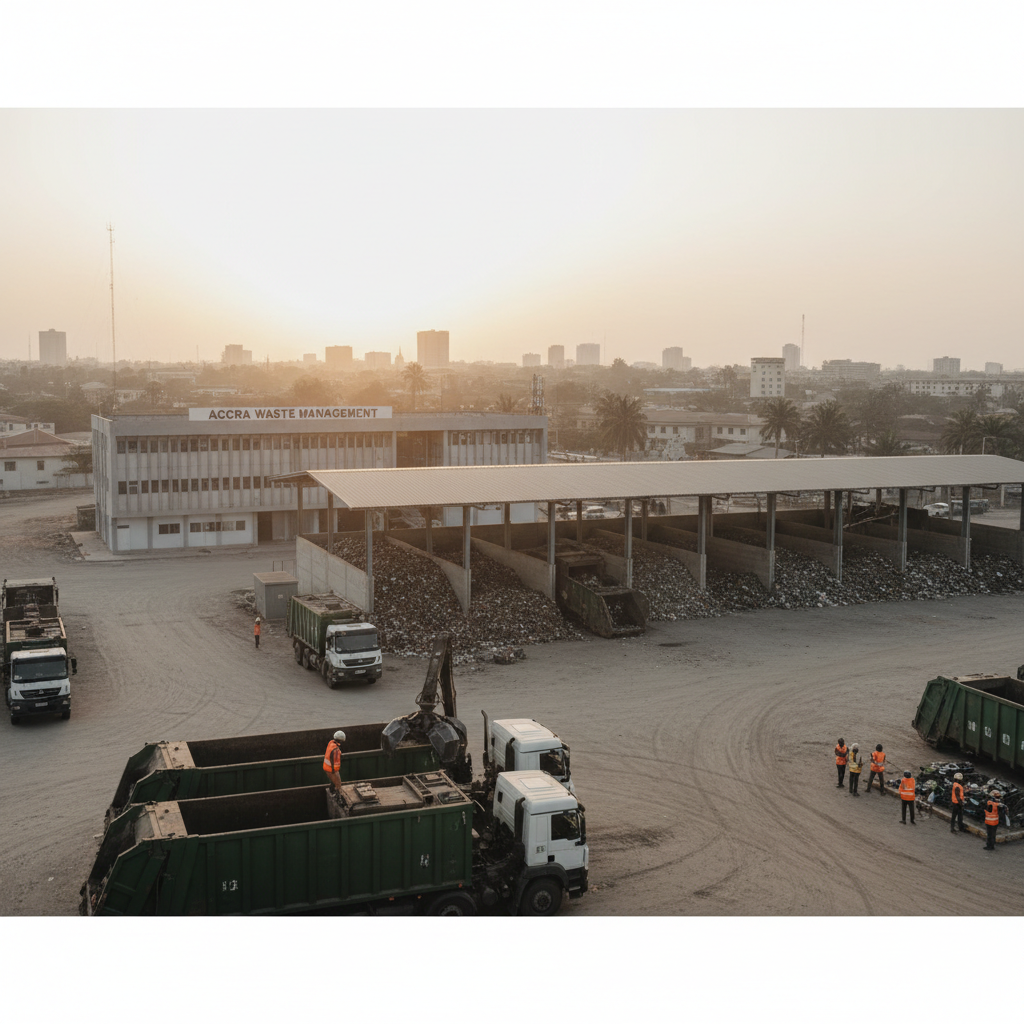
President John Dramani Mahama has directed the immediate operationalisation of six waste transfer stations in Accra. This measure aims to improve refuse collection and prevent waste from re-entering waterways after being cleared from drains. The President announced this directive during the second day of a nationwide clean-up exercise in Alajo.
These facilities, constructed more than nine years ago, have remained idle despite their potential. Their activation will enhance the efficiency of waste disposal. The government has engaged Zoomlion, a waste management company, to reopen these stations. This will allow refuse trucks to discharge waste closer to collection points, avoiding long journeys to final disposal sites like Amasaman.
This initiative forms part of a broader government strategy to strengthen sanitation management and reduce flooding risks in the capital. Ghana faces persistent challenges with waste accumulation. This problem contributes to blocked drains and exacerbates flooding during heavy rains. Previous data indicates that inadequate waste infrastructure often leads to informal dumping and environmental degradation.
President Mahama explained the rationale behind the directive. He stated, “Six transfer stations were constructed more than nine years ago, but unfortunately they were never operationalised. We have engaged Zoomlion to reopen them so that refuse trucks can discharge waste there instead of travelling long distances to Amasaman.” He added that larger haulage trucks would then transport the waste from these stations to final disposal sites. This process will significantly reduce turnaround times and stop waste from re-entering drainage systems.
The move comes after devastating floods on June 29, which affected the Greater Accra, Central, Volta, and Western regions. These floods claimed lives and displaced over 58,000 people. They also destroyed homes, businesses, and public infrastructure worth millions of cedis. The floods left behind vast quantities of refuse, silt, and debris, severely choking drains and littering streets.
Activating these transfer stations should alleviate congestion at landfill sites and improve the overall efficiency of waste collection. It signals a governmental commitment to addressing a critical infrastructure deficit that has long plagued Accra. Decision-makers and local communities will watch closely to see if this implementation translates into tangible improvements in sanitation and flood control. The proper management of these facilities will be crucial for their long-term success.
The Ministry of Finance has already released GHS 200 million to the National Disaster Management Organisation (NADMO). This funding is for procuring relief supplies for flood victims. Such allocations highlight the financial burden caused by inadequate waste management and flood preparedness. Continued investment in resilient infrastructure and community involvement remains critical for sustainable urban development in Ghana.