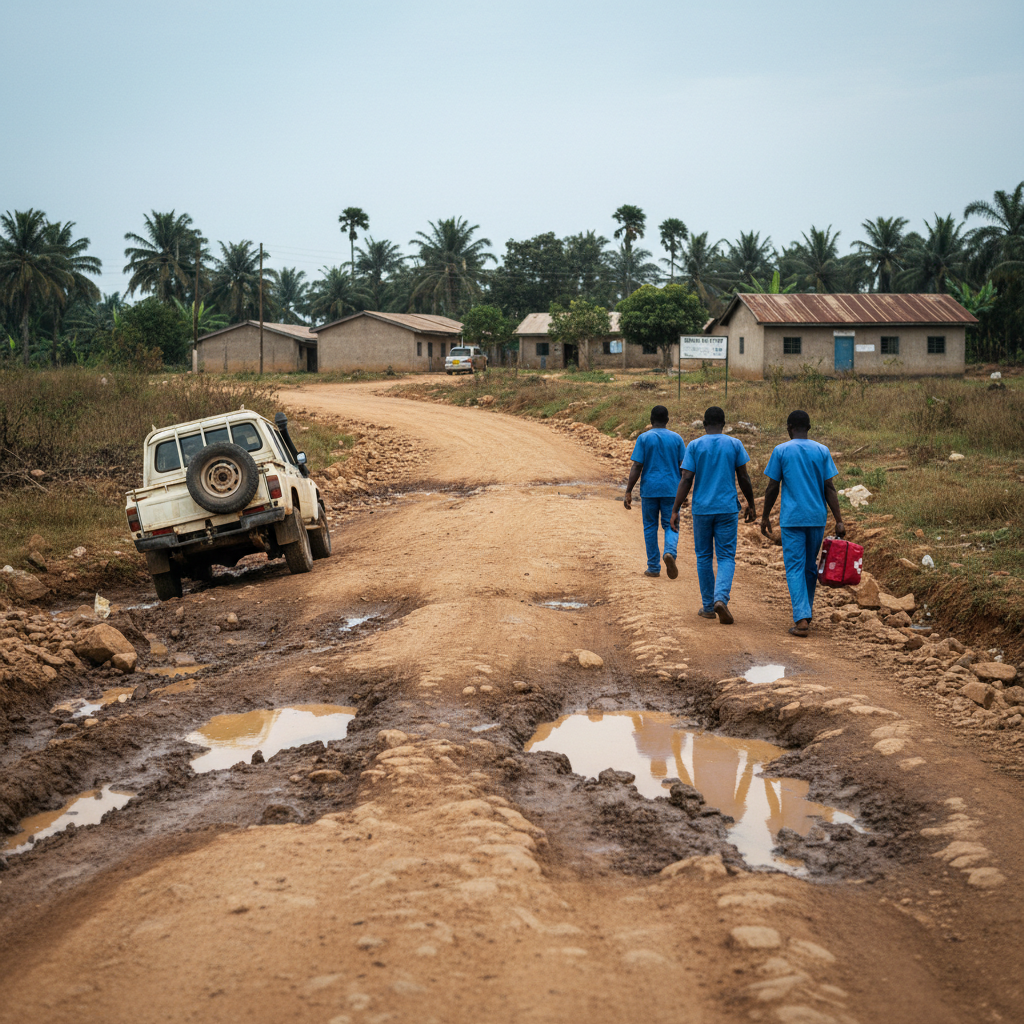
The Ghana Health Service (GHS) Northern Regional Directorate has expressed serious concern regarding the increasing difficulty in deploying health professionals to rural communities. This challenge stems from poor road networks, inadequate accommodation, and a lack of basic social amenities. This situation results in many health workers declining postings, creating critical staffing gaps that threaten access to quality healthcare.
These infrastructure gaps in underserved areas directly impact the equitable distribution of health personnel across the region. Health workers find these conditions unappealing, making them unwilling to accept and remain at their duty posts in remote locations. The problem affects the most vulnerable populations, who rely on these services the most.
This issue highlights a broader challenge in Ghana's healthcare delivery system, particularly in hard-to-reach communities. Despite continuous efforts by the GHS to improve nationwide healthcare, shortages of skilled personnel persist. The lack of basic amenities and infrastructure in rural areas remains a significant impediment to achieving universal healthcare coverage in Ghana.
Speaking at a conference for the Union of Professional Nurses and Midwives, Ghana (UPNMG) in Tamale, Dr. Richard Anthony delivered a statement on behalf of Dr. Chrysantus Kubio, the Northern Regional Director of Health Services. Dr. Kubio noted that retaining professionals in deprived communities remains a major challenge. He explained that adequate staff accommodation, proper transportation infrastructure, and essential social amenities are crucial for attracting and keeping health workers.
Dr. Kubio appealed to traditional authorities, religious leaders, and political office holders to support efforts to make rural communities more attractive. He stressed that local stakeholders play an important role in creating conducive environments for health professionals. Improving living conditions and initiating programs that make rural postings appealing are key steps. This would significantly address disparities in healthcare access across the region.
Strengthening healthcare delivery in deprived communities requires a collective effort, Dr. Kubio added. Collaboration between communities, local authorities, and the government is critical. This cooperation will ensure residents in rural areas have access to qualified health professionals and quality healthcare services. Addressing this issue will improve health outcomes and reduce the burden on major regional hospitals.
Decision-makers must prioritize investment in rural infrastructure and social amenities. This includes improving roads, building adequate housing for health staff, and ensuring access to essential services like clean water and electricity. Addressing these fundamental issues will help retain health workers and strengthen Ghana's healthcare system. It will also reduce the financial strain on individuals who must travel long distances for medical care.