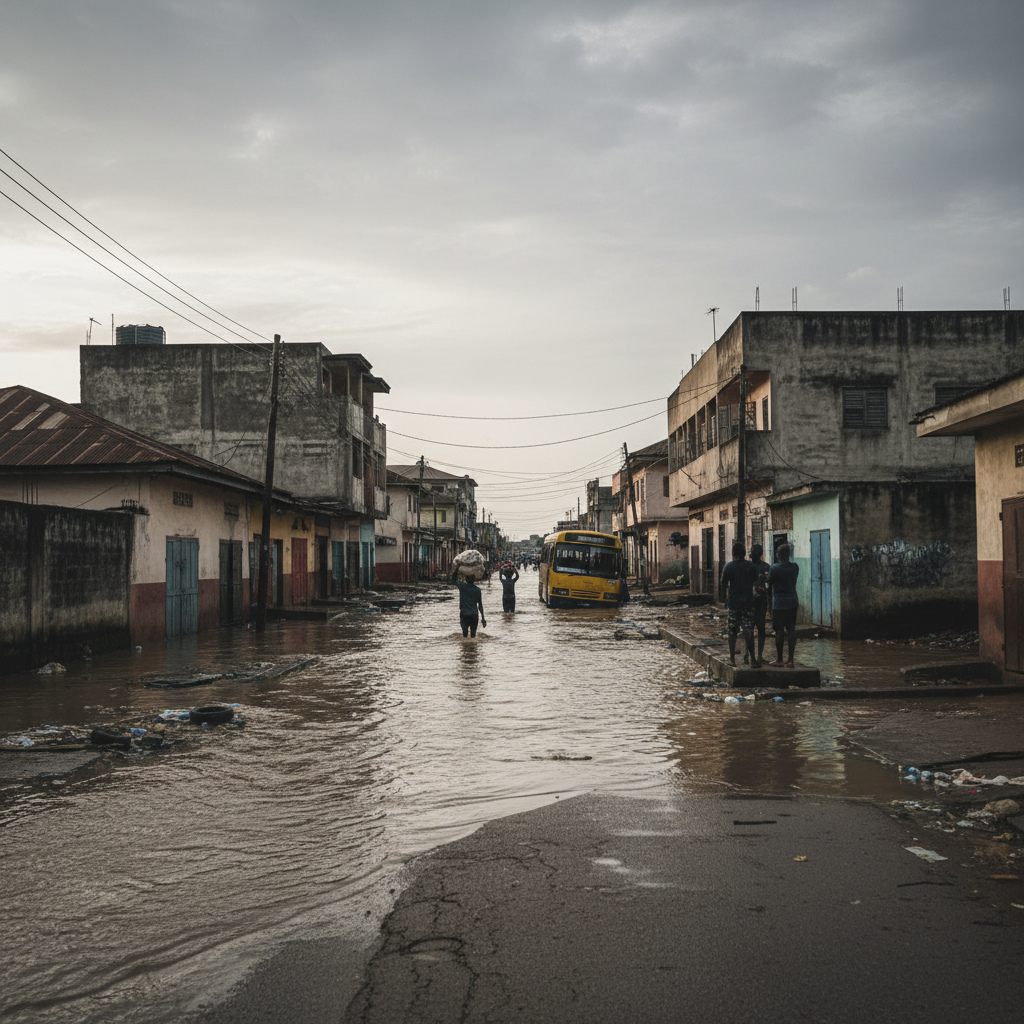
Accra's persistent flooding stems largely from poor maintenance and weak infrastructure management after projects are completed. This is the finding of petrochemical engineer and project manager Ing. Benedict Atta Poku.
Ing. Atta Poku stated that engineers design and build drainage systems to specific standards. These systems are then handed over to government institutions for upkeep. However, the long-term performance of these vital drainage systems suffers due to inadequate maintenance and improper use.
This issue fits into Ghana's broader challenge of infrastructure sustainability. The country often invests in new projects but struggles with their ongoing care. Data indicates that poor urban planning and waste management also contribute to these problems. Previous reports from organizations like ISSER have highlighted the necessity of greater investment in sanitation infrastructure.
Ing. Atta Poku explained his position during the fifth edition of the Loud and Green X Spaces discussion on flooding. He said, "Engineers are not necessarily the owners of the project." He further clarified that engineers provide as-built drawings and maintenance manuals to the government, the project owner, after construction. This means that the blame for subsequent failures largely rests with post-construction management.
The engineer used a simple analogy to describe the problem. He noted that even well-designed drainage pipes become ineffective when filled with refuse and silt. "The pipe whose volume was designed to carry water reduces because the refuse takes up part of that space," he said. This obstruction significantly limits the drainage system's ability to handle heavy rainfall.
His comments come amidst renewed public discussions about Accra's flood resilience. Recent heavy rains have again caused widespread inundation, damaged property, and disrupted economic activities across the city. This follows a pattern of such events observed over many years.
The cost of flood damage can run into millions of GHS annually, affecting livelihoods and infrastructure. For instance, in 2014, reports estimated flood damage to be GHS 55 million. The economic impact includes lost trade, damaged homes, and increased healthcare costs from waterborne diseases. This also puts pressure on the national budget for disaster relief and reconstruction efforts.
Ing. Atta Poku stressed that floods are not due to a single problem. He described them as a combination of planning deficiencies, inadequate maintenance, environmental degradation, and poor enforcement of development rules. He emphasized that natural watercourses must be respected. Human activities that block these waterways inevitably lead to flooding, as "water cannot disappear. Water will always find its way."
These observations call for a shift in strategy for managing urban infrastructure. Decision-makers must prioritize routine maintenance and effective management of existing drainage systems. This must happen alongside the construction of new flood control measures. Markets and businesses will continue to face disruptions until a comprehensive approach is adopted. The long-term implications for Accra's economic stability and public health are significant if these issues remain unaddressed. Observers will be watching for concrete policy actions on infrastructure maintenance.