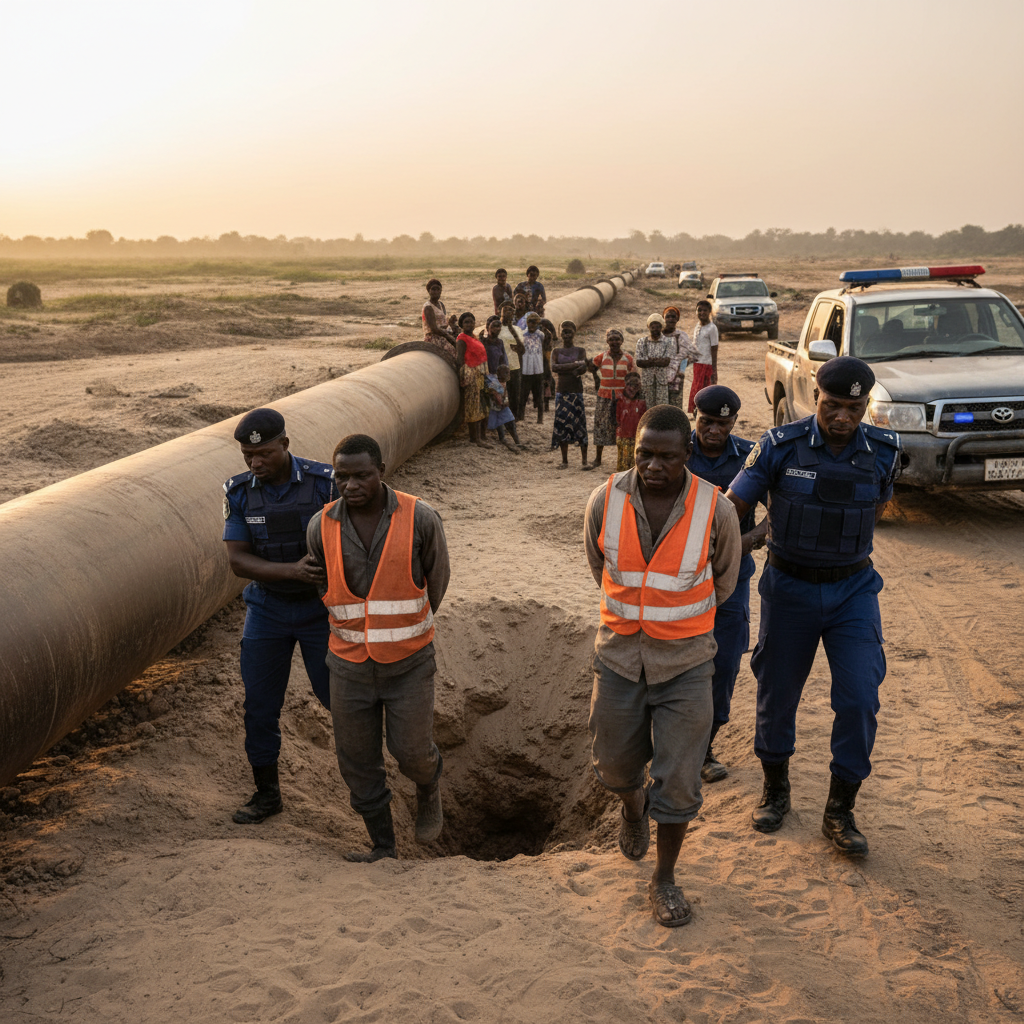
The Central Regional Police Command arrested three individuals for illegal mining near a main Ghana Water Limited (GWL) pipeline in Efutu, close to Cape Coast. This intervention followed a formal complaint from GWL about the illicit activity on Monday, June 8.
Police apprehended Eugene Oppong, 28, Paul Kumash, 30, and Amos Beyuo, 25, at the illegal mining site. Most other miners fled the scene, abandoning their equipment as police arrived. Authorities seized 19 water pumping machines, four washing carpets, seven cutlasses, and a wheelbarrow. Equipment that could not be removed was immobilised and burned, signalling a strong stance against such destructive practices.
This incident reflects Ghana's persistent struggle against 'galamsey', the local term for unregulated small-scale mining. Uncontrolled mining operations often pollute water bodies and destroy land, posing severe environmental and public health risks. The targeting of essential infrastructure, such as GWL pipelines, exacerbates these problems, threatening the supply of potable water. Recent data from the Ministry of Lands and Natural Resources indicates that 'galamsey' cost Ghana GHS 4.2 billion in environmental damage in 2021 alone.
The police confirmed the suspects remain in custody, assisting ongoing investigations into the illegal mining operation. All seized equipment is held as evidence against the accused. This immediate police action underscores the government's commitment to protecting vital national assets from illegal exploitation.
Looking ahead, continued vigilance and enforcement are crucial to deter further attacks on public infrastructure. Decision-makers will observe how these arrests impact future illegal mining activities in critical areas. Stricter penalties and more effective monitoring mechanisms may become necessary to safeguard Ghana's water security. Protecting such infrastructure is central to national development and public well-being, influencing investor confidence and long-term economic stability.
Protecting critical assets like water pipelines is essential for maintaining Ghana's public services and economic stability. The persistent issue of 'galamsey' demands a comprehensive approach combining law enforcement, community engagement, and alternative livelihood programs. Efforts to combat illegal mining directly affect the cost of water purification and distribution, which can impact utility tariffs for consumers. Effective regulation and enforcement will help protect Ghana's natural resources and ensure sustainable development for all citizens.