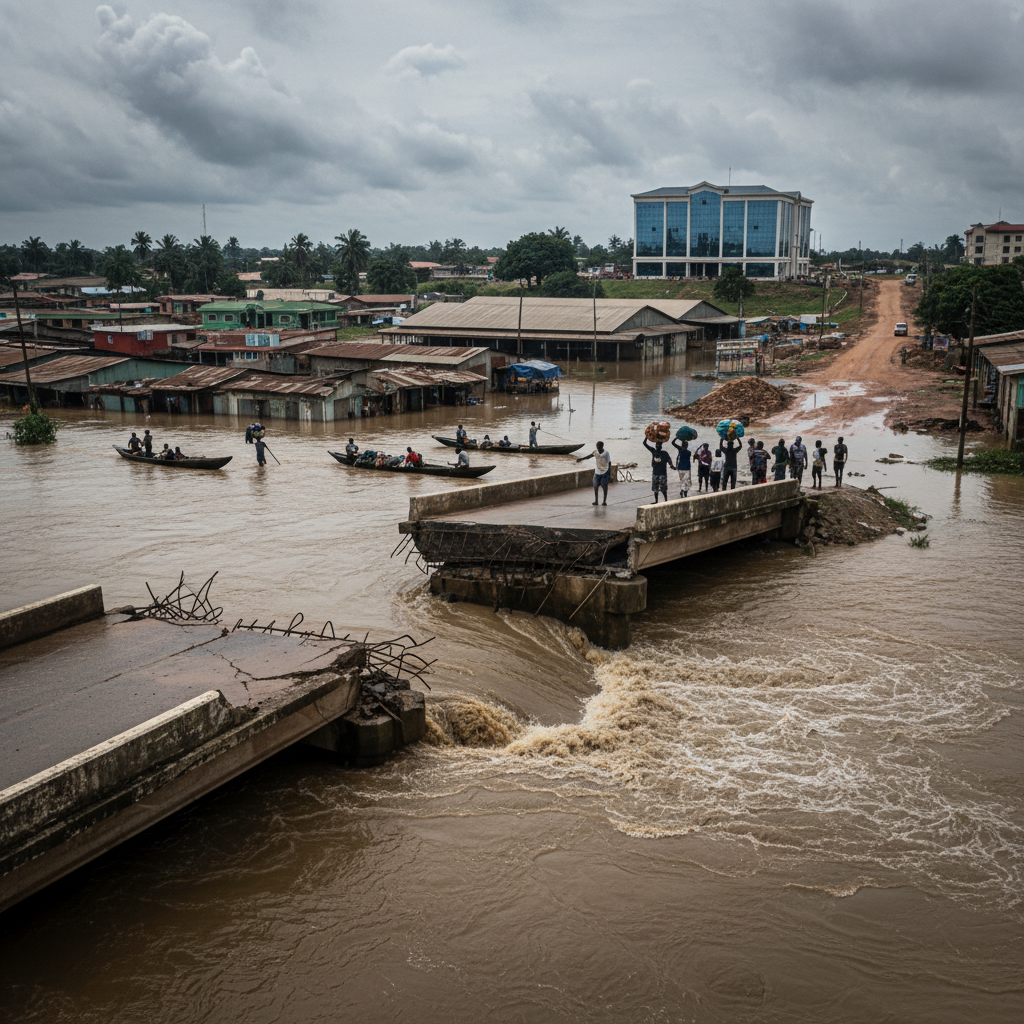
Hundreds of residents in Peace Town, a suburb of Ngleshie Amanfro, are homeless after severe floods swept through the community. The floodwaters destroyed the main bridge linking Peace Town to Amanfro, cutting off the area completely.
The disaster struck following hours of heavy rainfall on June 9, 2026. The River Jei overflowed its banks, causing rapid flooding that submerged homes. This event, described by locals as the worst in a decade, has left scores stranded on both sides of the collapsed bridge.
This incident reflects broader concerns about urban planning and waste management in Ghana. Recurring floods across the country often highlight issues with drainage infrastructure and environmental practices. The absence of proper waste disposal, which blocks natural waterways, frequently exacerbates the impact of heavy rains.
Community members blame a refuse dumpsite operating along the River Jei for the past seven months. Madam Ankrah, an educationist, stated that waste dumping blocked natural waterways. "We warned the assembly that this dumpsite would cause problems," she said. This situation prevented proper drainage, leading to the severe flooding.
The destruction of the bridge has immediate and significant implications for Peace Town. Economic activity has stopped, and children cannot access their schools. Market women cannot move their goods, and workers are unable to reach their workplaces. Residents are urgently appealing to the National Disaster Management Organisation (NADMO) and the Ga South Municipal Assembly for assistance. These appeals include demands for emergency relief and temporary shelter. The long-term impact on livelihoods and education for the affected community remains a critical concern.