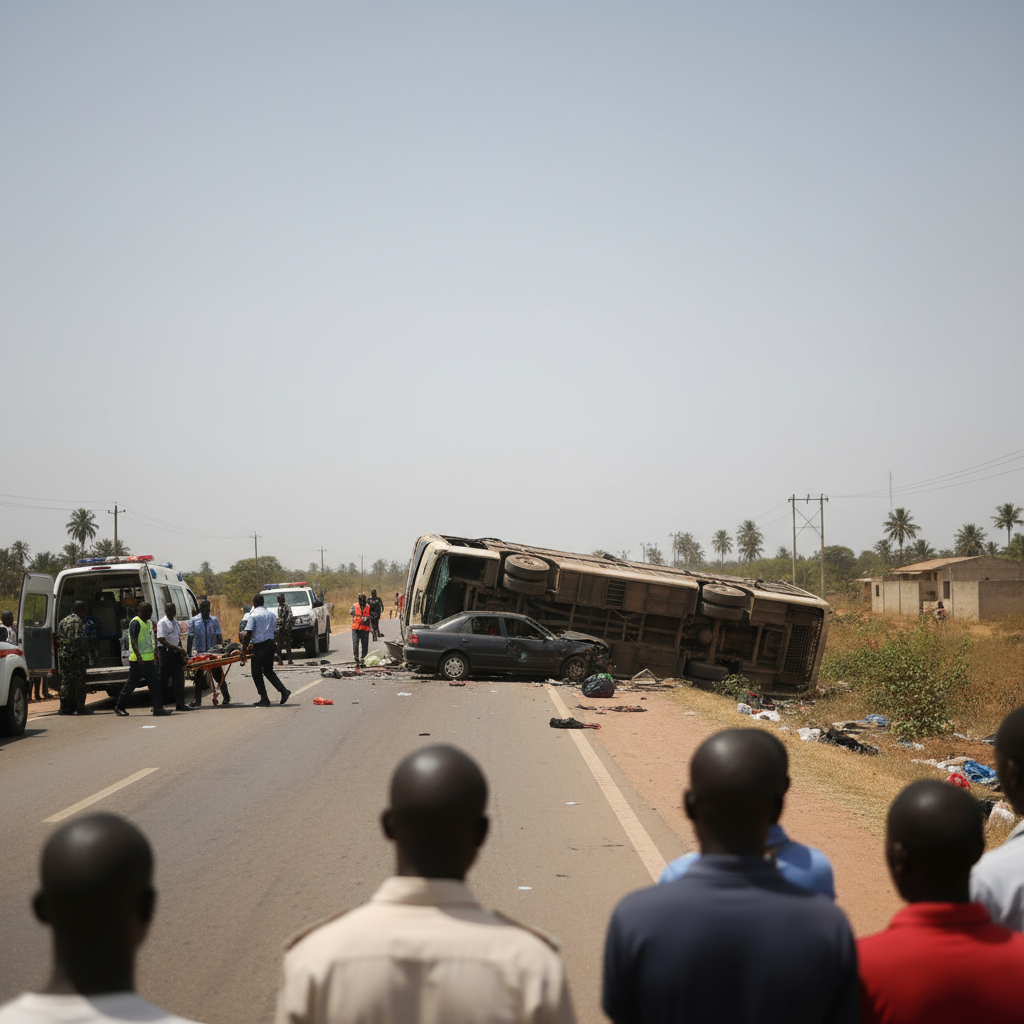
One person has died and four others sustained injuries after a Kia VIP Grandbird bus crashed into a faulty MAN diesel truck at Frimpongso on the Accra–Kumasi Highway. The incident, which occurred on July 29, 2026, involved a collision with a truck that was reportedly parked along the roadside due to a fault.
The accident happened when the VIP bus attempted to overtake the stationary truck, leading to a severe impact. The front section of the VIP bus suffered extensive damage, while the rear of the MAN diesel truck also sustained significant harm. Firefighters from the Anyinam Fire Station quickly responded to the scene, working to extricate two individuals who were trapped within the wreckage.
This tragic event highlights the persistent road safety challenges on Ghana's major highways, particularly the Accra–Kumasi Highway. This route is a critical economic artery, facilitating the movement of goods and people between the capital and the Ashanti Region. Accidents on this highway frequently disrupt economic activity and result in significant human and financial costs. Data from the National Road Safety Authority (NRSA) consistently shows a high incidence of crashes attributed to factors like speeding, reckless overtaking, and poorly maintained vehicles.
The Ghana National Fire Service (GNFS) personnel successfully rescued the trapped victims and assisted in transporting all injured individuals for medical attention. One male victim was pronounced dead at the hospital, while the four other injured persons are currently receiving treatment. Authorities are expected to conduct a thorough investigation into the circumstances surrounding the crash, including the truck's faulty status and its parking position.
The implications of such accidents extend beyond immediate casualties. They often lead to increased insurance premiums for transport operators, higher healthcare costs, and a loss of productivity. The Concerned Drivers Association has previously threatened a 20% fare increment over VIP price hikes, citing rising fuel and maintenance costs. Such incidents could further pressure transport companies and potentially impact fare structures, affecting commuters and the broader economy. The NRSA has intensified safety enforcement on the Accra–Kumasi highway, especially during peak travel seasons, but incidents like this demonstrate the need for continuous vigilance and stricter adherence to road safety regulations by all road users.
Decision-makers will likely face renewed calls for improved road infrastructure, more stringent vehicle inspection protocols, and enhanced enforcement of traffic laws. The economic impact of road accidents, including medical expenses, property damage, and lost economic output, is substantial for Ghana. Ensuring the safety of passengers and goods on major transport corridors remains a critical priority for sustainable economic development.