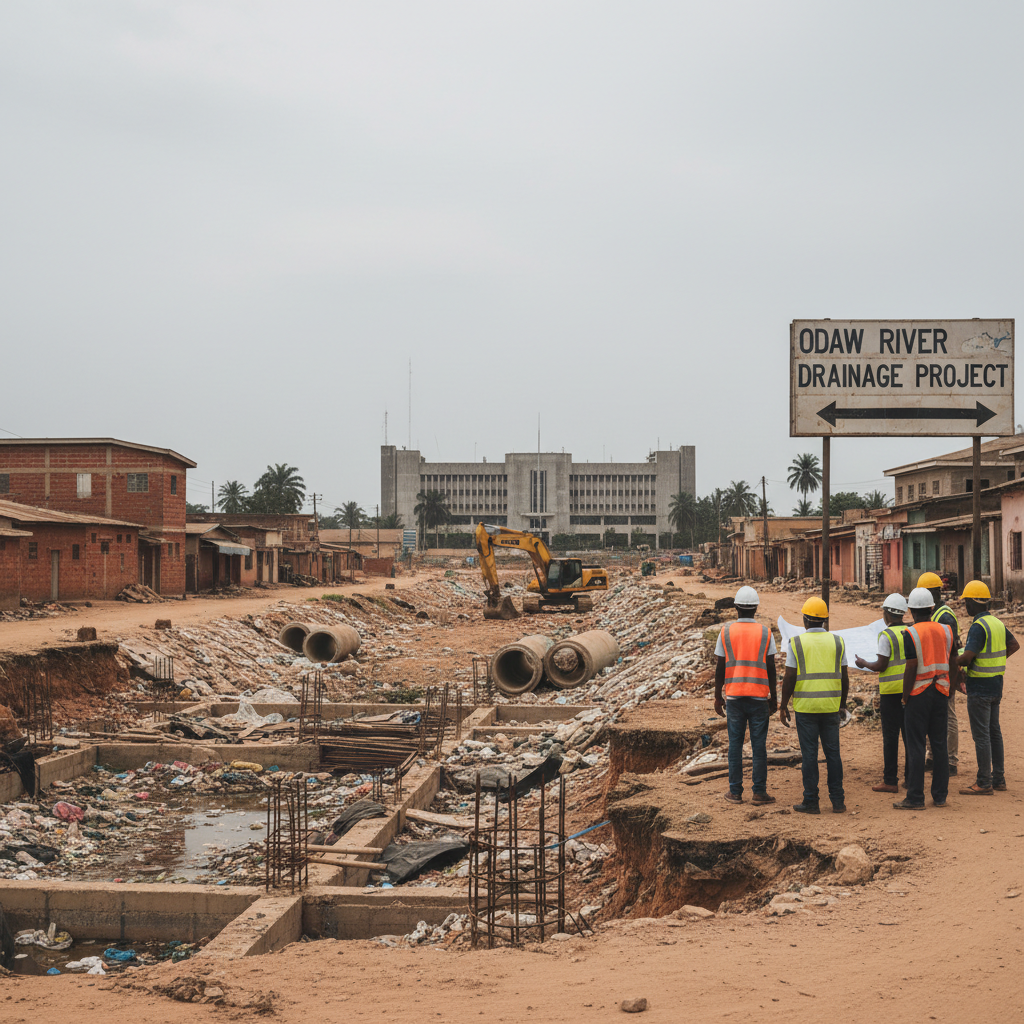
Ghana's Ministry of Works, Housing and Water Resources has terminated the contract for the construction of the Odaw River drainage system. The termination occurred due to the contractor's poor performance, as announced by Minister Kenneth Gilbert Adjei.
This critical infrastructure project was a part of the GHS 2.4 billion Greater Accra Resilient and Integrated Development (GARID) initiative. It aimed to construct a 1.5-kilometer box culvert from Nima Paloma to the Odaw River within 18 months, starting in July 2024. The contract termination necessitates urgent action to complete essential works and re-tender the project to prevent further flood risks in Accra.
This termination significantly impacts Ghana's broader efforts to improve urban resilience, especially against annual flooding in the Greater Accra Region. The GARID project, established in 2019 and funded by a $200 million (approximately GHS 2.4 billion) World Bank loan, addresses severe flooding, waste management, and climate risks. Delays or failures in such projects undermine the government's commitment to protecting vulnerable communities and infrastructure from climate-related disasters. The inefficient use of resources could also affect Ghana's ability to secure future development funding.
Minister Adjei informed Parliament about the termination while responding to a question. He stated, “due to poor performance, the contract for that work has been terminated.” The Ministry is now seeking approval from the World Bank to complete critical works immediately. These works include demolishing the Odaw channel's outfall wall and finishing downstream and upstream drainage sections.
The Ministry of Finance must grant commitment authorization for the re-tendering process. This administrative step is crucial for resuming works on the vital drainage system. Delays in obtaining this approval could prolong the project's completion, leaving flood-prone areas at continued risk. Stakeholders will closely monitor the re-tendering timeline and the selection of a new contractor to ensure efficient project delivery. Resolving these issues is paramount for the financial and social stability of affected communities.
The GARID project is Ghana's largest urban resilience program. It specifically targets low-income, flood-prone areas of the Odaw River Basin. The project includes components for flood risk mitigation, solid waste management upgrades, and community improvements. Consistent flooding in Accra causes significant economic losses and displaces thousands of residents annually. The government’s ability to effectively complete projects like this one is vital for public trust and economic stability. Effective project management and contractor oversight remain key challenges for large-scale infrastructure initiatives in Ghana.