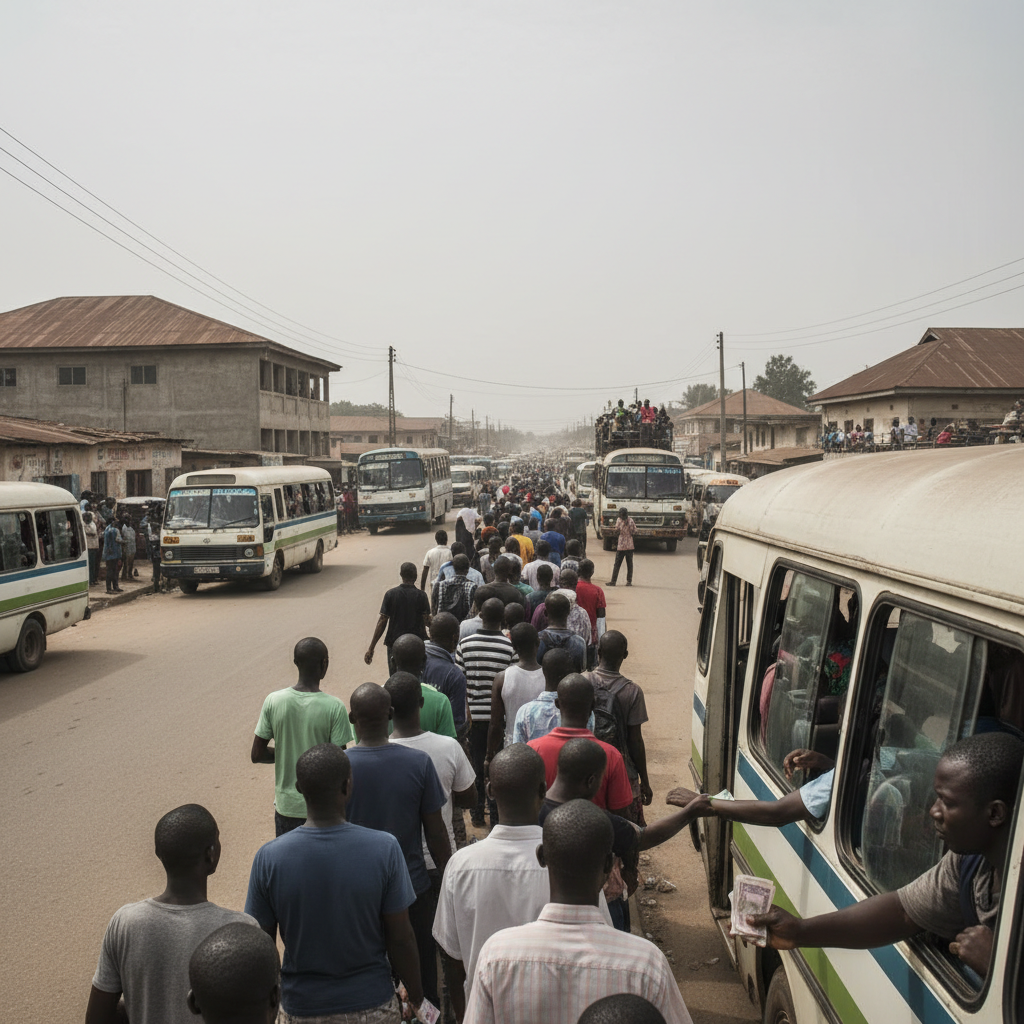
Commuters on the Nungua-Accra route are now paying GHS 20 for a journey that ordinarily costs GHS 6, due to an acute shortage of commercial vehicles. This represents a more than three-fold increase in transport costs for daily travellers.
This significant price hike forces individuals to spend substantially more on their commutes, directly affecting their household finances. Many workers also arrive late at their workplaces, impacting overall economic productivity. The shortage primarily affects those traveling between Nungua and Accra, with particular pressure during morning rush hours.
This situation aligns with broader concerns about the rising cost of living in Ghana, where transport expenses constitute a major part of household budgets. Data from the Ghana Statistical Service frequently highlights transport as a key driver of inflation. Persistent vehicle shortages and unchecked fare increases deepen financial strain on urban populations, already grappling with stagnant incomes.
Mr. Solomon Mensah, a commuter, described the situation as “worrying,” stating that transport is already one of his biggest daily expenses. He added that if the situation continues, many workers will struggle to meet other essential household needs. Ms. Linda Ofori, a national service person, noted that increased transport costs mean less money for food, rent, and school fees.
The current transport challenges could lead to increased daily spending for commuters and reduced discretionary income. Decision-makers and transport operators must address the vehicle shortage to stabilise fares and alleviate financial pressure on urban workers. Stakeholders will watch for potential interventions to regulate fares and increase vehicle availability on critical routes like Nungua-Accra.
Nii Akorsey Bortey II, Chairman of the Ghana Private Road Transport Union (GPRTU) at Nungua, stated that station authorities were unaware of passengers being exploited. He explained that station management encourages passengers to board vehicles within the lorry station, where fares are monitored. Commuters often prefer waiting by the roadside, which makes regulation difficult and creates opportunities for private drivers to charge unapproved fares. This practice undermines efforts to control transport activities and ensure fair pricing. The GPRTU often plays a crucial role in negotiating and setting transport fares across Ghana.
The issue highlights a persistent challenge in Ghana's urban transportation sector: balancing commuter convenience with fare regulation and operator capacity. Without intervention, increased transport costs can become a significant barrier to economic participation for many citizens. Such disruptions also affect the predictability of daily operations for businesses that rely on a timely workforce.