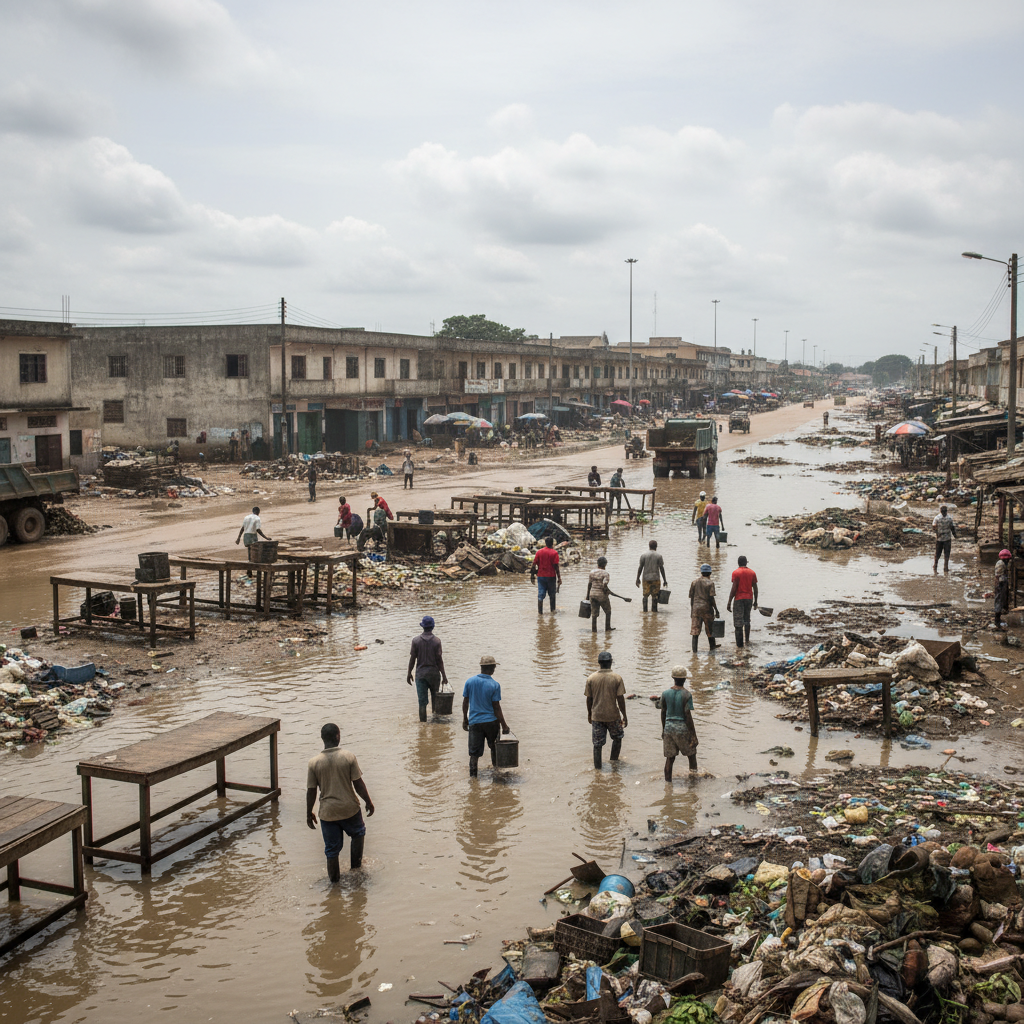
Ghana began a national clean-up exercise on Friday, July 10, 2026, across seven regions heavily impacted by recent floods. This two-day operation involves residents, institutions, and authorities clearing refuse and desilting clogged drains. The clean-up aims to restore public spaces and mitigate future flood risks.
Activities started slowly in the morning but saw increasing participation from various stakeholders. The government mandated closures for shops and non-essential businesses from 6:00 AM to 1:00 PM on both exercise days. This measure ensures maximum community involvement in the clean-up efforts.
This mass mobilization highlights the significant economic and social disruption caused by recent floods. Such events place immense strain on public infrastructure and resident livelihoods. Previous flood incidents have often led to substantial property damage and displacement, underscoring the urgent need for preventative measures and post-disaster recovery.
The Ministry urging residents, businesses, and religious organizations to actively support the exercise indicates the scale of the challenge. This collective effort is crucial for restoring clean and safe communities. The government hopes widespread participation will enhance community resilience against future climate-related events.
The exercise's success will have important long-term implications for public health and urban planning. Effective waste management and drainage systems are vital for preventing disease outbreaks and protecting property values. Decision-makers and markets will closely monitor the clean-up's impact on flood preparedness and community well-being.
In the Greater Accra Region, 104 flood-prone and affected locations were identified for the exercise. This comprehensive effort spans multiple Metropolitan, Municipal, and District Assemblies, including Ga South, Ga Central, Ga North, and Adenta. Specific areas like Tetegu, Mallam East, and New Weija are receiving attention from clean-up teams.
Clean-up activities are targeting major drainage points and flood-prone areas within Accra, such as Alajo drainage areas, Kokomlemle, and Pig Farm. In Ga Central, areas like Awoshie and Kolegu are part of the clean-up plan. Other key locations include Dome Market and Pokuase Footbridge in Ga East and Ga North respectively.
The exercise extended to coastal and peri-urban communities, including Teshie-Nungua Estate and Prampram Landing Beach. Businesses providing essential and emergency services received exemptions from the closure directive. This careful planning aims to balance public participation with critical service continuity.
The nationwide initiative demonstrates a concerted effort to address the aftermath of severe weather events. Continued investment in urban resilience and sanitation infrastructure will be critical for Ghana's economic stability. The successful execution of this clean-up could set a precedent for future disaster response and prevention strategies.