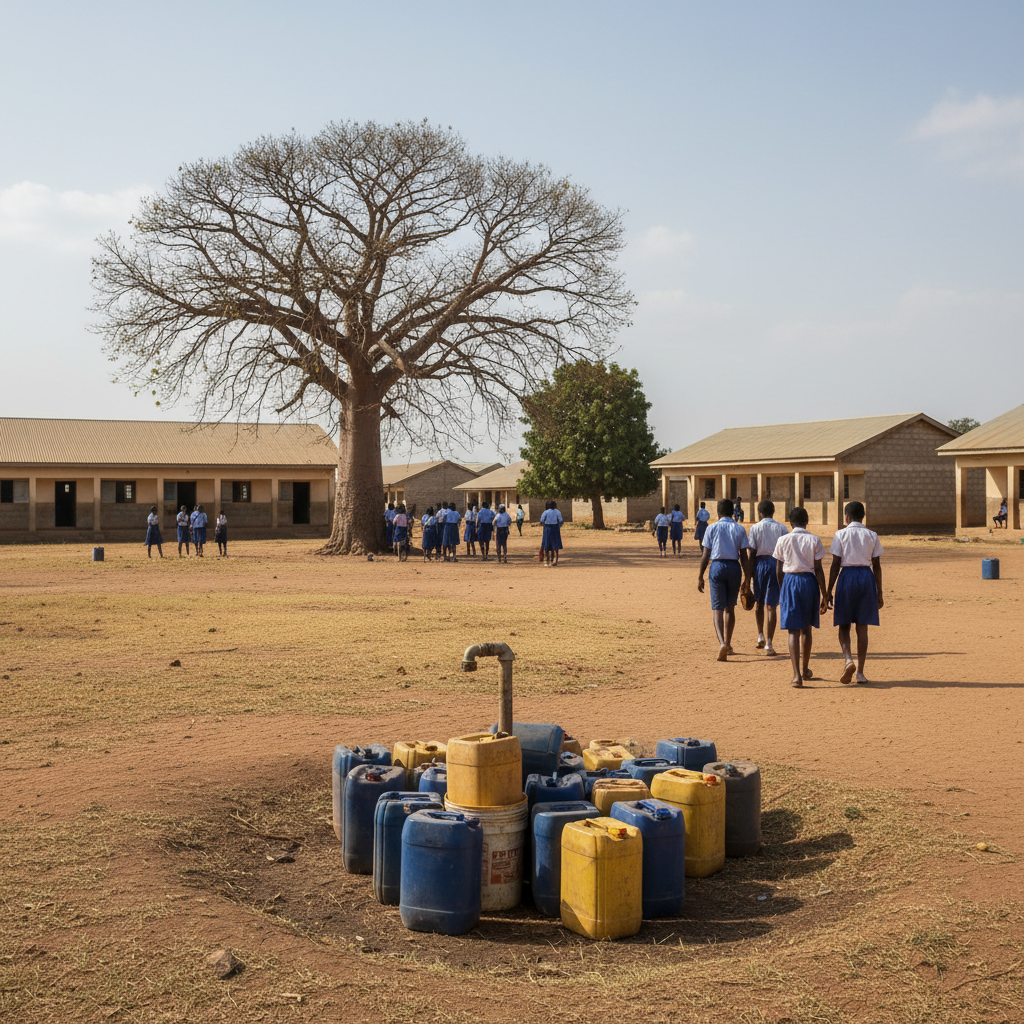
Students at Nalerigu Senior High School (SHS) in the North East Region have faced a month-long water crisis, severely disrupting their academic activities. This critical shortage has forced many students to abandon night studies, dedicating their evenings instead to finding water for daily needs.
The school's water supply system has been non-functional for nearly a month. This leaves students with no alternative but to trek into the Nalerigu township and nearby streams. They seek water for drinking, bathing, and other essential uses, diverting crucial time from their studies.
This situation fits into a broader national challenge regarding infrastructure development and access to basic amenities, particularly in educational institutions located in rural and peri-urban areas. Reliable water supply is fundamental for maintaining hygiene and ensuring a conducive learning environment. The disruption at Nalerigu SHS reflects systemic issues that can hinder Ghana's educational progress and human capital development. The government has invested over GHS 900 million under the 'No Stress Free' initiative to improve education, yet such basic needs remain unaddressed in some areas.
Students report that the crisis has severely impacted their academic work. "We hardly have time to study at night because we spend most of our evenings looking for water," a Form Two student stated. "By the time we return to campus, we are too tired to read." Efforts by MyJoyOnline to contact the Headmaster, Mr. Mohammed, and the PTA Chairman, Stephen Iddi, for comment were unsuccessful.
Beyond academics, the water shortage has worsened sanitation and hygiene conditions on campus. Toilets and bathrooms are difficult to use due to the lack of water, leading to increased instances of open defecation. Students also claim the school compound is becoming littered with refuse, and the indiscriminate disposal of used sanitary pads poses a growing health concern. Female students have also reported experiencing harassment while searching for water outside the school premises, raising serious safety concerns.
The prolonged crisis at Nalerigu SHS has significant implications for student welfare and academic performance. As students prepare for examinations, the inability to study effectively could lead to poorer results. This situation could also exacerbate existing inequalities in educational outcomes between well-resourced and underserved schools. Decision-makers at the Ghana Education Service and the government must urgently address this issue to prevent further academic and health consequences for the students. The lack of basic amenities like water can undermine the quality of education provided, despite other government efforts to improve the sector.
The incident at Nalerigu SHS underscores the critical need for robust infrastructure maintenance and emergency response plans in educational facilities nationwide. Ensuring consistent access to water is not merely a convenience but a fundamental requirement for a healthy and productive learning environment. The government's commitment to education must extend to guaranteeing these basic provisions for all students.