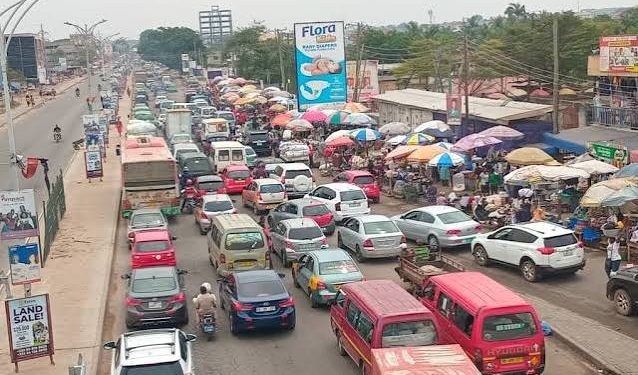
Commuters navigating the Mallam-Weija section of the Accra-Kasoa highway now endure daily traffic jams lasting up to four hours. This severe congestion results from deteriorating road surfaces and slow progress on essential drainage projects.
This critical transport artery, connecting the Central Region and Kasoa to Accra, has become a source of daily frustration. The delays particularly affect the stretch between Atala, Weija Junction, and Mallam Junction. The situation impacts thousands of motorists daily, hindering their ability to reach work and access crucial services.
The persistent gridlock on this vital economic corridor underscores broader infrastructure challenges facing Ghana. Inefficient transport networks can inflate business costs and reduce overall economic productivity. Poor road infrastructure also directly impacts the movement of goods and services. The government has focused on infrastructure development, but this incident highlights the need for timely project completion and maintenance.
Jerry Ahmed Shaib, the Member of Parliament for Weija-Gbawe, has urgently called on the government to fix the road. Speaking on the Citi Breakfast Show on Friday, July 3, he attributed the problem partly to the slow pace of work on an ongoing storm drain project. Mr. Shaib stated, “I do not know if it is an issue of funding or resources because they have been very slow in completing that project.” He added that he has repeatedly engaged the Minister for Works, Housing and Water Resources regarding the issue.
The delays carry significant economic implications. The MP cited an example of a surgeon at Korle Bu Teaching Hospital stuck in traffic for three hours, delaying patient care. Such incidents demonstrate the direct impact on productivity and access to essential services. Decision-makers and market participants will watch for concrete government action to address these concerns. Timely intervention could alleviate economic losses and improve daily life for residents in these busy areas.
Previous repair efforts by the MP have been undermined by recurring flooding and engineering defects, creating new potholes. Mr. Shaib has shared evidence with the Minister for Roads and Highways, who acknowledged the problems. The mp stressed the need for quick government intervention, emphasizing the route's importance for thousands of daily commuters. Fixing this specific stretch would benefit not only Weija-Gbawe residents but also a wider contingent of motorists.