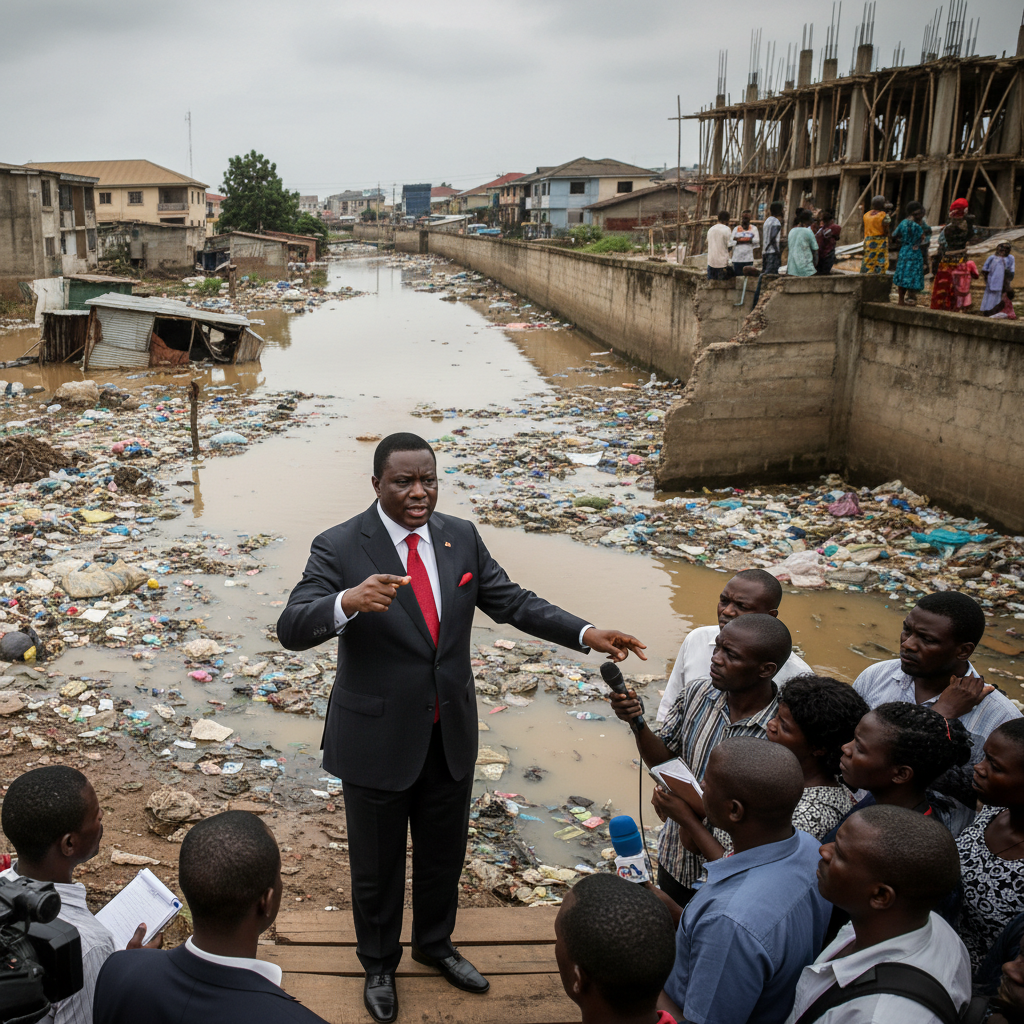
Former President John Mahama has attributed Accra's severe and persistent flooding to district assemblies and their officials. He alleges that these bodies have issued building permits for developments located in waterways and other restricted areas.
This practice has significantly worsened the city's vulnerability during heavy rainfall. Unchecked construction on natural drainage paths undermines essential infrastructure. The resulting floods cause substantial damage to lives, property, and public assets.
This issue fits into Ghana’s broader struggle with rapid urbanization and insufficient urban planning. Accra, a key economic hub, suffers an estimated GHS 4.2 billion in annual flood-related losses. These losses stem from damaged infrastructure, disrupted economic activities, and public health crises. The lack of green spaces and widespread unauthorized construction compounds these problems. Prior attempts to address these issues have faced public resistance and weak enforcement.
President Mahama highlighted specific instances while addressing his cabinet upon returning from the UK and Belarus. He stated, “If anybody brings a house that you are in a restricted area, which is in a waterway, it is not supposed to be sold. But some of the houses have a building permit. How did they get it?” He also criticized public reactions to demolitions of structures in wetlands. He noted, “When the Greater Accra Regional Minister and her team went out and demolished houses built in the wetlands, people said the government was inhumane.”
In response, President Mahama has instructed the National Disaster Management Organisation (NADMO) to conduct a comprehensive assessment. This assessment will identify all prohibited and high-risk development areas. The findings will inform future enforcement actions and corrective measures. Decision-makers and property developers will face increased scrutiny. Strict adherence to urban planning regulations will become crucial for sustainable growth. Market confidence in real estate development in vulnerable areas may also be affected.