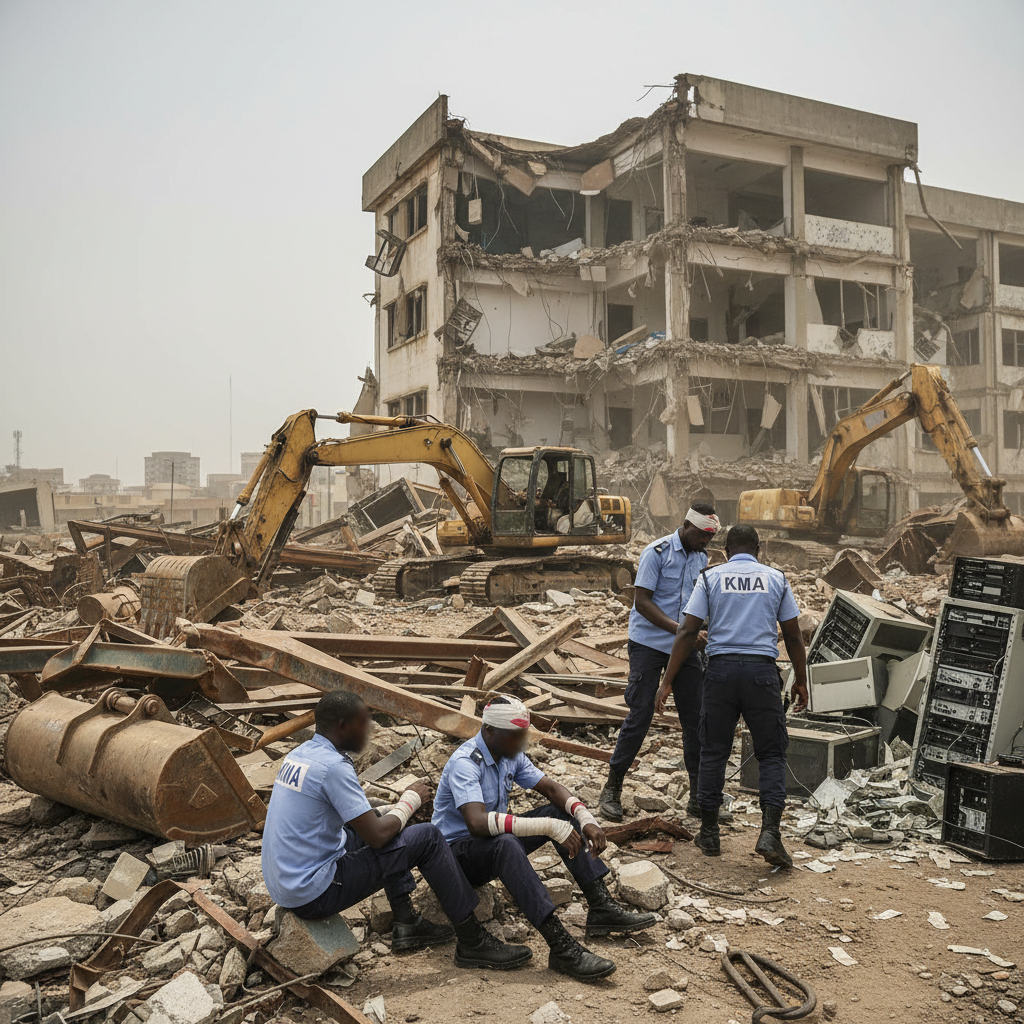
Three officers of the Kumasi Metropolitan Assembly (KMA) sustained injuries on Wednesday, July 8, when residents allegedly attacked an Assembly taskforce. The incident occurred during a demolition exercise behind the COCOBOD building at Adum, near the Asafo Overpass. The confrontation also resulted in the vandalism of several Assembly vehicles and equipment by residents.
The KMA task force targeted makeshift structures, which the Assembly described as illegal, along waterways. The demolition aimed to remove encroachments obstructing drainage channels. This action seeks to create access for desilting major drains before the peak rainy season. Such efforts are crucial to minimize the risk of widespread flooding in Kumasi.
This incident highlights ongoing challenges in urban planning and infrastructure development across Ghana. Rapid urbanization often leads to unauthorized constructions, particularly in flood-prone areas. Historically, such structures exacerbate flooding during heavy rains, causing significant economic losses and endangering lives. Government agencies frequently face resistance when enforcing building regulations and land use policies to mitigate these risks.
Kumasi Mayor Richard Ofori Agyemang Boadi stated that the attack would not deter the Assembly from enforcing protective measures. He said, “Our intention is to clear them and then desilt the place.” Mayor Boadi confirmed the loss of one pick-up vehicle and a vandalized excavator during the incident. He promised to repair damaged equipment and continue the exercise. The injured officers will receive medical attention, pending police documentation.
The KMA faces potential financial costs exceeding GHS 1 million to repair or replace the damaged equipment and vehicle. This estimated figure considers the standard replacement cost of a pick-up and repair cost of heavy machinery. Such expenses directly impact public funds designated for urban development and sanitation projects in Kumasi. The incident may also delay crucial flood mitigation efforts, potentially increasing future disaster risks.
Some affected residents contested the KMA's actions, claiming lawful acquisition of the land. One resident stated, “We paid money before they gave us the land.” They also accused the Assembly of carrying out the demolition without prior notice. This dispute over land ownership and notification processes could lead to further legal challenges or prolonged resistance. The KMA must navigate these claims while balancing public safety and urban planning objectives.
The continuation of these demolition exercises will be closely watched by affected communities and urban development stakeholders. The KMA's response to residents' claims of prior land acquisition will be critical. This situation underscores the need for clear communication and established legal processes in urban development initiatives. These efforts aim to avoid future confrontations and ensure equitable resolution of land disputes.