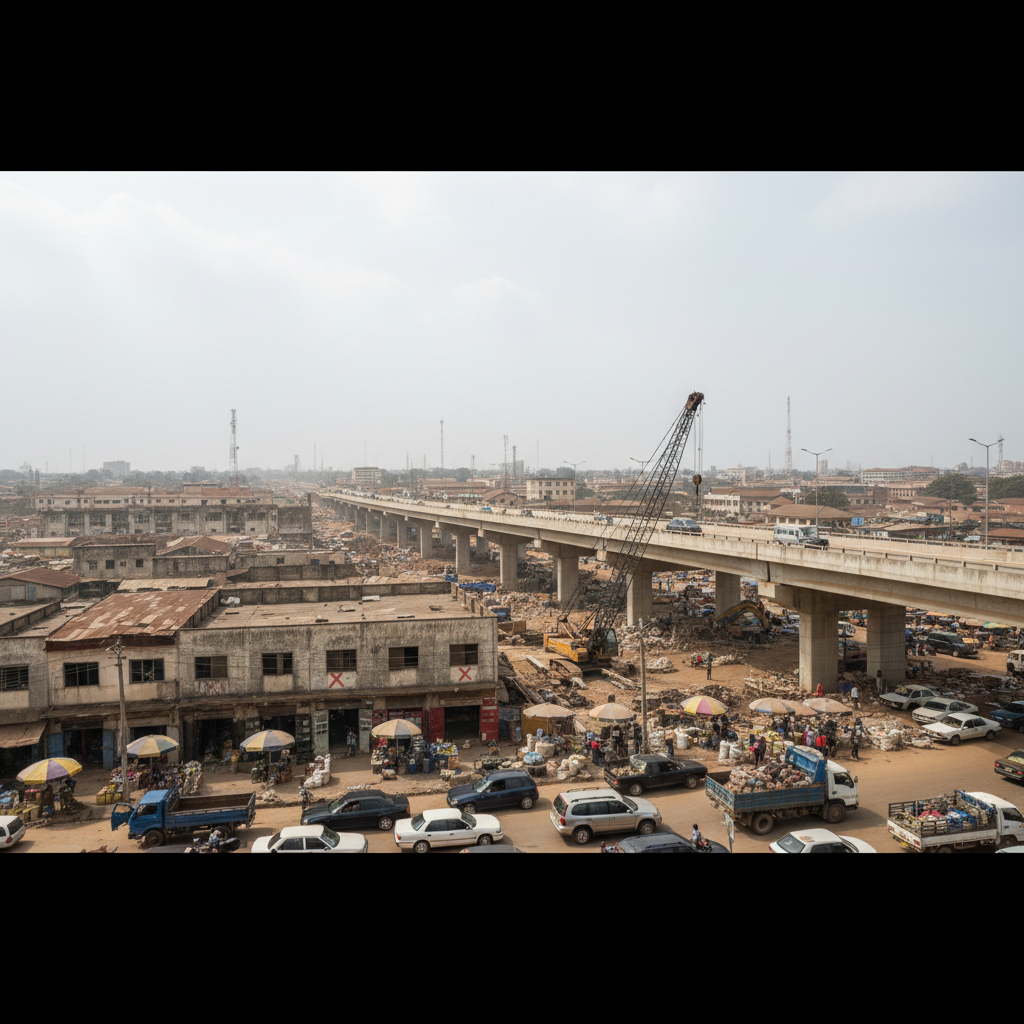
The Kumasi Metropolitan Assembly (KMA) will conduct a demolition exercise at the Asafo Interchange and its surrounding areas on Friday, July 17.
This action targets all persons occupying unauthorized spaces, including areas beneath the Interchange, behind COCOBOD, and within the Takoradi Flour Mill enclave. The KMA aims to restore order, improve public safety, and enforce city bylaws.
This demolition is part of ongoing efforts to decongest Kumasi. It seeks to ensure that public lands and infrastructure serve their intended purposes. The KMA has previously undertaken similar exercises across the city to manage urban development. These efforts support the broader national agenda for planned urban centers.
A statement from the KMA's Public Relations Unit confirmed these plans on Tuesday, July 14. The Assembly highlighted that the targeted area has become a hub for illegal activities. These activities include prostitution and the sale of hard drugs. The KMA warned all individuals using these spaces unlawfully to vacate immediately.
Property owners must submit legal authorization to the KMA's Works Department by Tuesday, July 14. Structures lacking valid documentation by Wednesday, July 15, 2026, will face demolition. The Assembly advised affected persons to comply to avoid forceful eviction without compensation for lost items or structures. This directive emphasizes the KMA's commitment to urban planning and law enforcement.
The KMA also reported that its officers and security personnel faced attacks during a recent inspection. This incident occurred while they performed their duties. The Assembly stressed that such acts will not deter its efforts to enforce the law. It will continue to ensure resident safety.
This demolition exercise follows KMA's continuous drive for urban renewal. Previous efforts often faced resistance from squatters and informal traders. The economic implications for affected individuals, many of whom run small businesses, could be significant. This operation aligns with broader government initiatives to improve Ghana's urban infrastructure.
The KMA's consistent enforcement of building codes and public space regulations impacts local commerce. It also affects the livelihoods of many informal sector workers in Kumasi. Such actions are crucial for planned urban development and public health. They often lead to short-term disruptions but long-term benefits in urban management.