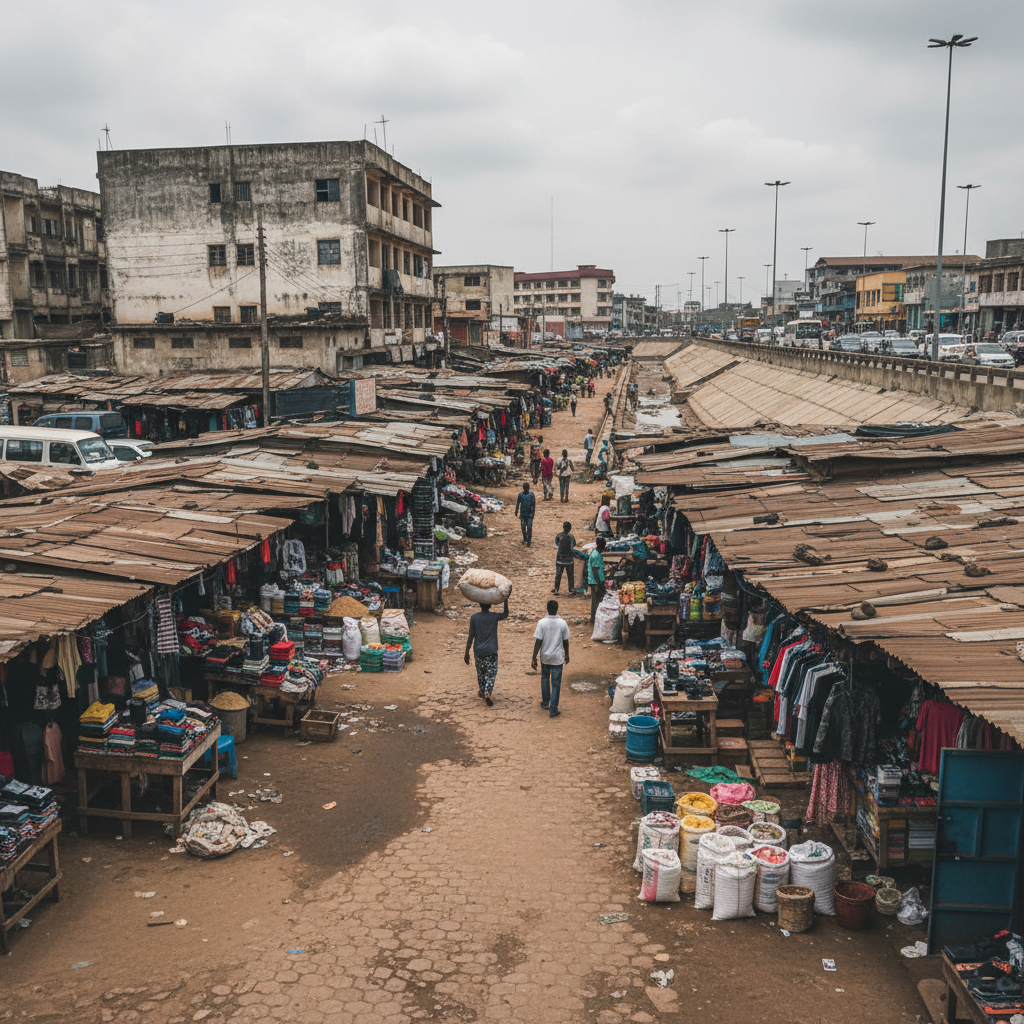
Kantamanto Market, a critical economic center in Accra, did not flood this rainy season. This marks the first time in over two decades that the market has remained dry during heavy downpours. The achievement is a direct result of extensive, proactive ecological restoration work.
The absence of flooding is not due to chance but to months of arduous work. This work involved clearing drainage systems and removing accumulated waste. Flooding historically damaged stock and halted trade for the 30,000 traders and workers in the market.
This success represents a significant shift in how Accra manages its flood vulnerability. The city has long struggled with seasonal inundations, often described as a vast coastal wetland. Past urban planning frequently ignored the natural landscape, leading to recurrent flooding.
The Or Foundation’s Community Ecological Care Network (CECN) spearheaded these efforts. They collaborated with the Accra Metropolitan Assembly and market leadership. Their approach views ecological care as an essential city function, not just charity.
Ahead of this year’s rainy season, teams cleared the main canal into which Kantamanto’s drainage empties. They excavated an informal dumpsite, removing over 100 truckloads of waste. This preparation ensured the system could handle rainfall before the rains arrived.
More than 150 members of the Tide Turners and June 4 Task Force cooperatives were deployed. They cleaned the underground Okai Kwei storm drain. This drain had reportedly not been desilted since its construction in the 1980s. Workers removed years of accumulated silt, plastics, and textile waste.
Coastal cleanup efforts also played a crucial role. Teams removed an average of 30 tons of waste every Tuesday from the beach. They monitored a 7km stretch of coastline weekly to track progress and identify hotspots. This prevents floating waste from re-entering the drainage system.
Plastic interceptors are maintained to stop waste from traveling downstream. Textiles are diverted before they can cause blockages. These consistent daily activities keep drainage pathways open, preventing failures.
The Kanta Keepers cooperative cleans Kantamanto every evening. They divert textile waste from entering the drainage network or being openly burned. Some collected waste goes to the Material Transformation & Technology Lab (MTTL). There, teams recycle it into new materials using innovative local methods.
Community ambassadors monitor flood-prone areas. They document blocked drains and report emerging issues. Citizen scientists collect environmental data, helping identify patterns and guide interventions across the watershed. These combined efforts build an environmental memory that single assessments cannot capture.
This year’s outcome demonstrates that impactful flood prevention requires consistent, long-term engagement. It shows that working with natural water flow, rather than against it, yields positive results. The economic benefits for Kantamanto’s traders are substantial, ensuring continued livelihoods and trade.