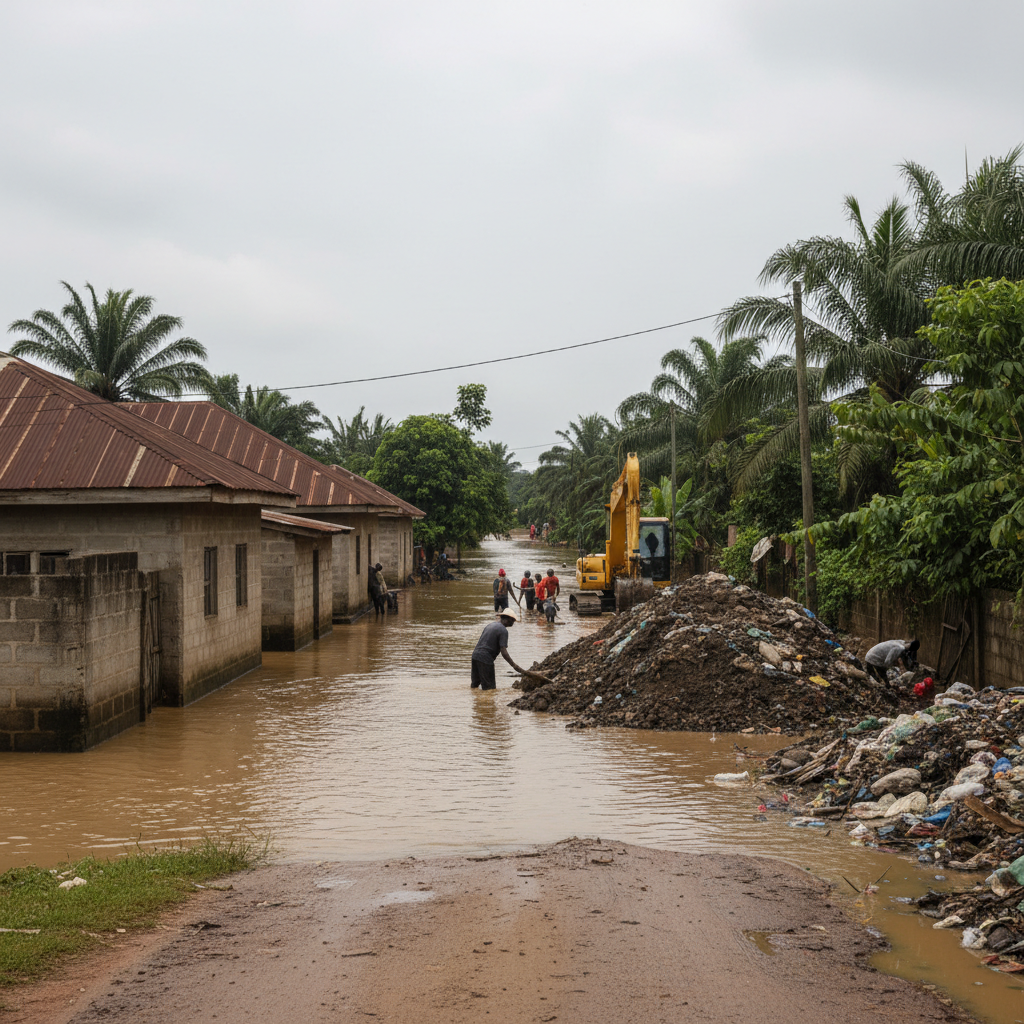
A three-hour rainfall in Kadjebi has exposed critical deficiencies in the township's drainage system. This downpour caused significant waterlogging, with floodwater running through homes and threatening properties.
The rain, which lasted from 0650 hours to 0950 hours, disrupted movement across several areas. Residents in Martin Kordzi, Tadzewu Kpodzi, and Kasadjan experienced rainwater flowing directly through residential areas. The absence of adequate storm drains forced runoff to follow natural paths, raising concerns about property safety and sanitation.
This recurring issue highlights a broader challenge in Ghana's urban planning and infrastructure development. Many communities face similar drainage problems, especially during the rainy season. Data from the Ghana Meteorological Agency often indicates increasing rainfall intensity, exacerbating these infrastructure weaknesses. Prior events have shown that inadequate drainage leads to substantial economic losses and public health risks.
Prophet Michael Komla Atonah, a resident of Tadzewu Kpodzi, described the situation as “sorrowful.” He appealed to the Kadjebi District Assembly for urgent steps to address the drainage challenge. Mr. Ben Asidigbe, a resident of Asito, echoed these concerns, calling for the construction and desilting of drains in flood-prone areas.
The implications of persistent flooding are significant for Kadjebi's residents and local economy. Property damage leads to financial strain for households and businesses. Stagnant water also poses public health risks, including waterborne diseases. Decision-makers must prioritize sustainable urban planning and infrastructure investment to mitigate these impacts.
Mr. Stanley Bedze, Physical Planning Officer of the Kadjebi District Assembly, confirmed the Assembly's awareness of the problem. He stated that an 11-member Spatial Planning Technical Sub-Committee is developing a development plan for 2025 to 2040. This plan aims to address future development, including drainage infrastructure. Data collection and stakeholder engagements have already taken place for this initiative.
The Assembly's commitment to a long-term plan is a positive step. However, residents require more immediate interventions to protect their properties and livelihoods. Effective implementation of the spatial plan will be crucial for preventing future flood disasters. This requires sustained funding and diligent oversight to ensure proper infrastructure development.
Addressing Kadjebi's drainage issues will require a multi-faceted approach. This includes constructing new storm drains and regularly desilting existing ones. Community engagement is also vital to ensure residents understand and support drainage maintenance efforts. The economic stability of the affected areas depends on these critical infrastructure improvements.
The incident underscores the need for proactive measures rather than reactive responses to seasonal flooding. Investing in resilient infrastructure now will save significant costs in property damage and public health crises later. The Kadjebi District Assembly's plan must translate into tangible improvements on the ground.