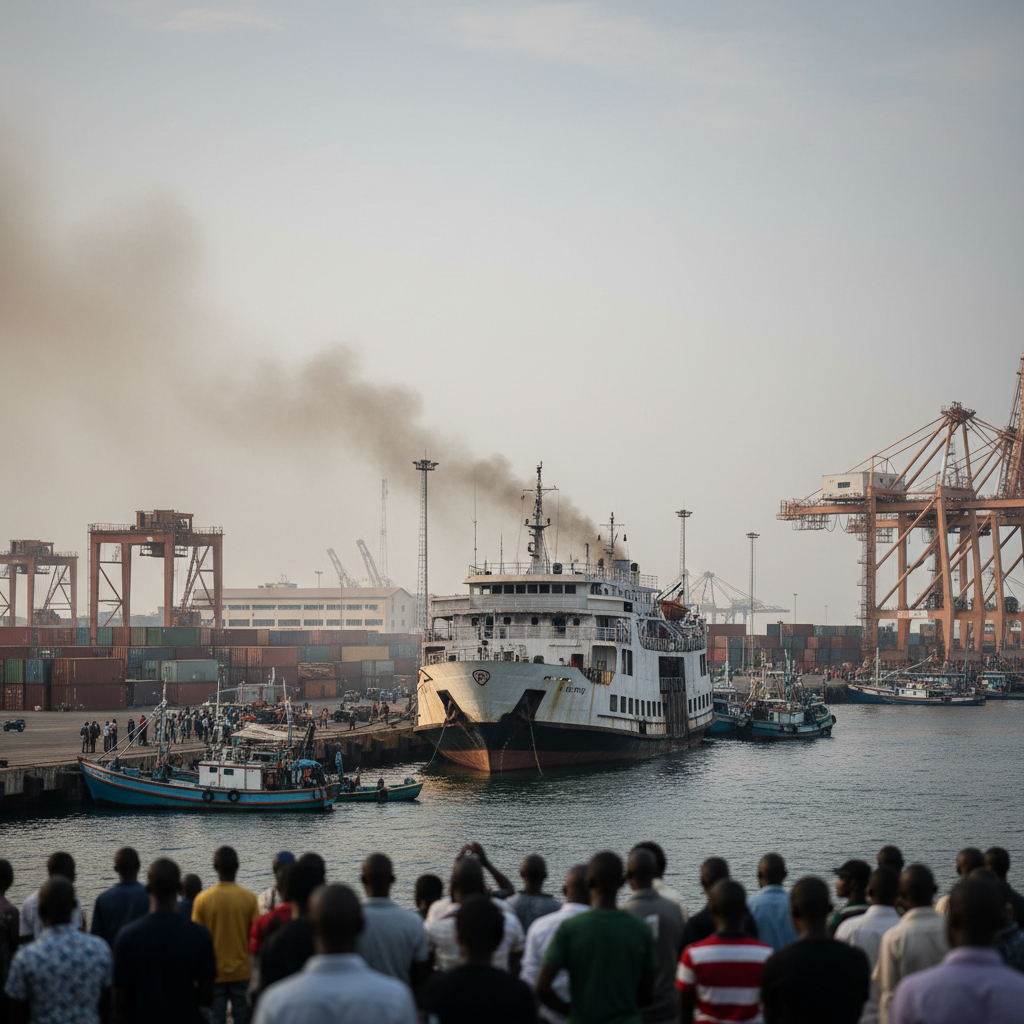
Indonesian authorities rescued 172 people on Wednesday after a ferry traveling from the tourist island of Bali caught fire. The incident resulted in one confirmed death, with search operations continuing for any additional missing passengers. This event underscores persistent issues with maritime safety in the archipelago nation.
The KM Putri Yasmin ferry departed from Padangbai port in Bali, heading towards Lembar port in Lombok, located in the province of West Nusa Tenggara. The fire erupted in the Lombok Strait at 4:39 a.m. on Wednesday. Muhammad Hariyadi, head of the local rescue agency, confirmed these details. The rapid response led to the evacuation of survivors to ports in both Bali and Lombok.
Indonesia, an archipelago comprising 17,000 islands, relies heavily on ferries for transportation. Sea routes offer a more affordable and accessible alternative to air travel for many citizens. However, this dependence is often coupled with lax enforcement of safety standards, contributing to a high rate of maritime accidents. This incident is not isolated, as another ferry, KM Mutiara Sentosa 2, caught fire off Madura island less than a month ago, killing five people.
Heri Wiyanto, an official at Padangbai port in Bali, told local broadcaster Kompas TV that the ferry's manifest listed only 114 passengers and 17 crew members. This number is significantly lower than the 172 people rescued, suggesting potential discrepancies in passenger registration. Such inconsistencies have been a recurring problem in previous Indonesian ferry accidents, where vessels often carried more people than officially recorded.
The immediate implication of this incident is a renewed focus on maritime safety regulations and their enforcement. Authorities will likely face pressure to investigate the cause of the fire and address any discrepancies in passenger manifests. Decision-makers will need to consider stricter oversight to prevent future tragedies. The frequency of such incidents could also impact public confidence in ferry travel, potentially leading to calls for improved infrastructure and safety protocols across the nation's extensive sea routes.
The Indonesian government has historically struggled with ensuring consistent safety across its vast maritime network. This latest incident serves as a stark reminder of the human cost when safety protocols are not rigorously followed. International observers and local citizens will be watching closely for concrete actions to enhance passenger safety on ferries. The economic impact of such accidents, including disruptions to trade and tourism, also remains a significant concern for the region.
Rescue operations involved deploying multiple boats and over 200 personnel to manage the evacuation. One Australian national was among the survivors, with the rest being Indonesian citizens. The cause of the fire remains unknown, and investigations are underway to determine if factors like overcrowding contributed to the disaster. Addressing these systemic issues is crucial for the safety of millions who depend on ferry services.