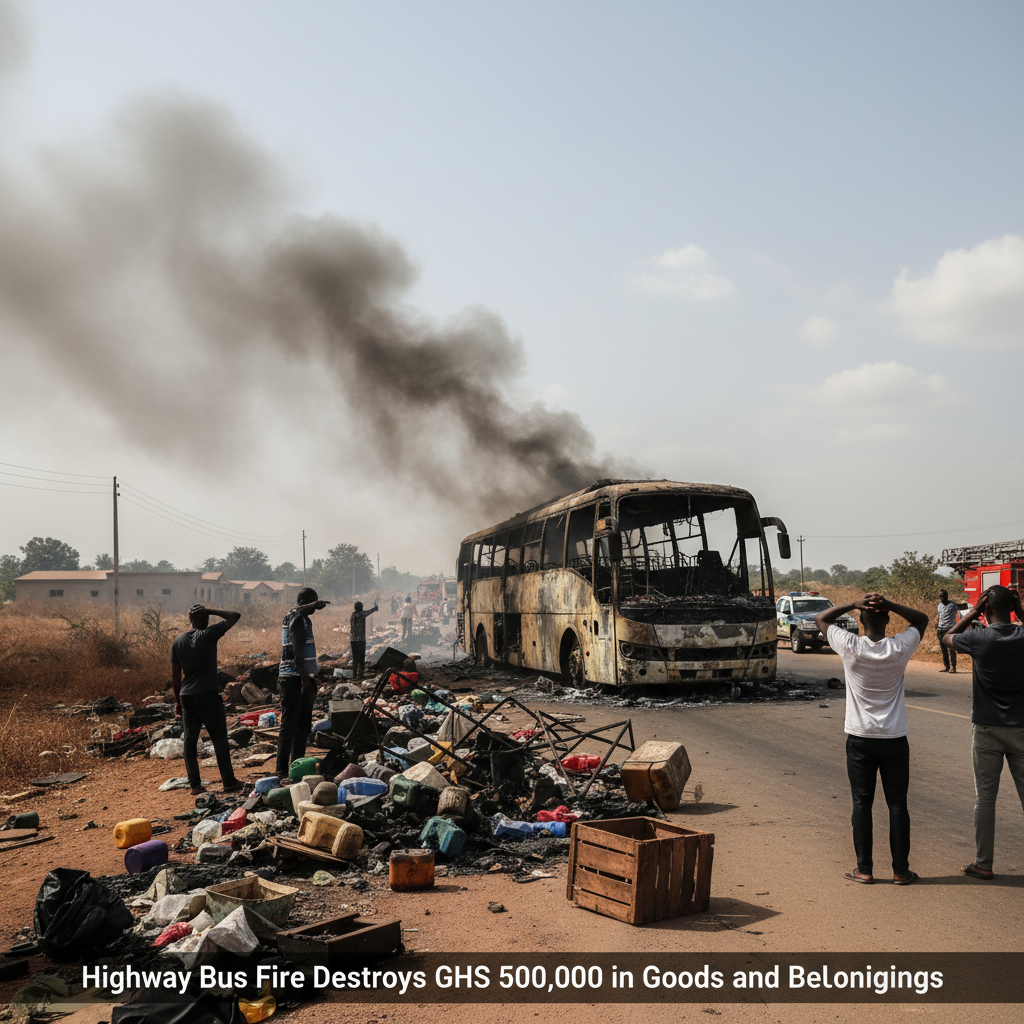
A Yutong passenger bus was completely destroyed by fire on the Mankessim–Accra Highway in the Central Region on Wednesday, July 8, 2026. This incident led to the total loss of all passengers' belongings and significant commercial goods. Early estimates suggest the combined value of lost items and the bus itself exceeds GHS 500,000.
The Ghana National Fire Service (GNFS) reported that an electrical fault caused the fire. This malfunction engulfed the vehicle shortly after 4:34 a.m. Firefighters arrived quickly, but the bus was already fully ablaze. The extensive damage included approximately 20 crates of drinks. These goods were being transported alongside personal luggage, leaving nothing salvageable for many travelers.
This event highlights persistent concerns about vehicle safety and maintenance in Ghana's transport sector. Data from the National Road Safety Authority (NRSA) shows that vehicle mechanical faults contribute to a significant percentage of road accidents. Such incidents disrupt supply chains and inflict financial hardship on citizens who rely on public transport for commerce. The lack of comprehensive cargo insurance for personal effects often leaves travelers without recourse after such losses.
According to a post shared on Facebook by the Ghana National Fire Service, emergency services reacted swiftly. They received a distress call at 4:34 a.m. Firefighters arrived and worked for several hours, bringing the blaze under control by 7:12 a.m. The GNFS emphasized that no casualties were reported. The successful evacuation of all passengers prevented a human tragedy, despite the severe financial losses.
The incident will likely reignite discussions on stricter vehicle inspection protocols for commercial passenger buses. Transport operators may face increased scrutiny regarding their maintenance schedules and electrical system checks. Market prices for transported goods, such as the destroyed crates of drinks, could see temporary fluctuations in regional markets. Consumers and businesses will watch for policy responses aimed at enhancing road safety and protecting travelers' investments.
The economic impact goes beyond the immediate loss. Businesses transporting goods face delays and increased costs. Passengers suffer financial setbacks and emotional distress. This event adds to the cumulatively high costs of road accidents on Ghana's economy. These costs are often borne by individuals and small businesses, hindering their economic activity.
Ghana's economy, already navigating various challenges, cannot afford such disruptions. The transport sector is a key driver of economic activity. Losses from incidents like these disproportionately affect livelihoods. Continued vigilance and investment in robust transport infrastructure and safety regulations are crucial for sustained economic growth.
Policy makers might review existing regulations for commercial vehicle fitness and operator licensing. Insurance companies may also reassess risk profiles for commercial passenger vehicles. This could potentially lead to adjustments in premium costs. The broader impact on consumer confidence in public transport services also warrants attention.