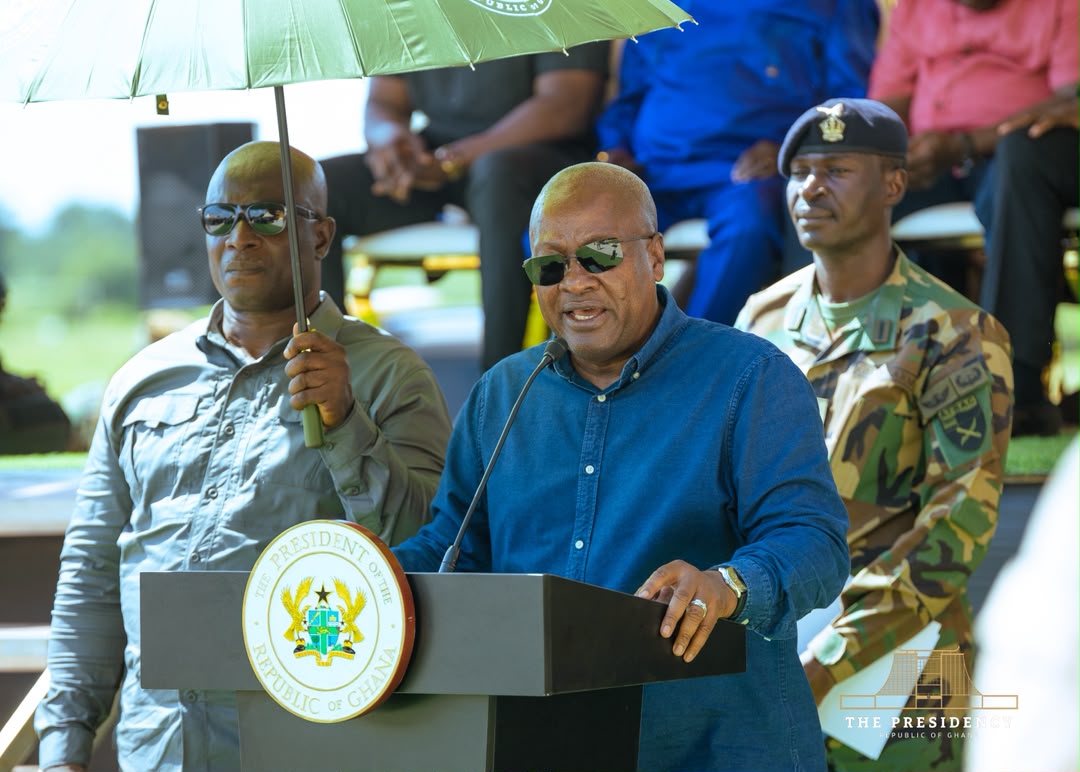
President John Dramani Mahama announced the government will complete 30 abandoned E-Block school projects across Ghana this year. This initiative aims to expand educational infrastructure and improve learning conditions in secondary schools. The completion of these facilities is a key part of the government’s GHS 3 billion STARR-J Project.
The STARR-J Project specifically seeks to address severe congestion in secondary schools. Its ultimate goal is to end the double-track system, which has been a significant challenge for students and educators. President Mahama made this announcement in Paga, Upper East Region, during the commissioning of a newly completed E-Block project.
This commitment fits into Ghana's ongoing efforts to enhance its education sector and manage public finances effectively. The government has allocated funds in the 2026 budget for these completions. Finishing projects where public money has already been spent prevents further waste of taxpayer resources. This strategy reflects a broader focus on ensuring value for money in public investments. Data from the Ghana Education Service often highlights infrastructure deficits as a major barrier to quality education.
President Mahama stated, “We said in 2024 that any project into which government has sunk money already, if you don't finish it, it is a waste of the taxpayers’ money.” He highlighted that the Paga E-Block was among the chosen projects. Students previously used parts of the unfinished facility under very difficult conditions. The completed facility now offers a significantly improved environment for teaching and learning.
The completion of these 30 E-Blocks carries significant implications for Ghana's education system and economy. It promises to alleviate pressure on existing school facilities. This expansion will accommodate the growing number of students seeking secondary education. Decision-makers will monitor the project’s progress and its impact on student enrollment figures. The successful implementation could also free up funds previously used to manage the double-track system. This could allow for reallocation to other critical educational needs. The Ghana Education Trust Fund (GETFund) has been directed to expedite the supply of furniture and equipment for the Paga school. This ensures the facility can be fully utilized immediately. The government's commitment to completing these projects signals a strategic investment in human capital development. This is crucial for long-term economic growth and productivity. The move also demonstrates accountability in public spending, a key concern for citizens and financial markets.