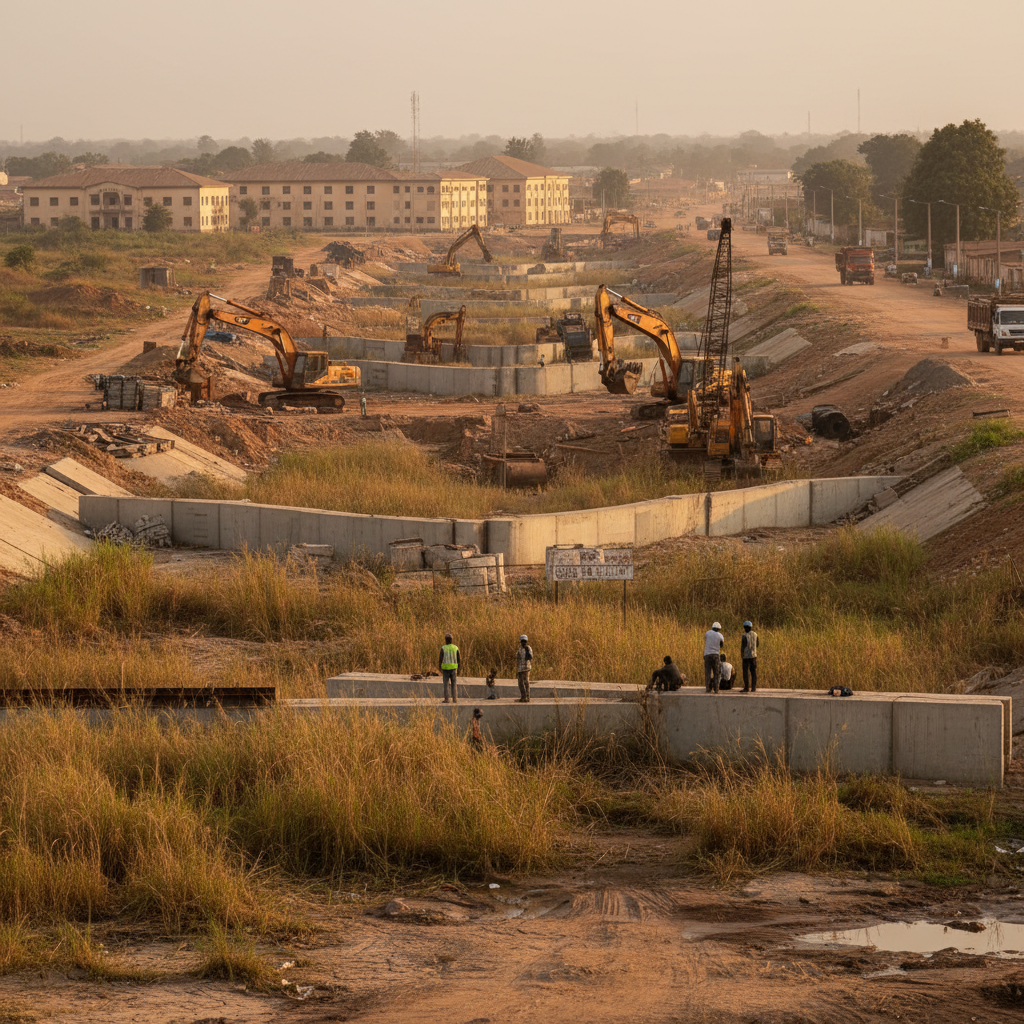
Ghana's current government has slowed the implementation of crucial flood control projects, despite inheriting active initiatives and significant financial backing. Richard Ahiagbah, Communications Director of the New Patriotic Party (NPP), highlighted this deceleration, noting the inherited projects included ongoing work to reduce flooding in Accra.
The previous administration secured US$150 million (GHS 1.8 billion) in 2024 to sustain the Greater Accra Resilient and Integrated Development (GARID) Project. This funding was part of a larger plan, adjusted for the COVID-19 pandemic, to enhance the city's resilience against recurrent floods. Key works like the dredging of the Odaw River and drainage construction in Achimota-Abofu and South Kaneshie were already underway or advanced.
This slowdown comes amidst Ghana's persistent struggle with urban flooding, particularly in Accra. The capital frequently experiences severe disruption and loss of life during heavy rainfall events. Historical data shows that inadequate drainage and rapid urbanization contribute significantly to this vulnerability. The GARID project, designed to address these systemic issues, represents a coordinated effort to improve infrastructure and urban planning.
Mr. Ahiagbah, in a Facebook post on Tuesday, June 30, contended that the current government 'did not inherit a void'. He stated, 'It inherited momentum, secured financing, had active contractors, and a clear plan in motion.' He added that detailed engineering designs and procurement processes for future interventions, such as the Atomic East and Atomic West Detention Ponds, were also in place.
The apparent stagnation of these projects poses significant risks for Accra's residents and economy. Delayed flood mitigation work could increase future economic losses from property damage and business disruption. It also raises questions about accountability and the efficient use of public and international funds. Decision-makers will need to address these concerns to maintain public trust and protect critical urban infrastructure. The performance of these projects will likely be a key issue in future political discourse.