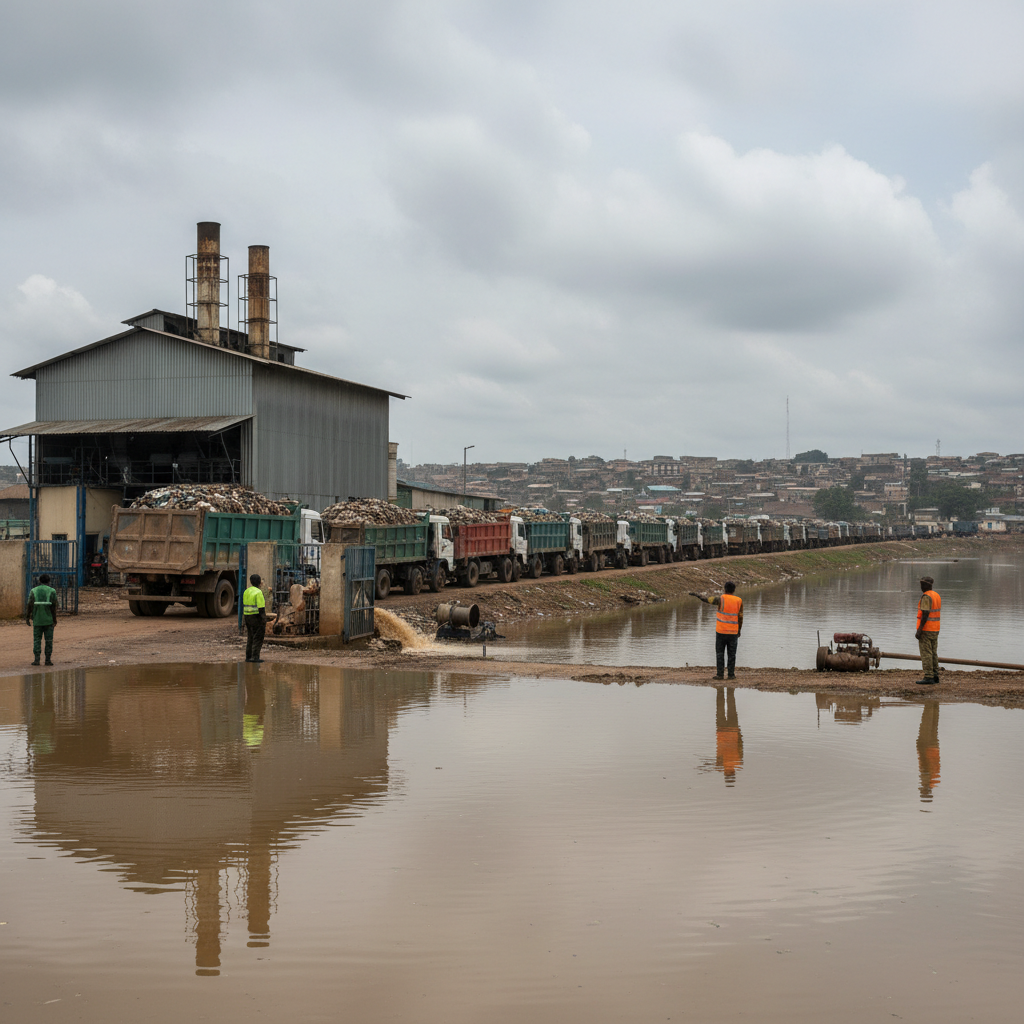
The government of Ghana and Zoomlion Ghana Limited have reopened the Achimota-Abofu Transfer Station. This action aims to restore crucial waste collection services and address sanitation challenges. Recent floods across the Greater Accra Metropolitan Area caused these disruptions.
The reopening acts as a temporary relief point for nearly 3,000 tricycle waste operators. They were unable to dispose of refuse due to inundated landfill sites. This situation posed an environmental and public health crisis for the capital. Timely intervention prevents further escalation of waste accumulation.
This initiative fits into Ghana's broader struggle for sustainable urban sanitation. Rapid urbanization and insufficient infrastructure strain waste management systems. The incident underscores the vulnerability of these systems to extreme weather events. It highlights the need for resilient waste infrastructure and consistent financial backing.
Minister for Local Government, Chieftaincy and Religious Affairs, Ahmed Ibrahim, announced the reopening. He visited the facility on Friday, June 26, 2026. Mr. Ibrahim emphasized the critical role of the station in restoring efficient waste collection. He noted that many transfer stations struggle financially. "User fees at some facilities have become unaffordable for informal waste collectors," Minister Ibrahim explained. This forces them to use unauthorized dumping sites.
Dr. Joseph Siaw Agyepong, Executive Chairman of the Jospong Group, highlighted the economic challenges. He stated that the Achimota Transfer Station, established in 2015, faced sustainability issues. This was due to the lack of expected government subsidies. Dr. Agyepong stressed that sanitation should be treated as a public good. Governments in countries like China and Turkey heavily subsidize such infrastructure. This support protects public health and prevents disease outbreaks.
The reopening of the Achimota Transfer Station should ease the immediate waste backlog. However, sustained government support for transfer station operations remains crucial. Decision-makers must develop a sustainable framework for waste management. This framework should integrate informal waste collectors and leverage existing infrastructure. Policy reviews could address funding mechanisms and user fee structures. Failure to do so risks recurring sanitation crises, especially with increased flood frequencies. The long-term implications involve improving public health outcomes and environmental protection across the nation.
The government plans to engage various stakeholders. These include informal waste collectors and transfer station operators. The goal is to develop an operational framework. This framework will optimize existing infrastructure for better waste management. Improved waste management could lead to significant health and environmental benefits. It also prevents economic disruptions caused by sanitation crises. This collaborative approach recognizes the complex nature of modern waste management.