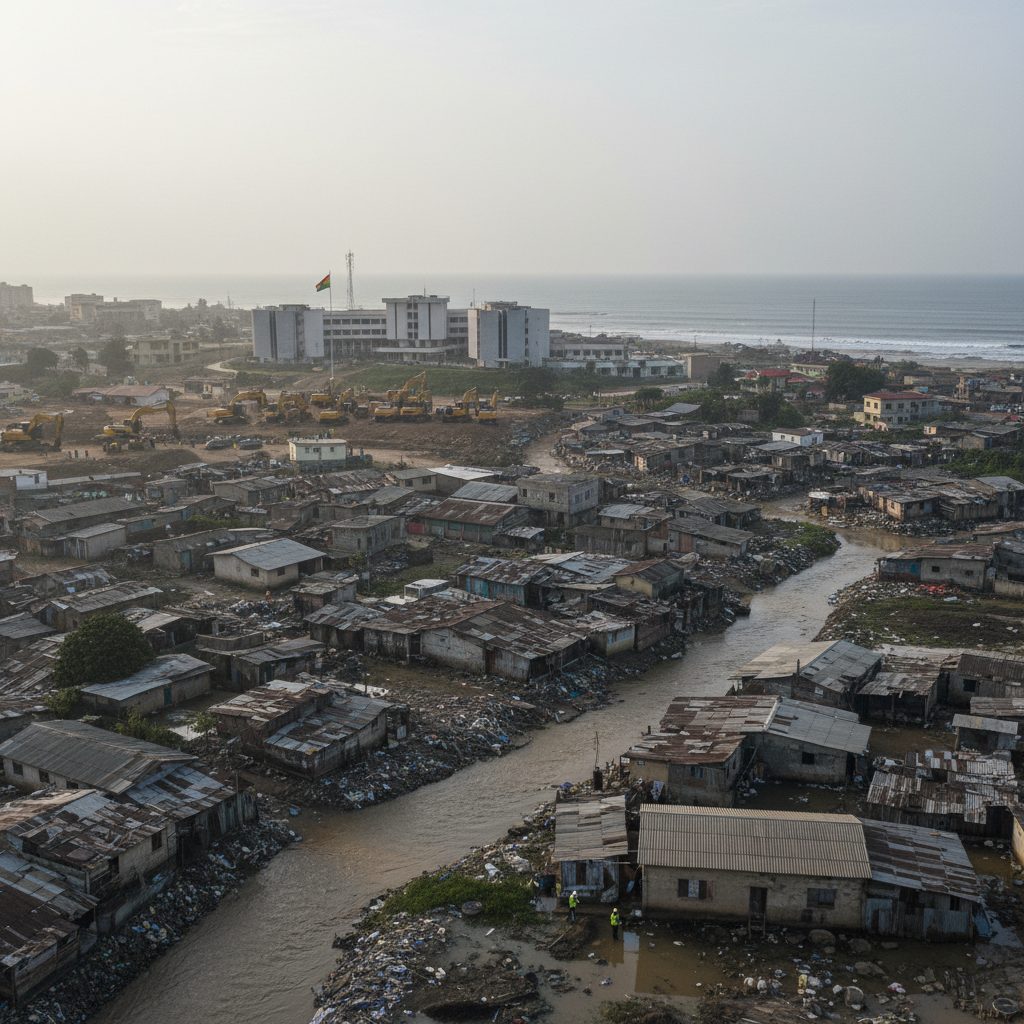
Ghana's government will demolish structures as part of its post-flood mitigation measures. This decision follows a directive for the Ghana Armed Forces to lead the exercise. This action targets buildings that contribute to or are vulnerable to severe flooding.
This initiative responds to the recurring and devastating floods experienced across the country. These floods have caused significant damage and displacement. The government aims to protect lives and property by removing structures in waterways or high-risk zones. The Ghana Armed Forces' involvement underscores the seriousness and scale of this planned operation.
Demolishing structures forms a critical part of Ghana's broader strategy for urban resilience and infrastructure development. Recurring floods exacerbate economic challenges, displace communities, and strain public resources. This measure aligns with efforts to manage public infrastructure and safeguard population centers. It seeks to break the cycle of destruction and reconstruction.
The government's announcement signals a firm commitment to addressing the root causes of urban flooding. While no specific official was quoted in the immediate public notice, the directive indicates a top-level decision. Such measures require careful planning and execution to minimize social disruption. They also aim to maximize flood protection benefits.
This pending demolition exercise will have significant implications for affected property owners and urban planning. It could lead to legal challenges, compensation discussions, and resettlement efforts. Investors and property developers in urban areas will closely monitor these developments. This will influence future construction practices and land use policies. The government's execution of this plan will demonstrate its resolve to enforce environmental and building regulations. It will also show its commitment to long-term flood management strategies.
Furthermore, this move could trigger debates on urban planning effectiveness and building code enforcement. There will be discussions around how structures were permitted in flood-prone areas. This action will test the government's ability to implement difficult but necessary reforms. The success of these mitigation measures will be crucial. It will determine Ghana's preparedness for future climate-related challenges. The long-term economic impact of reduced flood damage could be substantial. It could save the national economy potentially hundreds of millions of GHS annually in recovery costs.
The policy's implementation will require clear communication and fair treatment of affected citizens. The scale of demolitions and potential financial implications are not yet known. However, previous similar exercises have faced public resistance. This underscores the need for a well-managed approach. Ghana’s property market and urban development will likely adjust to these new enforcement priorities.