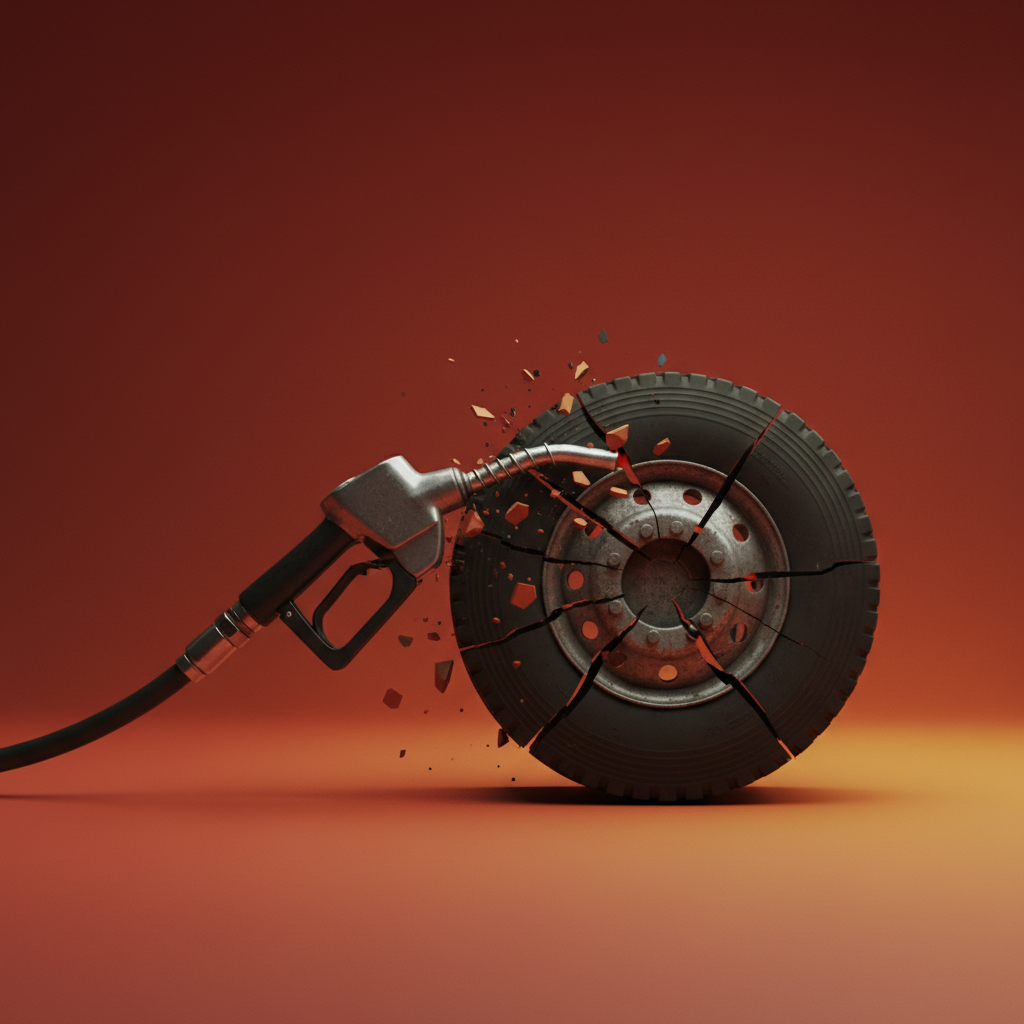
Ghana Oil Company (GOIL) has stated that rising fuel prices alone do not justify the Ghana Private Road Transport Union's (GPRTU) proposed 30% increase in transport fares. Edward Bawa, Chief Executive Officer of GOIL, emphasized that other economic factors must be considered before any fare adjustments are made. This declaration comes as global crude oil prices near $100 per barrel, sparking concerns about potential increases at local fuel pumps.
Mr. Bawa highlighted that a comprehensive assessment of transport fares should include the cedi-dollar exchange rate, the cost of spare parts, and insurance premiums. He noted that the recent stability of the Ghana cedi should also play a role in GPRTU's calculations. GOIL is currently evaluating the market situation and aims to find strategies to protect consumers from excessive price hikes.
This discussion unfolds within Ghana's broader economic landscape, where fuel prices significantly influence inflation and household budgets. The nation, a net importer of refined petroleum products, remains vulnerable to global oil price volatility. Previous fuel price increases have often triggered corresponding adjustments in transport fares, leading to higher costs of living for many Ghanaians. The government and regulatory bodies frequently monitor these trends to mitigate their impact on the general populace.
“Prices going up does not necessarily mean that at the pumps it will go up,” Mr. Bawa stated. He added, “GOIL will definitely find a way of trying to tame the market.” This suggests GOIL intends to absorb some costs or implement strategies to stabilize pump prices despite international trends. He further explained that GPRTU’s assessment should extend beyond just fuel. “There is also the issue of the exchange rate because of spare parts. There’s an issue of insurance and all other things that come into it,” he noted.
The implications of this stance are significant for both commuters and the transport sector. If GPRTU proceeds with its proposed 30% fare increase without broader economic justification, it could face public backlash and potential intervention from the Ministry of Transport. Consumers, already grappling with economic pressures, would bear the brunt of higher transport costs. Decision-makers will closely watch GOIL's pricing strategy and GPRTU's response, as these actions will influence daily commuting expenses and overall inflation rates. The stability of the cedi, as mentioned by Mr. Bawa, offers a potential buffer against immediate fare hikes.
Mr. Bawa also pointed out that the Ministry of Transport typically works with GPRTU to establish fare adjustment thresholds. He stressed that an increase is usually considered only when a combination of relevant factors reaches a predetermined level. This structured approach aims to ensure fairness and prevent arbitrary price changes. GOIL, as a state-owned entity, feels a responsibility to support transport operators in keeping fares manageable. This involves factoring in broader economic conditions when setting its own fuel prices.
The ongoing geopolitical developments globally continue to exert pressure on oil marketing companies like GOIL. Mr. Bawa acknowledged that these international events directly influence petroleum prices. He affirmed GOIL's commitment to ensuring that its customers are not unduly burdened by these external price pressures. The company's strategy will aim to balance its operational costs with its social responsibility to Ghanaian consumers. This careful balancing act is crucial for maintaining economic stability and public confidence in the transport sector.