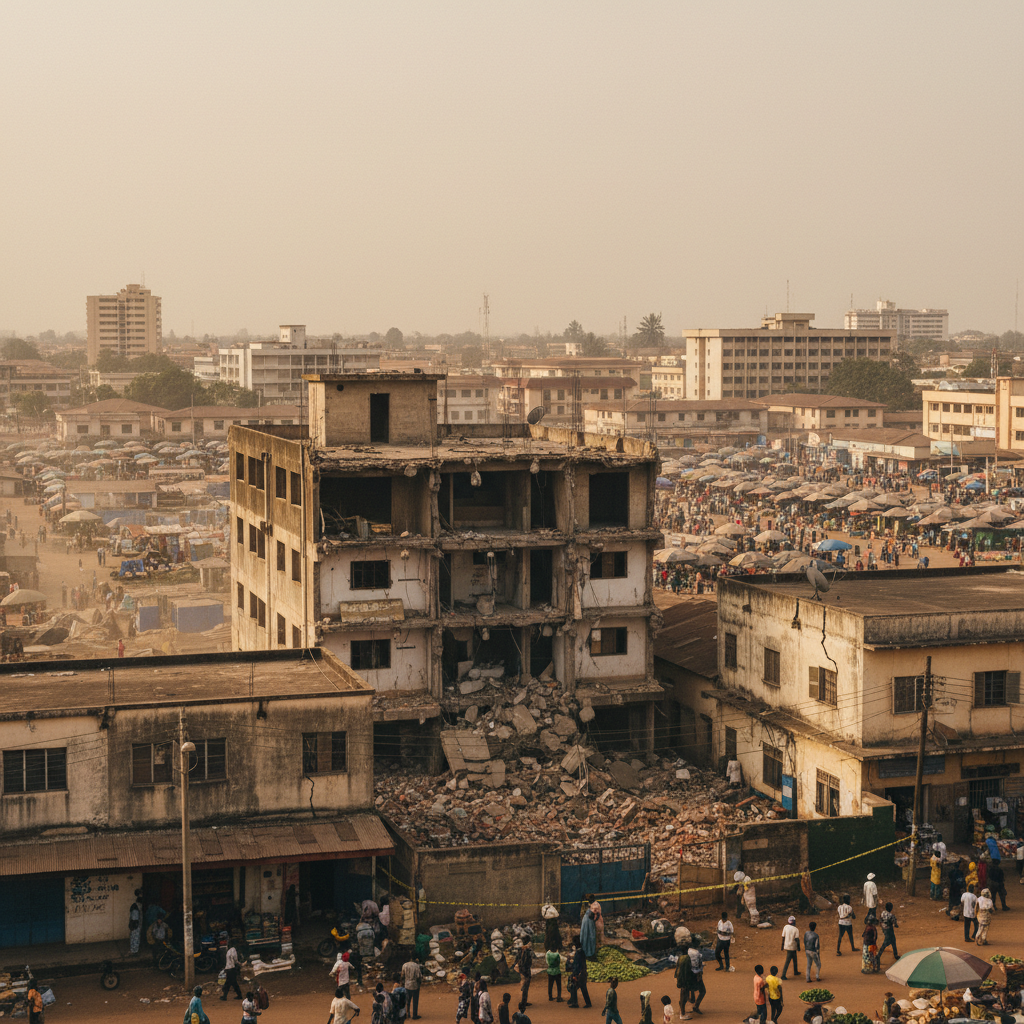
Ghana continues to face significant delays in demolishing unsafe buildings, a critical issue highlighted three weeks after a structure collapse claimed three lives. Martin Adjei-Mensah Korsah, the Ranking Member of Parliament’s Works and Housing Committee, attributes these delays to weak enforcement of building regulations.
The legislator expressed deep concern over the persistent presence of dilapidated structures, especially in Accra, despite official assurances for their demolition. This failure to act directly endangers public safety and fosters an environment where non-compliance with building codes goes unchecked. The building that collapsed in the North Industrial Area, for example, still stands despite its poor condition and promises to pull it down.
This situation fits into a broader pattern of regulatory challenges within Ghana's economic and urban development landscape. Insufficient oversight of construction projects and a perceived lack of accountability have long plagued the sector. This has resulted in unchecked urban sprawl and structures that do not meet safety standards, a trend that can deter foreign investment and impact the property market's stability.
Mr. Korsah stated that the ongoing problems stem from a “lack of enforcement of officialdom.” He further noted that even when permits are issued, there is often no follow-up to ensure adherence to approved plans. He described a growing “impunity” among developers who construct buildings without proper authorisation or procedures.
Parliament's Works and Housing Committee plans to take decisive action to address this escalating crisis. The committee will push for stronger measures against identified unsafe structures, including demolitions where essential. Parliament also aims to hold public forums to gather public input and will engage relevant authorities in “serious interrogations,” focusing on strengthening regulatory control and accountability in the construction sector. This initiative seeks to prevent future disasters and restore confidence in urban development standards.
The lack of enforcement regarding unsafe buildings has broader implications for Ghana’s economy. The construction sector provides numerous jobs and contributes substantially to the national Gross Domestic Product (GDP). However, a reputation for unsafe practices can deter both local and international investors, slowing down development and job creation. Confidence in the regulatory environment is crucial for attracting capital, especially for large-scale infrastructure projects.
Furthermore, the cost of responding to building collapses, including emergency services, medical care, and potential compensation, places an added burden on public finances. Preventing such incidents through robust enforcement is therefore a critical economic imperative. Financial institutions also face risks, as they often provide loans for construction projects. If buildings are unsafe or declared unfit for habitation, the value of these assets can decline, impacting loan repayment capabilities.
The government and regulatory bodies must demonstrate a clear commitment to stringent enforcement to mitigate these economic risks. Investor confidence and public trust hinge on a transparent and accountable regulatory framework. Without effective intervention, the economic and social costs associated with unsafe buildings in Ghana will continue to mount.