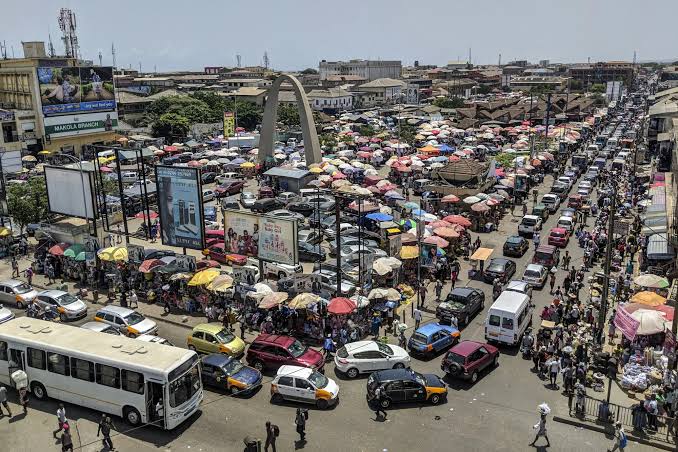
Ghana's worsening urban traffic congestion is severely constraining the national economy. This crisis is forcing the government to seek private capital to accelerate investment in mass transit, rail, and other high-capacity transport systems. Rapid urbanization continues to stretch existing infrastructure beyond its limits.
The Ministry of Transport has received key recommendations from the Graphic Business–Stanbic Bank Breakfast Meeting. These discussions involved policymakers, financiers, academics, and transport-sector stakeholders. Their focus was on modernizing Ghana’s urban mobility system. Key areas included congestion, sustainable financing, alternative transport modes, stronger coordination, and deeper private-sector involvement.
This intervention comes as population growth and city expansion, particularly in Accra and Kumasi, increase commuting distances. Road networks have struggled to keep pace with this demand. The economic implications extend far beyond mere inconvenience. Congestion raises fuel and logistics costs for businesses. It also reduces productive working hours for employees. This situation complicates labour mobility and weakens the competitiveness of companies in major commercial centres. For many firms, traffic acts like a hidden tax, impacting their bottom line and potentially filtering into consumer prices.
Graphic Communications Group Limited presented the report to the Ministry of Transport. The company expressed optimism that these recommendations would move the debate from diagnosis to implementation. A representative stated, “Anybody who comes to Ghana must see that Ghana is the flagship of our continent. In other areas we are doing well. Transport, we can do better.” This statement underscores the urgency and potential for improvement in the transport sector. The report aims to help the Ministry respond effectively to these suggestions.
Ghana’s transport challenge highlights a significant mismatch between urban development and mobility investment. Private cars, taxis, and low-capacity commercial vehicles still carry most passenger traffic. Without sufficient high-capacity public transport alternatives, simply building more roads will not solve the problem. The policy question now focuses on transitioning from fragmented, road-dominated mobility. The goal is an integrated network capable of moving more people and goods efficiently.
Railways, mass-transit systems, and urban transport infrastructure require large upfront costs and long investment periods. Public finances are currently under pressure. Relying solely on the national budget would severely limit the speed and scale of necessary investments. Therefore, the Ministry of Transport emphasizes the importance of private-sector participation. A Ministry spokesperson highlighted the need for transport systems that support urban development. These include rail systems, sky trains, and efficient bus systems with proper routing. The Ministry’s purpose is to create policies that address these challenges, including urban traffic.
Opening the sector more aggressively to private investment could ease pressure on government finances. It could also accelerate project delivery. Public-private partnerships, infrastructure bonds, and pension and insurance capital are potential funding channels. Blended-finance structures could also provide additional funding for commercially viable projects. However, private capital will not flow in simply because the government desires it. Investors require predictable revenue streams and transparent procurement processes. They also need credible regulation and confidence that contracts will remain enforceable across political changes. Projects unable to demonstrate clear capital recovery are unlikely to attract long-term investors without guarantees or other risk-sharing mechanisms. Therefore, project bankability is as crucial as ambition.
The broader opportunity lies in integrating different transport modes. Roads, rail, and mass transit should complement each other. This integration would allow passengers and freight to move through a unified network. It would also reduce the current pressure concentrated on a limited number of roads and highways. This strategic shift is essential for Ghana's economic future and urban development.