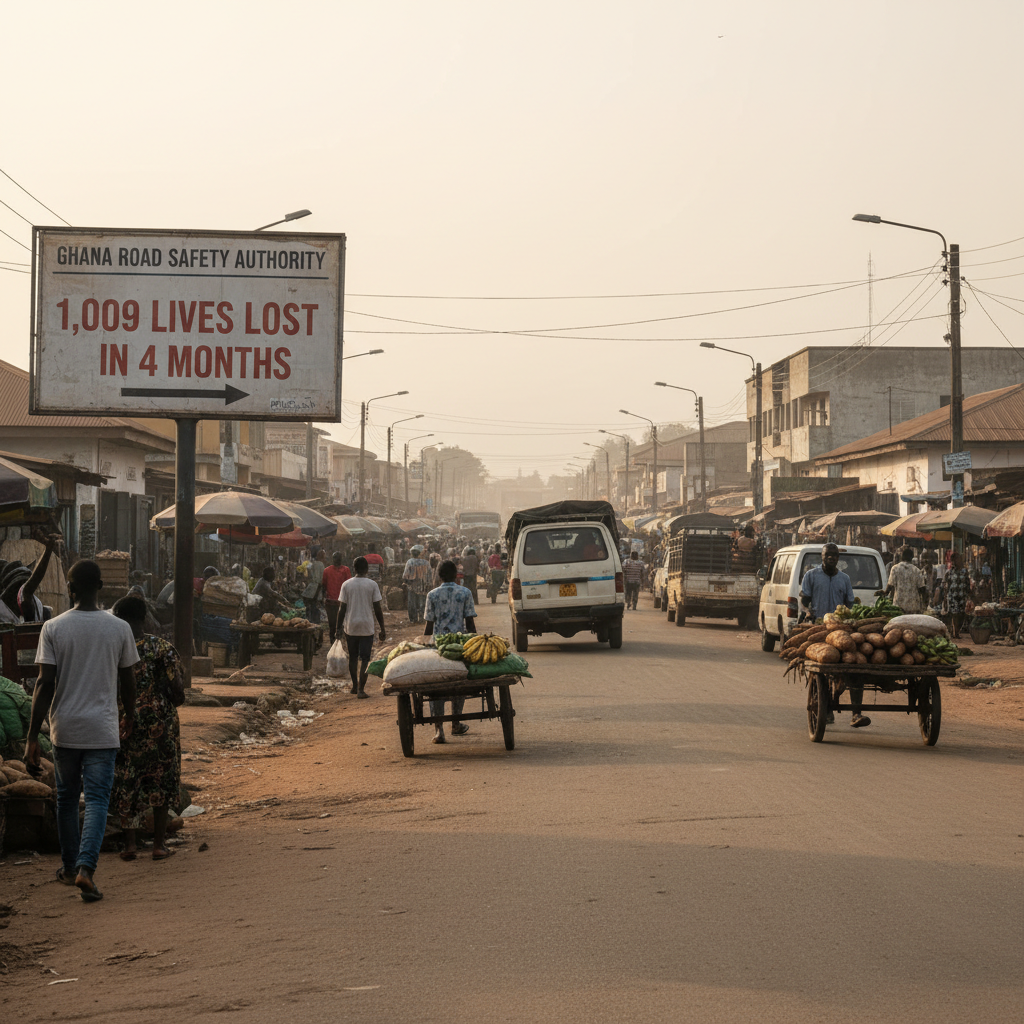
Ghana recorded 4,899 road traffic crashes between January and April 2026. These incidents tragically claimed 1,009 lives and left 5,982 people injured. This alarming trend follows a difficult 2025, where 14,743 crashes resulted in 2,949 deaths and 16,714 injuries across the nation.
The persistent rise in road fatalities and injuries is largely attributed to human behavior, inadequate road infrastructure, and challenges in enforcement. George Spencer Quaye, Chairman of the Governing Board of the Driver and Vehicle Licensing Authority (DVLA), emphasized that driver indiscipline is a primary cause. Many drivers disregard traffic rules, accelerate at amber lights, and ignore lane discipline, contributing significantly to the crisis.
This ongoing road safety crisis places a substantial burden on Ghana's economy and public health system. Each accident represents a loss of productive citizens and increased healthcare costs. The high number of fatalities and injuries affects families and communities, impacting national development. The DVLA, National Road Safety Authority, and other bodies are intensifying collaboration to address these systemic issues.
Mr. Quaye stated that the DVLA finds these statistics deeply disturbing. He highlighted the need for an honest national conversation about road safety. He also noted that corruption within enforcement institutions undermines efforts to improve road safety, allowing violations to go unpunished. This erodes public trust and the effectiveness of traffic regulations.
Looking ahead, the DVLA plans several transformative initiatives to curb the accident rate. Next year, RFID-enabled vehicle number plates will be introduced to improve vehicle identification and enforcement. A driver demerit point system will hold repeat offenders accountable. The Authority will also enhance roadworthiness certification through technology integration and implement a new driver's licence acquisition regime to eliminate fraud and ensure only qualified drivers are licensed. The National Insurance Commission is urged to consider a risk-based insurance model, linking premiums to driver behavior. This would reward safe drivers and penalize those who frequently cause accidents, creating a financial incentive for better driving habits. Other interventions include automated speed enforcement and expanded road safety education.
The economic implications of Ghana's road accident crisis are profound. High accident rates deter investment, increase insurance premiums, and strain public resources. Businesses face productivity losses due to employee injuries and fatalities. The proposed reforms aim to reduce these costs and foster a safer environment for all road users. Success will be measured by a significant reduction in these disturbing statistics, ensuring Ghana's roads become safer for everyone.
The DVLA's success will not only be measured by digital transformation or increased revenue. It will be measured by its ability to reverse these disturbing statistics. Making Ghana's roads safer and ensuring only qualified drivers operate vehicles are key objectives. Ultimately, the goal is to save lives and reduce the economic and social toll of road accidents. Road safety is a shared national responsibility, requiring a change in attitude from every road user.