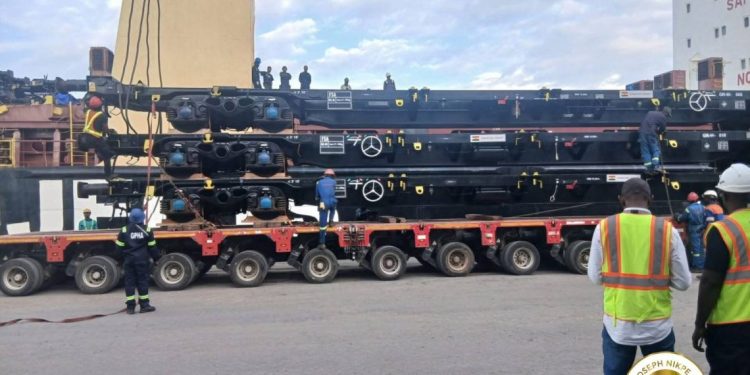
The Ghana Railway Development Authority (GRDA) has strongly refuted allegations that the two locomotives it recently acquired are old and only suitable for a museum. The locomotives, purchased for GHS 38.7 million, are refurbished British Rail Class 56 diesel-electric engines.
These claims originated from the opposition New Patriotic Party (NPP), whose Minority Caucus suggested the engines were built between 1976 and 1983. The NPP stated that Colas Rail previously operated these engines in the United Kingdom. This scrutiny highlights ongoing public interest and political oversight regarding government expenditures on infrastructure projects.
This procurement fits into Ghana's broader efforts to revive its railway network, which is critical for economic development and easing road congestion. Significant investments in rail infrastructure, like the Tema–Mpakadan line, aim to improve both freight and passenger transport. The debate over these locomotives underscores the challenges of balancing cost, modernity, and operational efficiency in large-scale national projects.
Dr. Frederick Appoh, Chief Executive Officer of the Ghana Railway Development Authority, addressed journalists on Monday, July 6, regarding the purchase. He emphasized that the procurement decision was based on engineering and operational requirements for the Tema–Mpakadan railway, not the locomotives' apparent age. Dr. Appoh cited ongoing use of Class 56 engines by companies like DC Rail and Colas Rail in the UK for various operations, including a GHS 524.7 million (58 million pounds) contract with Network Rail.
The GRDA believes these locomotives will significantly strengthen Ghana’s railway system and enhance transport services. They are expected to improve both passenger and freight movement along the Tema–Mpakadan corridor. This will help reduce the heavy pressure currently experienced on the country’s road network.
Going forward, the performance and reliability of these refurbished Class 56 locomotives on Ghanaian tracks will be closely watched. Their operational success will be crucial in justifying the GHS 38.7 million investment and in demonstrating the GRDA's technical assessment capabilities. Any operational challenges could reignite political debate and public questioning of government procurement processes.