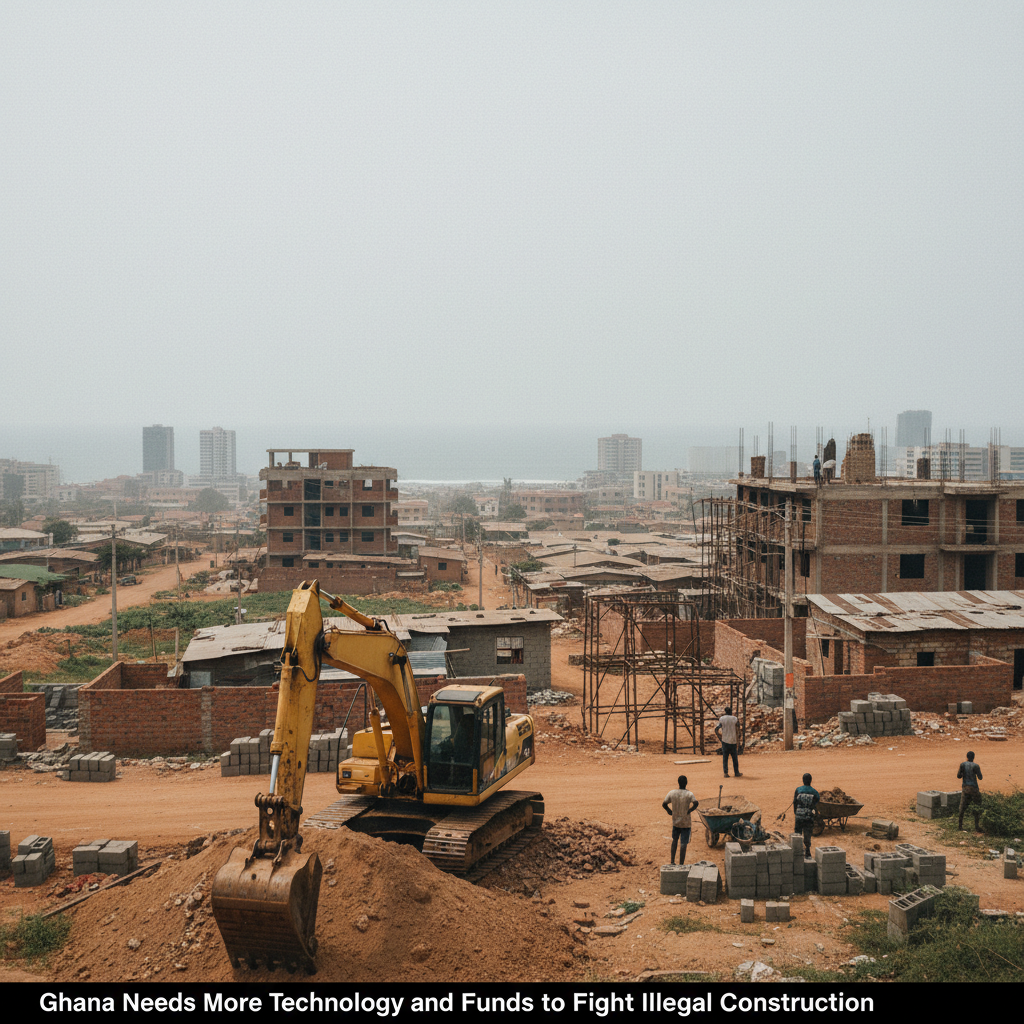
Ghana must deploy more resources and technology to combat illegal developments. These unregulated constructions significantly worsen the country’s flooding problems, according to the Local Government Service Association of Physical Planners.
Mr. Ansong, the National General Secretary of the association, stated that Ghana's flooding crisis demands urgent attention. He emphasized that current challenges related to urban planning cannot be underestimated. Many Metropolitan, Municipal, and District Assemblies (MMDAs) are failing to properly manage development permissions.
This situation ties into a broader economic challenge in Ghana. Rapid urbanization puts pressure on existing infrastructure and planning systems. Data shows that cities like Accra are experiencing quick and often uncontrolled growth. This growth frequently occurs in areas not designated for building.
Mr. Ansong highlighted that permits indicate MMDA approval, meaning they are responsible for compliance. He noted that many assemblies have focused more on generating revenue. This focus diverts attention from critical planning functions. “Our minds have been fixated on general revenue rather than special planning functions,” Mr. Ansong explained on JoyNews’ Super Morning Show on July 7.
The implications of this oversight are severe. Unchecked construction leads to increased flood risks and environmental degradation. Decision-makers must redirect funds and attention to bolster planning departments. They must equip MMDAs with the tools to enforce regulations effectively. This will protect lives and property from future flood events.
Accra's rapid urban expansion exemplifies the problem. Developers are increasingly building in unsuitable places. Some of these areas are planned, while others are not. Furthermore, some individuals sell land without legal authority, and others buy it without following proper procedures. These actions undermine effective urban planning.
The solution requires supporting assemblies to fulfill their planning mandate. This support includes adequate funding for special planning committees. It also demands improved resources for assemblies themselves. Investing in spatial intelligence and technology can reduce human errors in planning. These technological solutions are not necessarily expensive but can greatly enhance monitoring. They could also improve enforcement of building codes.
Mr. Ansong also called for better training for physical planning personnel. Capacity building is also needed for members of Spatial Planning Committees. He stressed that planning decisions involve multiple institutions, not just one person. A clear understanding of the planning process is crucial. It ensures accurate conclusions regarding illegal developments and flooding challenges. This comprehensive approach will help Ghana build more sustainably and reduce natural disaster risks.