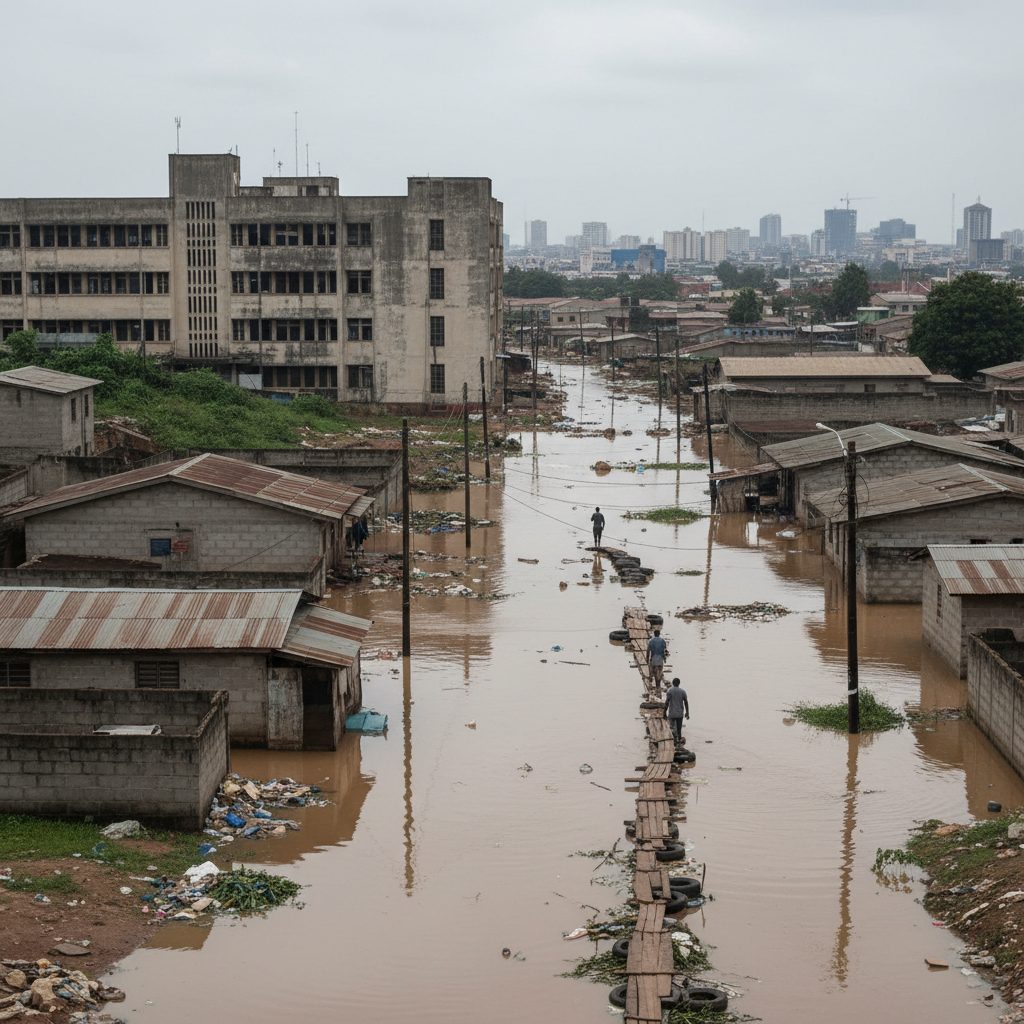
Dr. Juliet Ohemeng-Ntiamoah, an environmental engineer, has called for a fundamental redesign of Ghana's drainage infrastructure. She argues that the country's persistent flooding issues require modern stormwater management practices. This includes planning for a "100-year flood" standard.
Dr. Ohemeng-Ntiamoah stated that recurring floods cannot be solved by clean-up exercises alone. She clarified that attributing the problem primarily to indiscriminate waste disposal overlooks deeper structural issues. The expert highlighted inadequate infrastructure, poor urban planning, and weak environmental protection as major factors. These contribute more significantly to flooding than waste disposal.
This call for an overhaul fits into broader concerns about climate change impacts and urban development in Ghana. Rapid urbanisation has increased impermeable surfaces like concrete and tiles. This prevents rainwater from soaking into the ground naturally. Consequently, more water flows directly into drainage systems. This overwhelms their capacity during heavy rainfall. The economic cost of flooding in Ghana is substantial, with damages often running into GHS billions annually. Without a new approach, these costs will continue to rise.
Speaking on JoyNews' Newsfile, Dr. Ohemeng-Ntiamoah explicitly challenged the government's focus. She stated, "My main concern is that... it appears that we are elevating indiscipline or indiscriminate waste disposal as a major cause of the flooding, and I beg to differ with that." She added that while poor waste disposal plays a role, it should not overshadow the need for robust infrastructure. Ghana needs systems engineered to handle floods with a one per cent chance of occurring in any given year. Many global cities have already adopted this principle.
The implications of this proposal are far-reaching for urban development and public spending. Adopting a "100-year flood" standard would necessitate significant investment in new drainage infrastructure nationwide. It also implies a shift from reactive clean-up efforts to proactive, long-term engineering solutions. Policymakers and city planners will need to consider integrating permeable surfaces and green spaces into future developments. They must also enforce environmental regulations more strictly, especially regarding wetlands. These natural areas are crucial for storing excess stormwater. Effective flood management will demand continuous infrastructure maintenance and evidence-based policies. This approach is essential to reduce flood risks and protect Ghana's growing urban centres.
Furthermore, Dr. Ohemeng-Ntiamoah stated that sediment accumulation, or silt, is often the primary reason drains become blocked. This traps solid waste, rather than plastic waste being the initial cause of blockages. This perspective suggests that routine desilting and erosion control measures are as crucial as improved waste collection. These integrated strategies are vital for Ghana's long-term resilience against extreme weather events.