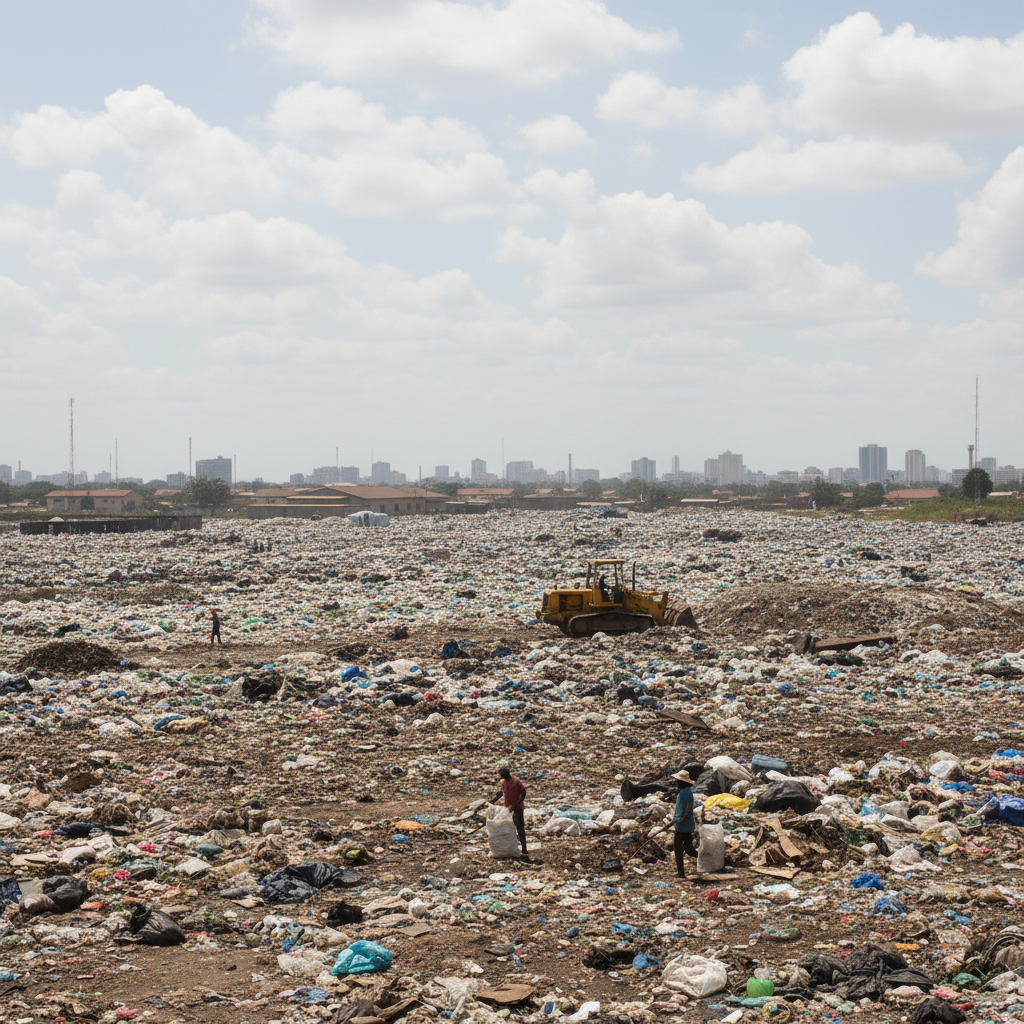
Dr. Ted Yemoh Annang, a senior research fellow at the University of Ghana, stated Ghana needs sustained investment in waste management infrastructure. He emphasized the critical need for landfill sites designed to last for generations. Current Ghanaian landfill facilities cannot effectively manage waste over long periods.
This situation presents a significant challenge to sanitation improvement efforts across the country. Ghana's existing landfill sites often fill up prematurely due to comprehensive waste disposal practices. Dr. Annang highlighted that more than three-quarters of Ghana's waste is degradable. However, this portion is not diverted, leading to inefficient use of existing landfill capacity.
This call for investment follows recent severe flooding impacting various parts of Ghana, especially Accra. Poor sanitation practices and inadequate waste infrastructure often worsen flood impacts. The recurring sanitation challenges reflect a broader national issue of insufficient long-term infrastructure planning. Ghana's economic development is often constrained by such fundamental deficiencies.
Dr. Annang explained, "These landfill sites are to be built to last for over a certain period of time. But because we take everything there, before that lifespan, it is full." He stressed that engineered landfill sites should manage waste for a lifetime. He made these remarks on JoyFM’s SMS programme on Monday, July 13, 2026. His comments underscore the urgency of addressing Ghana's waste disposal methods.
Developing properly engineered landfill sites with long-term capacity is crucial for Ghana. This approach supports a cleaner environment and contributes to public health and economic stability. National clean-up exercises are important for immediate relief, but they do not substitute for strategic infrastructure. Decision-makers must prioritize this investment to prevent future sanitation crises and reduce public health risks. The long-term economic cost of inadequate waste management far exceeds infrastructure investment.
Improved waste management also influences investor confidence and tourism. A cleaner environment signals responsible governance and a commitment to sustainable development. This shift could attract more foreign direct investment into Ghana. Furthermore, efficient waste management can create new industries, such as recycling plants. Authorities must integrate long-term landfill strategies into national development plans. This will safeguard Ghana's future environmental and economic health effectively.
The current lack of advanced facilities means Ghana misses opportunities for waste diversion and resource recovery. Modern landfills incorporate technologies that minimize environmental impact. They also extract valuable resources from waste. Ghana's reliance on rudimentary disposal methods wastes potential economic value. Addressing this infrastructural gap would yield significant and lasting economic benefits for the nation.