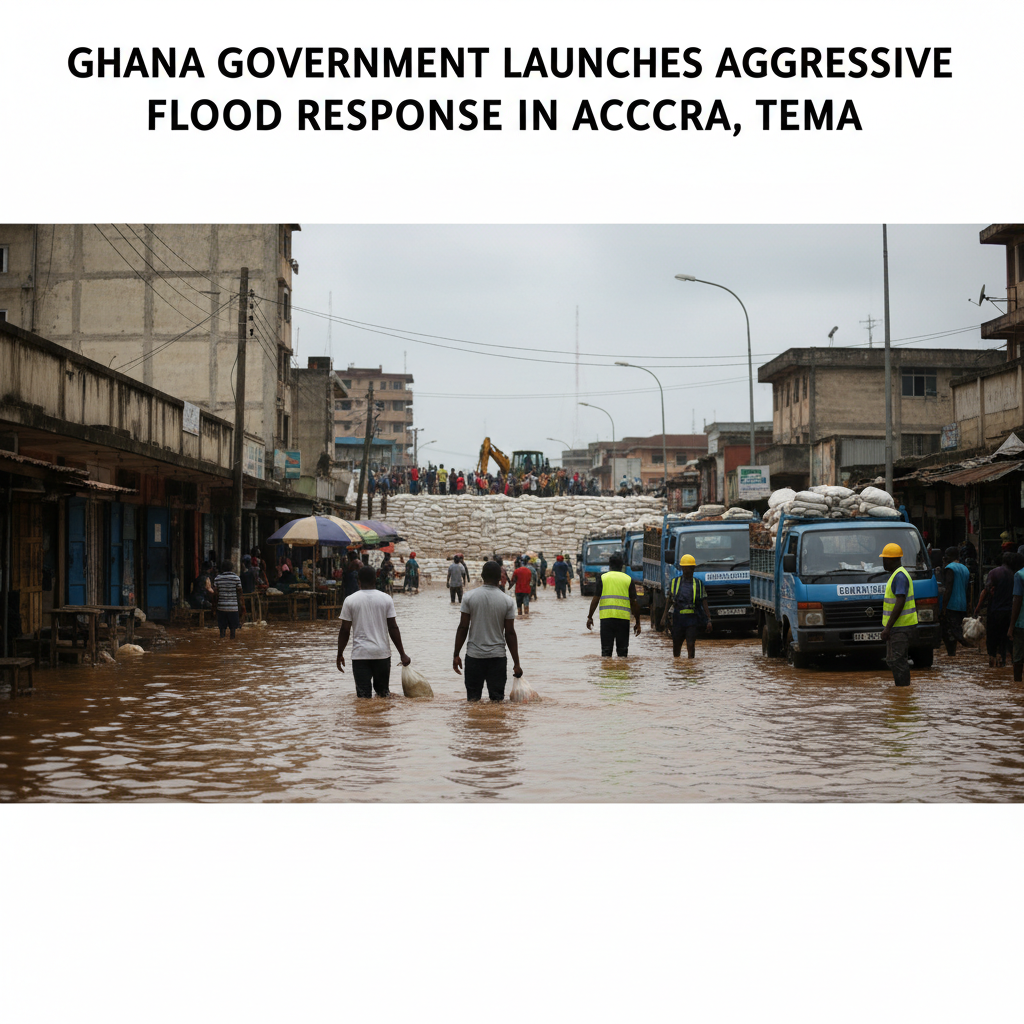
The government of Ghana has launched a forceful, multi-agency emergency response to combat widespread flooding across Accra, Tema, and surrounding areas. This action follows days of relentless heavy rains that submerged homes and businesses. The Minister for Works, Housing and Water Resources, Kenneth Gilbert Adjei, issued an immediate press release after an assessment tour.
The President, John Dramani Mahama, led the inspection of hard-hit zones with the Anti-Flood Task Force. They evaluated structural damage and confirmed immediate solutions. Sustained torrential rains have relentlessly battered the capital region, severely disrupting social and economic activities. Low-lying areas have been particularly affected.
This flooding contributes to a recurring challenge for Ghana’s urban centers during rainy seasons. Rapid, unplanned urbanization in Ghana often leads to increased impermeable surfaces. This situation, combined with poor drainage systems, exacerbates flood risks. Earlier data from the National Disaster Management Organisation (NADMO) consistently highlights flooding as a major annual disaster in Ghana.
Minister Adjei acknowledged the severe pain and financial devastation inflicted on citizens. He stated, “We fully appreciate the pain, disruption, and economic hardship that these events will impose on households, traders, transport operators, and businesses.” He assured affected citizens that the government remains fully committed to supporting relief, recovery, and reconstruction efforts.
The government's response will involve several key actions. The Greater Accra Regional Coordinating Council and various Metropolitan, Municipal and District Assemblies (MMDAs) have started extensive enforcement operations. These operations focus on demolishing and removing illegal structures choking drainage channels and wetlands. The Ministry vowed to intensify and sustain these enforcement efforts to protect the environment.
For the current emergency, a large coalition has deployed emergency response and evacuation teams. This coalition includes the Ghana Hydrological Authority, NADMO, security services, and local assemblies. Displaced residents are receiving relief items while technical teams assess damaged infrastructure.
Looking ahead, the government has detailed a comprehensive engineering and infrastructure strategy. This involves massive desilting operations to clear obstructed drainage channels. It also includes the urgent construction of new drainage networks aligned with natural water pathways. The goal is to improve stormwater runoff significantly. Long-term resilience plans also include expanding and rehabilitating national drainage infrastructure. Strict enforcement of development controls within floodplains, restoration of degraded lagoons and wetlands, and strengthening early warning systems are also part of this strategy.
The Ministry is strongly urging residents, especially those in low-lying areas, to adhere to flood safety protocols. They must move to higher ground when necessary and avoid walking or driving through floodwaters. This will prevent tragic accidents and exposure to waterborne diseases. The government also appealed for national discipline, asking citizens to stop dumping waste into drains and end unauthorized construction on waterways.