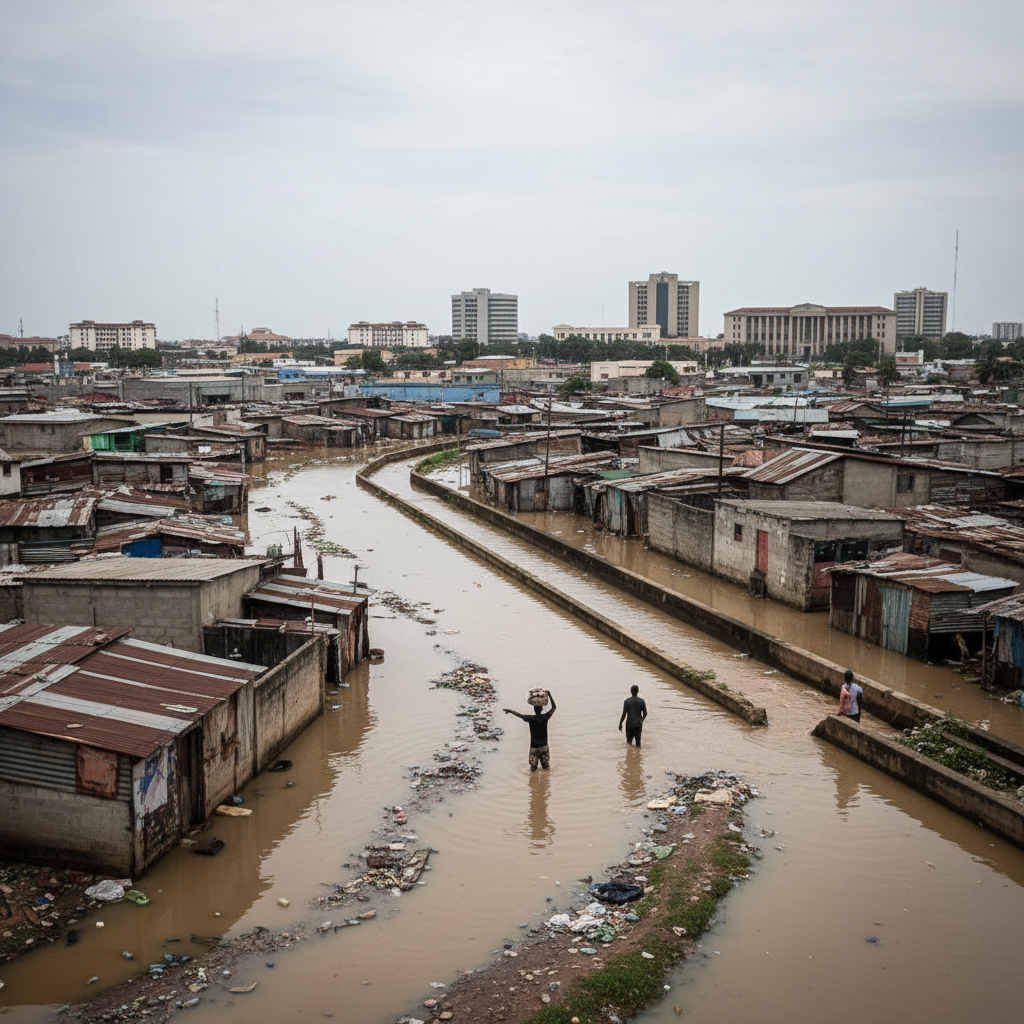
The Ghana Hydrological Authority (HYDRO) stated that Ghana's persistent flooding cannot be solved by engineering projects alone. The Authority stressed that changing public attitudes and behaviours is equally critical to reducing the country's flood risk. This announcement follows recent severe floods in Accra and other parts of Ghana, highlighting devastating impacts on communities and infrastructure.
The devastation from heavy rains shows the urgent need for a collective national response involving both government and citizens. While climate change contributes to more intense rainfall, human activities worsen flooding. Indiscriminate refuse disposal, illegal construction on waterways, and unplanned urban development are leading causes. These actions undermine government investments in drainage infrastructure.
Flooding in Ghana has significant economic costs, affecting businesses, displacing residents, and damaging property. The Greater Accra Resilient and Integrated Development Project (GARID) aims to improve drainage and flood management in the capital. However, recurring floods underscore the difficulty in managing rapid urbanisation and its environmental consequences. Past efforts, often focused solely on infrastructure, have yielded limited long-term success without addressing human factors.
HYDRO stated, "Flooding is not solely an engineering challenge—it is also a behavioural challenge." The Authority reported it will increase inspections of drainage systems and identify flood-prone communities. It will also accelerate maintenance works before further rainfall. This highlights the integrated approach needed to tackle the problem.
The Authority plans to expand flood risk mapping and early warning systems. It will also strengthen partnerships with local assemblies and the National Disaster Management Organisation (NADMO). This collaborative effort aims to improve coordinated flood management across the country. These actions will influence urban planning and resource allocation in affected areas.
HYDRO urges the public to avoid dumping waste into drains and to keep drainage channels clear. Citizens must also stop constructing on waterways and wetlands. Reporting blocked drains and illegal developments to authorities is essential. These measures require active public participation for sustainable flood management.
Changes in public behaviour are essential for building safer and more resilient communities. The Authority reaffirmed its commitment to safeguarding lives and property through sustainable flood management. This requires a "whole-of-society approach" involving various institutions and individuals. All Ghanaians must remain vigilant during the rainy season.
The economic impact of flooding includes property loss, disruption to supply chains, and public health concerns. Businesses face operational halts, and municipal budgets are strained by disaster response and recovery efforts. These costs hinder economic growth and divert funds from other essential public services. A reduction in flooding would free up resources for development projects.
Moving forward, the focus will be on the effective implementation of these behavioural change campaigns and integrated strategies. Investors and businesses will closely watch improvements in flood resilience, especially in urban centres like Accra. Sustainable urban development policies will be critical to mitigate future risks and protect economic assets. The success of this approach will depend heavily on citizen compliance and consistent enforcement by authorities.