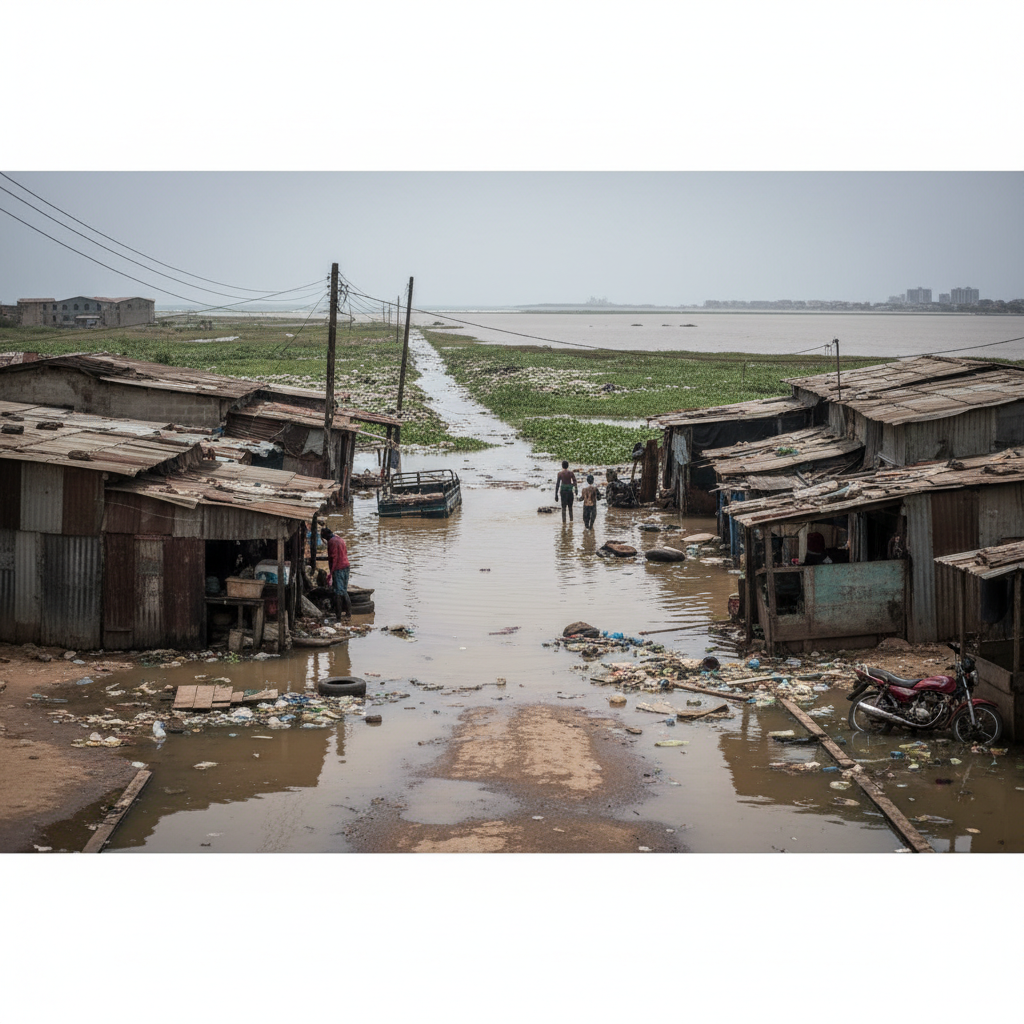
Ghana Flooding Highlights Infrastructure and Waste Management Failures

    Recent floods in Accra expose critical deficiencies in urban planning and drainage maintenance, costing lives and considerable economic damage.

    2 min read3 min listen
    Ghana Flooding Highlights Infrastructure and Waste Management Failures
    Ghana’s recent floods in Accra caused widespread devastation, submerging homes, destroying businesses, and tragically claiming lives. These severe flood events highlight persistent failures in urban planning and waste management across the country. Drains designed to channel stormwater often remain clogged with plastic waste, refuse, and silt. This blockage prevents proper water flow, leading to widespread flooding during heavy rainfall. This recurring problem fits into a broader pattern of climate vulnerability and infrastructure deficit in Ghana. The nation experiences increasingly intense rainfall, aligning with global climate change trends. Despite annual occurrences, proactive measures for flood preparedness and mitigation remain insufficient. This cycle of disaster and response places a significant burden on the national economy and affected communities. Citizens point to poor waste management as a primary driver of the flood crisis, according to MyJoyOnline News. They argue that the scale of destruction is avoidable, even with heavy rainfall. This sentiment underscores a public demand for more effective governance and infrastructure solutions. The implications are far-reaching for Ghana’s economic stability and public safety. Without consistent investment in drainage maintenance, strict enforcement of environmental laws, and urban planning that accounts for climate realities, future flood events will continue to cause extensive damage. Decision-makers must prioritize resilient urban development strategies and effective waste disposal systems to protect lives and property. Moreover, the rapid proliferation of concrete and paved surfaces in modern residential developments reduces the natural absorption of rainwater. This exacerbates pressure on already strained drainage systems. Learning from international practices, such as incorporating green spaces and permeable surfaces, could offer valuable insights for redesigning Ghanaian communities. The challenge extends beyond mere infrastructure development; it includes the consistent enforcement of existing environmental laws and building regulations. Indiscriminate waste dumping into waterways persists, undermining any investment in drainage. A unified approach involving government institutions, local authorities, and private developers is essential for effective flood prevention. Ghana must shift its focus from post-disaster response to proactive, preventative measures. This includes regular inspection and cleaning of drains, coupled with robust urban planning that integrates natural solutions for stormwater management. Investing in these areas will yield significant long-term benefits, reducing economic losses and safeguarding communities from future calamities. The recent floods serve as a stark reminder of the urgent need for comprehensive policy changes and sustained action. The nation’s capacity to withstand future extreme weather events hinges on these critical improvements.

    Comments

    More from StatsGH