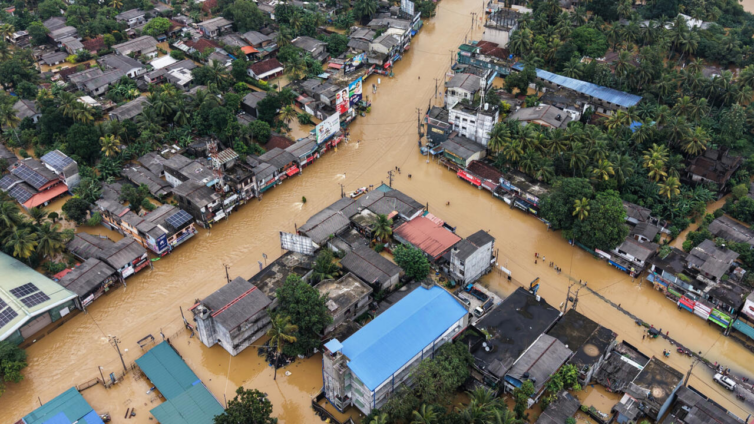
Urban flooding in Ghana affects more than 3 million people each year, generating substantial economic losses. This places flooding as the second-highest natural disaster after epidemics in the country. Cities like Accra, Kumasi, and Sekondi-Takoradi regularly experience these disruptive events.
Accra, the national capital, faces particularly severe and recurring floods. Rapid and unplanned urban expansion in the city has converted natural land into concrete surfaces. This change prevents rain from soaking into the ground. Old drainage systems cannot handle the increased runoff, leading to widespread water accumulation.
This persistent flooding in Accra is part of a broader national challenge. Ghana has seen increasing flood incidents, with severe events in 2007, 2010, 2011, 2015, and 2020. These events consistently devastate urban areas. The economic impact includes damaged property, disrupted business activities, and increased public health risks. For example, the June 3, 2015, flood and fire incident in Accra killed about 200 people.
The Ghana Institution of Engineering recently stated that current drainage systems are insufficient. They explained that these systems were designed for historical rainfall patterns. They cannot cope with rapid urbanization, increased paved surfaces, and changing rainfall. This shortfall contributes significantly to the problem.
Looking ahead, more effective urban planning and infrastructure upgrades are crucial. Decision-makers must address unplanned construction in flood-prone areas. Improved waste management is also necessary to prevent blockages in drainage systems. Continued climate change will likely intensify rainfall events, demanding more resilient solutions. Businesses and residents must prepare for ongoing disruptions unless significant changes are implemented.
Several factors contribute to Accra’s vulnerability. One is rapid and unplanned urbanization. This has led to buildings being constructed in wetlands and natural water paths. Research by Amoako and Boamah (2015) confirms uncontrolled growth as a key driver of flood risk in Accra. Wetlands, which naturally absorb rainwater, have been replaced by buildings. This reduces the city’s capacity to handle heavy rainfall.
Poor drainage infrastructure also plays a major role. Many drains are too small, poorly maintained, or blocked by waste. The Ghana Institution of Engineering has highlighted this issue. They assert that existing systems cannot manage modern stormwater volumes effectively. This leads to water overflowing onto streets and into homes during heavy rains.
Indiscriminate solid waste disposal is another significant problem. Plastic bags, sand, and other debris often clog drains. This prevents water from flowing freely. Blocked drains cause rapid water build-up, leading to flash floods even in areas with some drainage. Public discussions often point to poor waste management as a main reason for Accra’s recurring floods.
Encroachment on waterways and wetlands further complicates the situation. Construction on riverbanks and floodplains disrupts natural water flow. Studies show that weak enforcement of building rules allows this to happen. Ecologically sensitive areas, which should act as flood buffers, are instead developed. This removes natural protection from floodwaters.
Finally, climate change intensifies these problems. It causes more frequent and heavier rainfall events. These extreme conditions overwhelm Accra's already stressed infrastructure. Researchers warn that recurrent flooding will likely worsen as climate variability increases. This will place further pressure on transportation, public services, and vulnerable communities.