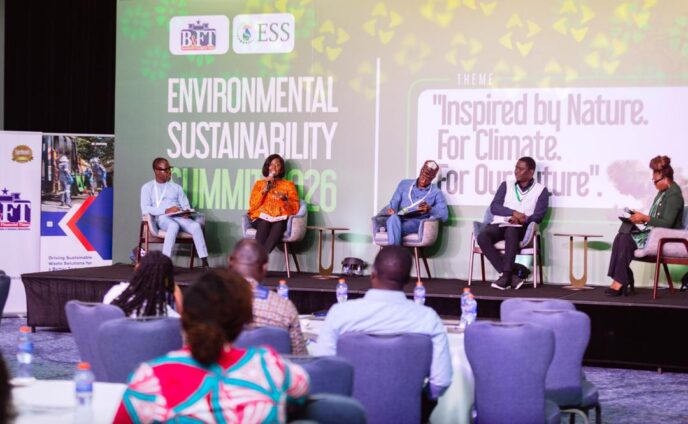
Ghanaian experts and policymakers have called for a fundamental shift in urban development, urging better planning, efficient waste recovery, and sustainable financing to build green cities. This consensus emerged from a high-level dialogue on green urban development, emphasizing the need for practical, bankable projects to attract long-term investment.
The experts stressed that Ghana must move beyond existing climate action and urban development policies. Implementation remains slow due to inadequate planning, fragmented institutional coordination, and limited financing. Transforming cities requires deliberate changes in energy generation, waste management, infrastructure financing, transportation, and natural resource protection.
This initiative aligns with Ghana's broader economic and environmental goals, particularly the Energy Transition Framework. The framework recognizes waste management, transport, and energy as critical components of national climate action. However, current investment priorities need re-evaluation to maximize environmental and economic returns.
Dr. Gloria Boamah Kusi, Senior Sustainability Officer at the Jospong Green Transitions Office, highlighted efficient waste segregation as crucial for a successful circular economy. She stated, "If we want to harness the value of waste, we must embrace segregation at the point of generation." Separating waste at source improves material recovery, making recycling and compost production more efficient.
Doris Edem Agbevivi, Project Manager for Energy Transition and Green Infrastructure at the French Development Agency (AFD) for Ghana and Liberia, emphasized integrated planning. She noted that waste management, transport, and energy are interconnected sectors requiring joint planning for sustainable cities. She questioned the sustainability of Ghana's electric mobility transition without green supporting infrastructure, asking, "If we are using electric vehicles, what powers the charging systems? Where will the batteries be recycled?"
Ing. Godfred Fiifi Boadi Esq., representing the Ministry of Local Government, Chieftaincy and Religious Affairs, argued that smaller investments in waste management can deliver greater environmental and economic returns. He explained that evaluating projects based on total life-cycle costs reveals waste management as a smart investment. He also advocated for effective implementation of Extended Producer Responsibility (EPR), making manufacturers responsible for product life cycles.
Financing remains a significant barrier to sustainable urban development. Development Finance Institutions (DFIs) provide catalytic capital, but only for credible, well-developed investment plans. Ms. Agbevivi stated, "We do not need plans that simply end as feasibility studies. We need plans that generate implementable projects." Development partners seek measurable milestones and clear implementation strategies before committing financial support.
The current waste management approach is largely linear, with much waste ending up in disposal sites. This contrasts with a circular economy model where waste is viewed as a valuable resource. Efficient collection systems should feed Material Recovery Facilities (MRFs) to recover recyclables and convert organic waste into compost for agriculture.
Ghana's journey towards green cities requires a concerted effort from all stakeholders. This includes robust policy implementation, innovative financing mechanisms, and a shift in public perception of waste. The focus must be on creating resilient urban environments that reduce carbon emissions and improve the quality of life for citizens.