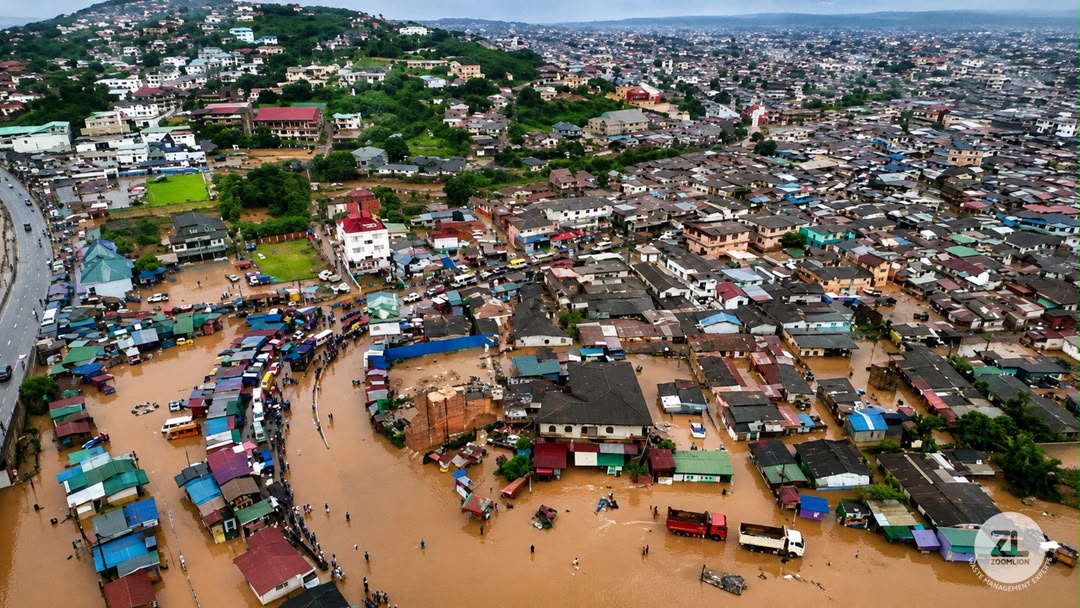
The Ghana Institution of Engineering (GhIE) has launched a 19-point plan to address Ghana's long-standing flood problems. This comprehensive strategy aims to move beyond temporary relief efforts. It seeks to establish lasting solutions to protect lives and property across the country.
The GhIE's proposals emerged after recent floods hit Accra and other areas. Their statement, issued on June 30, emphasized that Ghana possesses the necessary technical expertise. However, it currently lacks the political will to put proven solutions into practice. The institution noted that June's unusually high rainfall overwhelmed the capital's existing drainage systems.
This initiative from the GhIE fits into a broader national conversation about urban resilience and infrastructure development. Ghana has historically suffered significant economic losses due to flooding, impacting businesses, homes, and public services. Past government efforts have often focused on short-term fixes, which engineers argue are insufficient as urban areas expand rapidly. Data consistently shows that poorly maintained infrastructure and uncontrolled building contribute heavily to the yearly flood crisis.
The GhIE explicitly stated that Ghana's problem is not a lack of knowledge, but a lack of action. "Ghana does not have a knowledge problem. We have an action problem," the statement declared. It added that today’s floods result from how the nation plans, enforces laws, manages waste, designs roads, and channels water. The GhIE asserted that all these factors are within Ghana's control. They reaffirmed their readiness to collaborate with government agencies to implement these proposals before the next rainy season.
Among its crucial recommendations, the GhIE urged the government to prioritize the rehabilitation of the Odaw River and Korle Lagoon drainage systems. They classified these as national projects of critical importance. The institution also advocated for an independent audit of all previous restoration works. This audit would identify both engineering and implementation challenges.
Regarding waste management, the GhIE highlighted the need for reliable waste collection services. They stressed strict enforcement of sanitation by-laws throughout every community. "Get established collection back on a dependable schedule in every community," the statement said. This would prevent households from dumping waste into gutters, which then clogs drains.
Engineers also recommended fully integrating the Department of Urban Roads and the Ghana Highway Authority into national flood management planning. This integration would ensure all road projects include properly designed drainage systems. Crucially, these systems must come with dedicated funding for maintenance. The GhIE warned, "A road built without a working drain is just a future flood channel."
For urban development control, the GhIE called for stricter enforcement of planning regulations. This includes an immediate halt to construction on waterways and wetlands. "Stop building in the wrong places, and mean it," the engineers urged. Such a move would confront powerful interests but is deemed essential for flood prevention. The institution noted that no amount of engineering can protect a city that continues to build over its natural water routes.
The GhIE additionally promoted nature-based solutions to aid flood control in growing urban areas. These solutions include detention ponds, rain gardens, and bioswales. These natural systems can absorb and manage excess water more effectively. The implementation of these measures will determine Ghana's future capacity to mitigate flood risks and protect its economic assets.