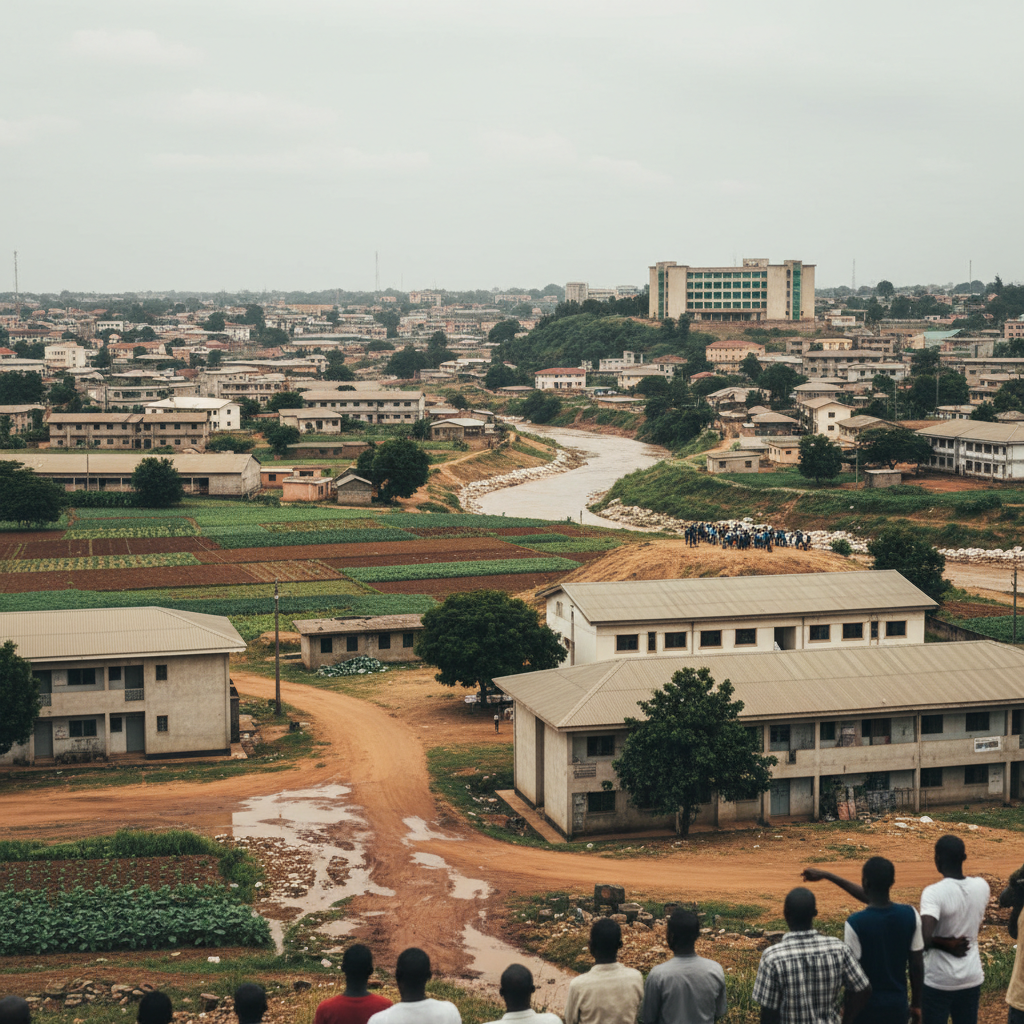
The Ghana Institution of Engineering (GHIE) urges Ghana to implement nature-based solutions for flood management. Ing. Michael Obeng Konadu, Chairman of GHIE's Civil Technical Division, highlights that unplanned development has removed natural defenses against heavy rainfall.
Ghana's natural environment once absorbed and slowed rainwater effectively. However, extensive paving and construction on water-holding areas have diminished this capability. Rainwater now rushes into undersized drainage systems, causing widespread flooding. This change in land use has significantly altered the landscape's ability to cope with precipitation.
This call for a return to nature-based flood control comes as Ghana grapples with frequent and devastating floods. These events disrupt economic activity, damage infrastructure, and displace communities. Ghana’s rapid urbanization often overlooks environmental considerations, leading to strained public services and increased disaster vulnerability. The recent floods in Accra, for example, have underscored the urgent need for sustainable solutions.
Ing. Konadu stated, “We’ve taken away nature’s ability to help us in that regard.” He explained that areas naturally designed to hold water have been built over. Surfaces that allowed water to soak into the ground are now impenetrable. This forces all rainwater into inadequate drainage channels, leading to overflow.
Ghana must stop focusing solely on moving water away quickly. Decision-makers should instead identify natural water flow paths. They must preserve or restore spaces where water can be detained, slowed, and absorbed. This approach will reduce pressure on drainage infrastructure. It also offers a more sustainable, long-term solution to the recurring flood menace.
The current uncoordinated approach to infrastructure development exacerbates the problem. Different agencies build roads and drains without proper integration into a broader stormwater plan. This results in disconnected and ineffective drainage systems. A unified authority is needed to oversee drainage planning across entire catchments. This coordination would ensure that all development projects consider their impact on the wider hydrological system.
Protecting wetlands and natural retention areas is crucial. These spaces act as sponges, holding excess water and releasing it slowly. Their destruction for development removes vital components of the natural flood defense system. Ghana's future flood resilience depends on valuing and safeguarding these natural assets.
In the short term, authorities must identify and clear existing obstructions in waterways. Structures blocking the natural flow of water contribute significantly to immediate flooding issues. Tackling these major choke points will offer immediate relief. Longer-term measures, like restoring natural landscapes, will then prevent future flood events.
Adopting nature-based engineering methods will mimic natural processes using infrastructure and vegetation. This will slow the movement of water through the system. Such methods provide a more resilient and environmentally friendly solution. They also reduce reliance on expensive, hard engineering solutions that often fail to address the root cause of flooding.
Ghana's persistent flooding issues cost the economy millions of GHS annually. Investing in natural infrastructure offers a cost-effective and sustainable alternative. This shift in strategy could protect lives and livelihoods. It could also secure Ghana's economic future against the increasing impacts of climate change.