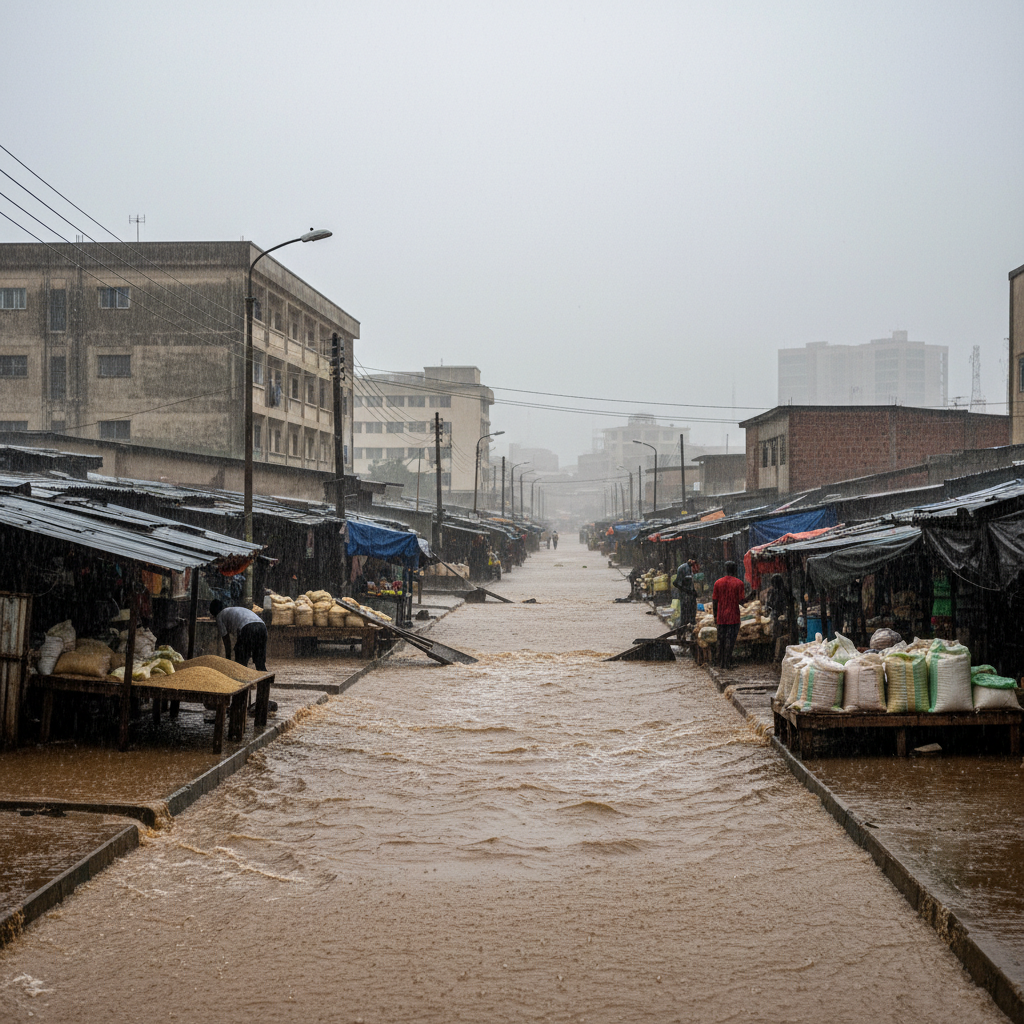
Ghana’s drainage infrastructure is struggling to manage heavier rainfall, leaving communities vulnerable to devastating floods. Climate experts attribute this to rising temperatures, intensifying rainfall patterns across the nation.
Warmer atmospheric conditions hold more moisture, causing more frequent and heavier downpours. Existing drainage systems, designed for historical rainfall patterns, cannot handle the increased volume and intensity of today’s storms. This situation amplifies flood risks, exposing weaknesses in the country’s aging infrastructure.
This challenge fits into Ghana's broader economic story, increasing infrastructure costs and public health burdens. Flooding disrupts businesses, damages homes, and submerges roads, impacting the livelihoods of thousands. The World Bank recently downgraded Ghana's energy recovery programme, citing fiscal controls and election-related delays, indicating broader infrastructure and fiscal strains.
Nana Adwoa Eghan Abroka, a Climate Change and Health Advocate, stated, “The temperatures are rising. The atmosphere actually holds more moisture, so it causes a lot of more frequent rainfall events. What happens when a lot of rainfall events happen? It actually overwhelms drainage systems.” This highlights the direct link between climate change and worsening flood severity, particularly in Accra.
The discussion, hosted by JoyNews, Behind the Science, and CDKN Ghana, emphasized that Ghana’s flood crisis is no longer solely due to choked gutters. Experts advocate for climate adaptation as a central pillar of infrastructure planning and urban development. Failure to adapt will continue to impose significant economic, environmental, and public health costs on Ghana.
Decision-makers must focus on updating infrastructure to reflect evolving climate realities. Markets will likely respond to increased risks of business disruption and property damage from more frequent floods. Investing in climate-resilient drainage systems becomes crucial for stable economic growth and public safety.
Ghana’s government must consider integrated solutions that combine improved waste management with climate-informed engineering. This includes protecting natural drainage systems and preventing unplanned settlements in flood-prone areas. Without such measures, flood events will continue to strain national resources and hinder development efforts.
The economic impact of unmitigated flooding extends beyond immediate damage. It affects food security, healthcare systems, and long-term investment prospects. For example, floods are worsening chronic illnesses by disrupting healthcare access, as noted by health experts. This creates a silent health emergency alongside the visible infrastructure damage.
The ongoing challenge requires a multi-sectoral approach involving urban planners, engineers, public health officials, and climate scientists. Their combined efforts are necessary to build resilience against the escalating impacts of climate change. Failure to act proactively will result in continued and growing economic losses.