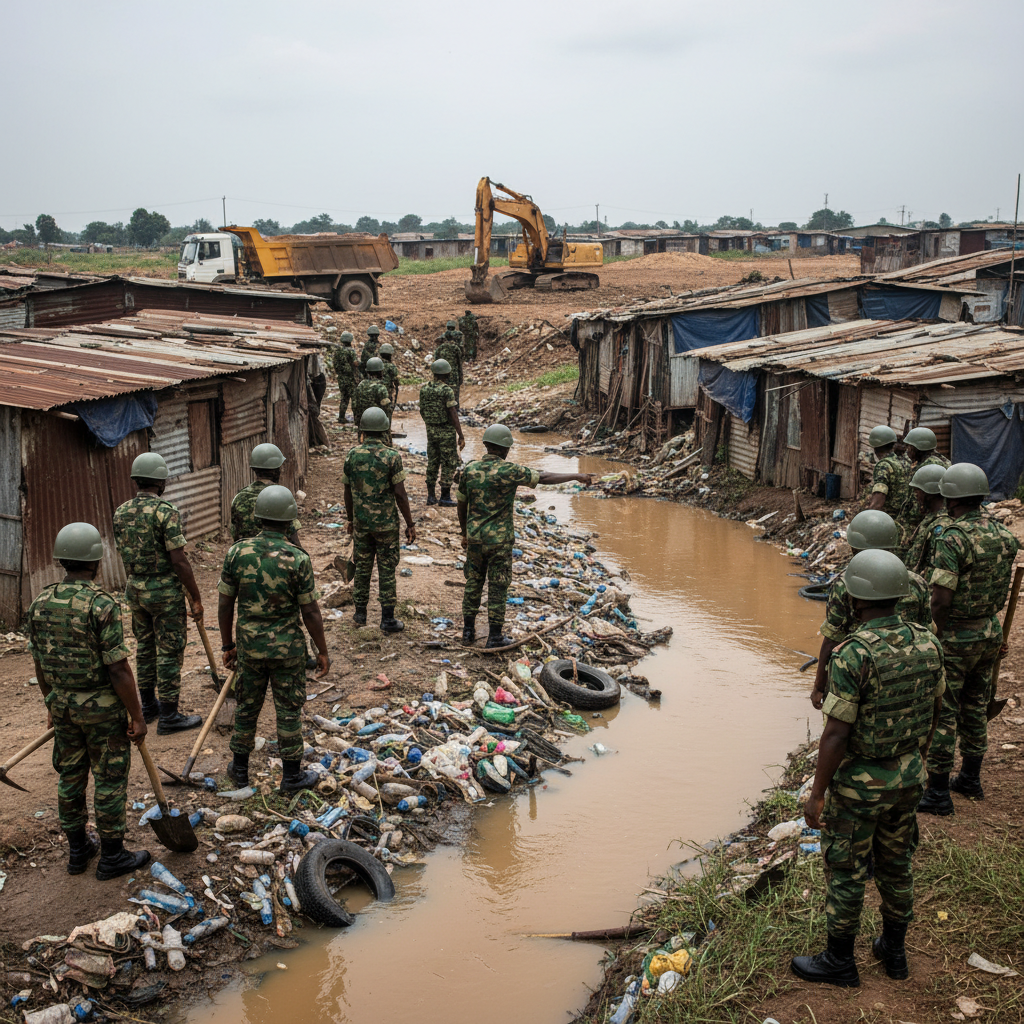
The Ghana Armed Forces (GAF) confirmed the removal of structures obstructing waterways as part of ongoing flood recovery operations. This action follows widespread flooding across parts of Greater Accra and other regions on June 28 and 29, 2026. The government considers this a sustained process requiring detailed planning and continued intervention.
Brigadier General Forster Okae-Yeboah announced this on Friday, July 3, during a media briefing about the government's response to the recent floods. He stated clearing debris and waterways is a priority. Structures hindering this effort will be pulled down, impacting property owners in affected areas. This reflects a significant government commitment to address urban development issues contributing to flood vulnerability.
This initiative fits into Ghana’s broader struggle with rapid urbanisation and inadequate drainage infrastructure, which frequently leads to costly flood events. The recurring floods pose a substantial drain on public finances for relief and reconstruction. They also disrupt economic activities and livelihoods for thousands of citizens. Prior reports from organisations like the National Disaster Management Organisation (NADMO) have consistently highlighted illegal construction on wetlands as a major cause of flooding. This GAF-led operation signifies a more forceful approach to enforcing building regulations and land use planning.
“This is not an event. It’s a process. It’s going to take some time,” Brigadier General Okae-Yeboah said. He emphasised the recovery exercise is phased to ensure proper restoration of drainage systems and communities. These efforts are coordinated through specialised sub-committees. These committees fall under a national post-flood mitigation task force. They include the Post-Flood Mitigation Committee and the Sanitation and Health Committee.
The removal of these structures will likely face resistance from affected property owners. However, the government's resolve suggests a prioritisation of public safety and long-term flood resilience over individual property rights in these specific instances. Decision-makers and affected communities will watch for details on specific demolition schedules and any compensation plans. The success of this operation could redefine urban development policies and prevent future economic losses from similar disasters.
This long-term, phased approach aims to reduce Ghana’s vulnerability to future floods. The scale of damage and the complexity of fixing drainage systems demand this sustained effort. Effective collaboration among state institutions is crucial for the success of these comprehensive measures. The financial impact of not addressing these issues decisively is significant, costing the nation substantial amounts in emergency response and reconstruction.