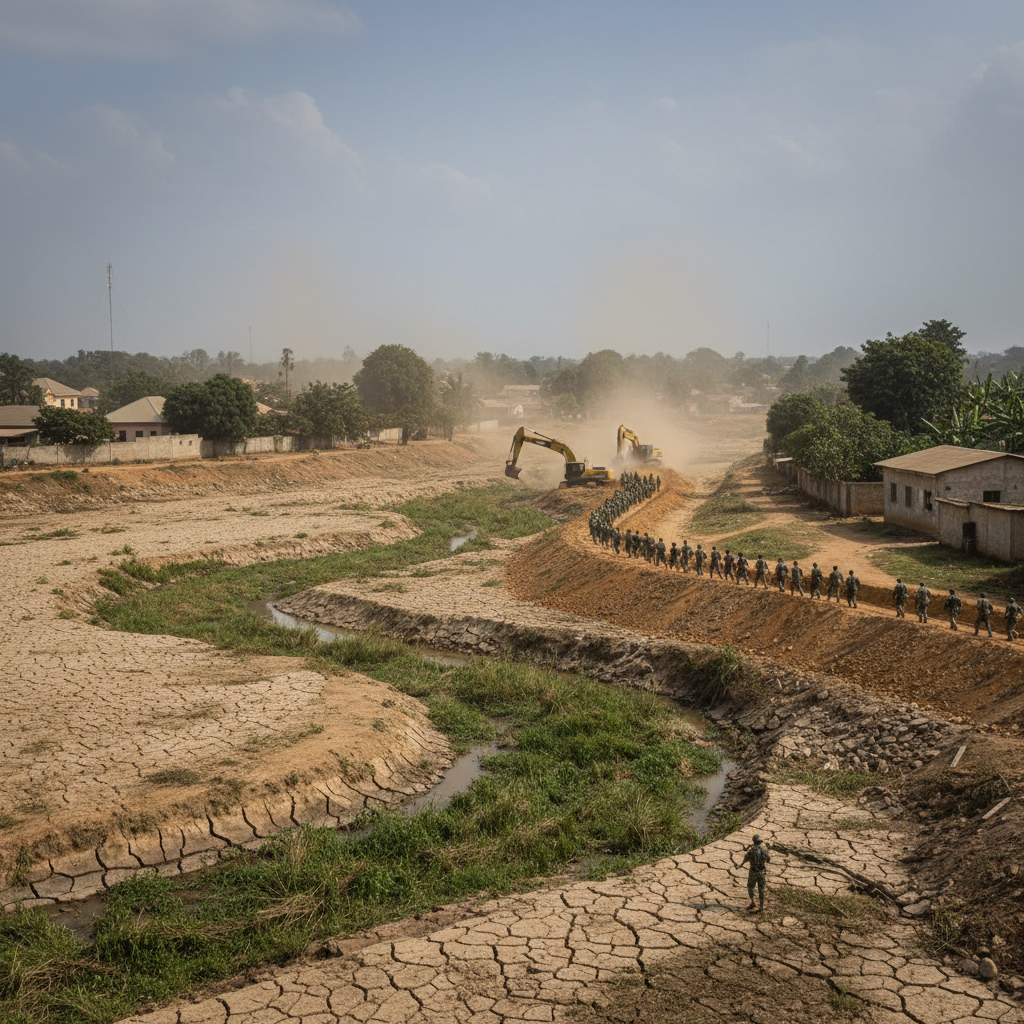
The Ghana Armed Forces have initiated extensive reclamation work at the Lafa water retention basin in Mallam. This critical operation aims to significantly reduce the risk of flooding in Mallam, Weija, Dansoman, and other nearby communities.
The 48 Engineer Regiment of the Ghana Armed Forces leads this effort. Their work focuses on restoring the basin's capacity, which has diminished due to years of accumulated solid waste, siltation, and illegal encroachment. The project involves several key activities: dredging the basin, removing accumulated waste for disposal at a designated landfill site, demolishing illegal structures within the water reserve, and constructing protective embankments to strengthen flood control measures.
This initiative forms part of a broader national strategy to restore waterways and drainage channels across Accra. The Post-Flood Mitigation Task Force coordinates the operation. This task force was established following the devastating floods experienced on June 29. Similar flood mitigation works are also underway in other critical areas, including Oyarifa, East Legon, and around the Kpeshie Lagoon. These efforts highlight the government's commitment to addressing perennial flooding challenges.
The government has provided all necessary resources and equipment for this extensive exercise. Authorities are urging residents to cooperate fully with the task force. They also emphasize the importance of refraining from activities that obstruct waterways or undermine flood risk management efforts. Public participation is crucial for the long-term success of these interventions.
The reclamation of the Lafa basin is expected to substantially improve its ability to retain excess stormwater. This enhanced capacity will directly reduce the impact of flooding on downstream communities. Effective flood control is vital for protecting property, infrastructure, and livelihoods in these densely populated areas. The government's proactive measures aim to prevent future economic disruptions caused by severe weather events.
This project represents a significant investment in urban resilience and public safety. Flooding has historically caused substantial economic damage and displacement in Accra. By restoring natural water retention systems and improving drainage, the government seeks to safeguard communities and promote sustainable urban development. The success of these projects will depend on continued public cooperation and sustained maintenance efforts.
The broader context of Ghana's economic development is deeply intertwined with effective infrastructure management. Recurring floods disrupt economic activity, damage businesses, and strain public finances through emergency response and reconstruction costs. Investment in flood mitigation, like the Lafa basin reclamation, is therefore an economic imperative. It protects existing assets and creates a more stable environment for future growth and investment. The government's focus on these infrastructure projects demonstrates a commitment to long-term economic stability.
The ongoing reclamation works are a direct response to the urgent need for improved flood management in Ghana's capital. This strategic intervention aims to protect thousands of residents and their properties from the devastating effects of heavy rainfall. The government's allocation of resources underscores the high priority placed on environmental protection and urban resilience. This project is a crucial step towards building a more flood-resilient Accra.