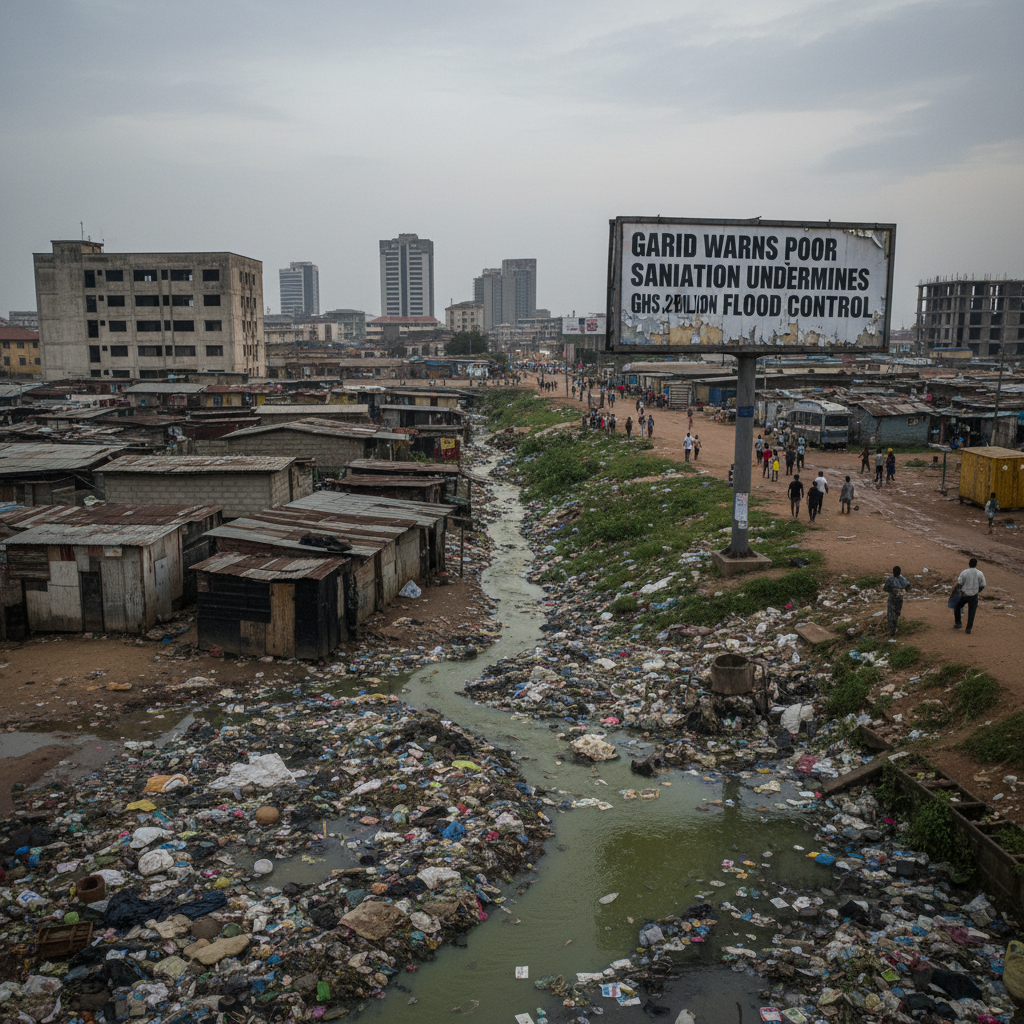
The Greater Accra Resilient and Integrated Development (GARID) Project has issued a warning; poor sanitation habits are undermining Accra's flood control efforts. New drainage systems are filling with refuse shortly after rainfall, defeating government efforts to prevent floods. This persistent behavior threatens significant investments aimed at protecting the capital.
GARID Communications Specialist Philip Dornyo highlighted this growing behavioral challenge. He noted that engineers consistently find large volumes of waste in drains. This occurs immediately after rainstorms, even in areas with recently completed drainage works. The practice obstructs water flow, directly contributing to recurring floods across numerous Accra communities.
This issue fits into Ghana’s broader economic narrative of substantial public investment facing behavioral hurdles. A 2017 study by the Institute of Statistical, Social and Economic Research (ISSER) at the University of Ghana estimated that Ghana loses over GHS 6.2 billion annually due to poor sanitation. The GARID Project itself, established after the devastating June 3 flood disaster, aims to strengthen flood resilience in the Odaw River Basin. It benefits from World Bank support, signifying the international community's concern and investment in this critical area.
Mr. Dornyo emphasized the futility of engineering solutions alone. He stated, “no matter what government does… people pack their solid waste, wait for the rain, and as soon as the rain sets in, they dump that solid waste into the drains.” He explained that such actions make it difficult for water to flow freely, causing the recurrent flooding seen in the city. Inspections in areas like Kaneshie have confirmed significant refuse accumulation in new drains after rainfall events.
The government's continued investment in drainage infrastructure, such as the GHS 4.2 billion estimated cost for ongoing flood control projects, faces major risks. Unless public behavior changes, these investments may prove ineffective. Decision-makers and communities must now focus on combining infrastructural development with robust public education and enforcement of waste management regulations. This approach will determine the long-term success of Accra’s flood prevention strategies. Financial implications for the city, including property damage and economic disruption from floods, will remain severe without this dual approach.