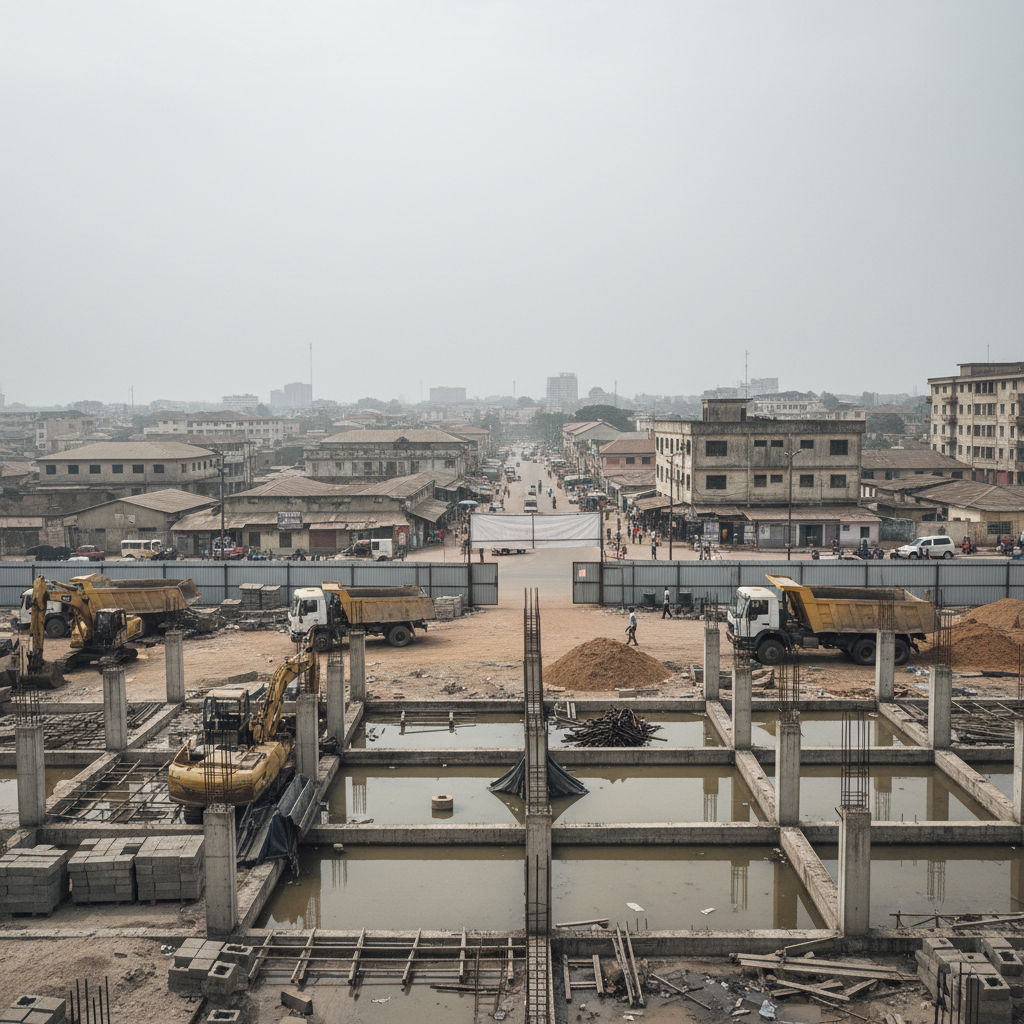
The Greater Accra Resilient and Integrated Development (GARID) Project has seen significant slowdowns in engineering works due to delays in releasing payments to contractors. These payment issues have at times caused contractors to halt their work on the World Bank-funded program.
Official statements confirm that cash-flow challenges, including those linked to exchange rates, have hindered the timely processing of contractor invoices. This situation directly affects the pace of construction, leading to project delays. The GARID Project focuses on crucial flood mitigation efforts in Accra.
These construction delays arise in a broader context of recurrent flooding across Accra. The capital recently experienced severe downpours on June 28–29, 2026, which submerged roads and communities. These floods also tragically resulted in at least three fatalities in Alajo due to electrocution.
Ohene Sarfoh, the GARID Project Coordinator, elaborated on the payment issues during an appearance on Joy FM. He stated, “Partly because of this… exchange and conditionality and so on, that affected financing at some point reduced drastically [the speed at which] their invoices [were] being processed.” Dr. Sarfoh acknowledged that these delays have caused contractors to suspend work, despite contract terms allowing up to 60 days for payment of certified invoices. He noted that contractors often expect much quicker disbursements.
The current situation highlights ongoing financing constraints impacting critical flood-control infrastructure in Ghana. A recent World Bank review also identified that contractor payments were not keeping pace with physical progress. This disparity has slowed the disbursement of overall project funds from the World Bank.
The GARID Project is Ghana’s primary urban resilience initiative. It aims to reduce flood risks across the Odaw Basin through comprehensive upgrades to drainage systems, dredging, improved solid waste management, and community infrastructure development. The total project funding is GHS 3.3 billion ($285 million), with approximately GHS 1.7 billion ($150 million) already committed.
As Accra recovers from the latest flooding incidents, scrutiny will intensify on potential financing issues. Decision-makers and the public will closely monitor whether these payment delays impede the completion of vital drainage works. The timely resolution of these financial bottlenecks is crucial for the project to achieve its objectives of protecting lives and property.