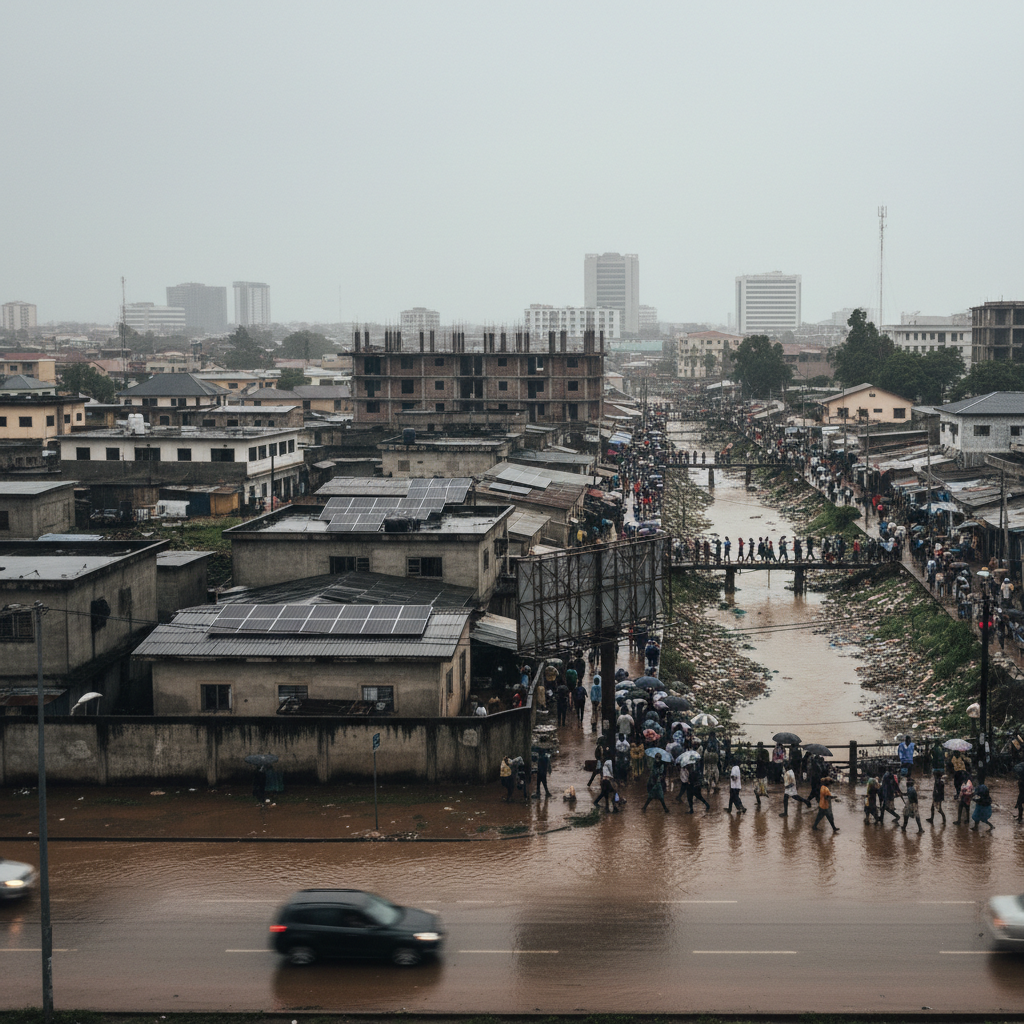
The Greater Accra Resilient and Integrated Development (GARID) Project has directly linked the worsening flood situation in the Greater Accra Region to rapid urbanisation. Dr. Kwadwo Ohene Sarfoh, the GARID Coordinator, also cited widespread encroachment on wetlands and natural drainage areas as a primary cause. This combination has severely reduced the capital's capacity to handle heavy rainfall.
Dr. Ohene Sarfoh explained that satellite imagery confirms unchecked development over many years. This development has significantly diminished Accra's ability to contain stormwater. Studies on major wetlands, streams, and stormwater drains revealed extensive encroachment, particularly in the Akwapim Ridge and Densu-Weija Basin. These critical natural water retention areas have been significantly depleted.
This trend sits within a broader narrative of rapid urban expansion in Ghana. Accra, like many African capitals, experiences immense population growth. This growth drives demand for housing and infrastructure, often at the expense of environmental planning. Prior government efforts to manage flooding have faced challenges, including funding issues, as highlighted by past reports on stalled flood projects. The current situation underscores a critical failure in urban planning and enforcement.
"The city no longer has enough space for water to pond," Dr. Ohene Sarfoh stated during a press briefing on July 3. He added that this lack of space prevents runoff from being contained before it reaches settlements. Developers frequently reclaim wetlands by filling them with earth during the dry season. They then construct buildings, eliminating vital natural flood buffers.
The implications are dire, portending more frequent and severe flooding in Accra. Future impacts include increased infrastructure damage, economic disruption, and public health risks like cholera outbreaks. Policymakers and city planners must address the conflict between development and environmental protection. Strict enforcement of land-use regulations and investment in sustainable drainage solutions are critical to mitigate these risks. Markets will react to the ongoing economic costs of flood damage, potentially impacting property values and business continuity in affected areas.
Comparative satellite images from 2010, 2023, and 2026 clearly show a sharp increase in developments. These developments are visible on hillsides and within wetlands. This leaves little room for floodwaters to collect before flowing into residential communities. Dr. Sarfoh warned that without effective control over development in wetlands and waterways, flooding will intensify. The government's post-flood mitigation briefing outlined both immediate recovery measures and long-term interventions. These interventions include improving drainage infrastructure and strengthening environmental regulations. The economic cost of recurrent flooding poses a significant challenge to Ghana's fiscal stability and sustainable development goals. Protecting these natural buffers is not just an environmental issue, but a critical economic imperative.