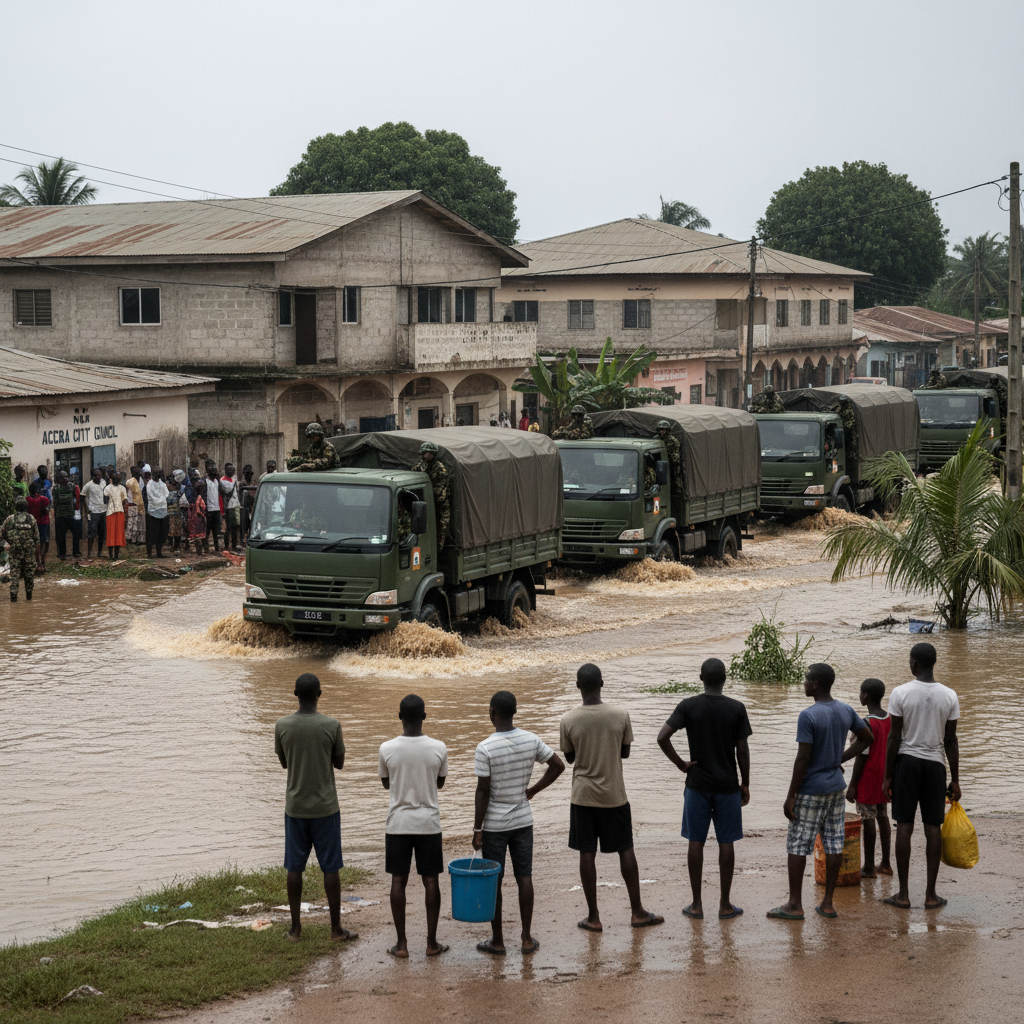
The Ghana Armed Forces (GAF) has deployed military personnel to flood-affected communities across Accra under “Operation Boafo”. This intervention aims to support residents dealing with heavy rains and widespread flooding. Personnel are positioned in key areas such as Klagon, Tse Addo, and Dzowulu.
Lieutenant Colonel Frank Osei Amponsah, Commanding Officer of the 48 Engineer Regiment, confirmed the operation’s activation. Soldiers are providing rescue and relief support across the capital city. This military deployment provides rapid assistance to residents and reduces risks to human life.
Accra frequently experiences flooding during its rainy seasons, especially due to inadequate drainage systems and rapid urbanisation. These events often disrupt economic activities, displace residents, and put pressure on emergency services. The GAF's direct involvement highlights the severity of the current situation and the need for coordinated disaster response.
Lieutenant Colonel Amponsah stated that the team has already rescued several stranded individuals. Many residents sought help from their homes. He also noted that residents can contact 0244 312 667 for assistance. He assured the public that despite severe water levels in some areas, no fatalities were recorded at the time of his report. The situation remains under close monitoring by emergency teams.
The deployment of military personnel signifies the government’s commitment to mitigating the impact of recurring floods. It also suggests a recognition of the scale of the disaster. Businesses will monitor the situation for disruptions to supply chains and workforce availability. Daily commuters will face continued challenges with transport infrastructure. Further investments in drainage and urban planning remain crucial for long-term resilience against these annual events.
The economic implications of such widespread flooding are substantial. Property damage, business closures, and disruption to transportation networks can cost the Ghanaian economy millions of Ghana cedis. The recurrent nature of these floods necessitates a comprehensive national strategy beyond immediate relief efforts. Policymakers will likely face renewed calls for significant infrastructure development and stricter building regulations in flood-prone areas. Future government budgets may need to allocate more funds toward urban resilience projects. This includes improving stormwater management systems and enforcing environmental protection laws.