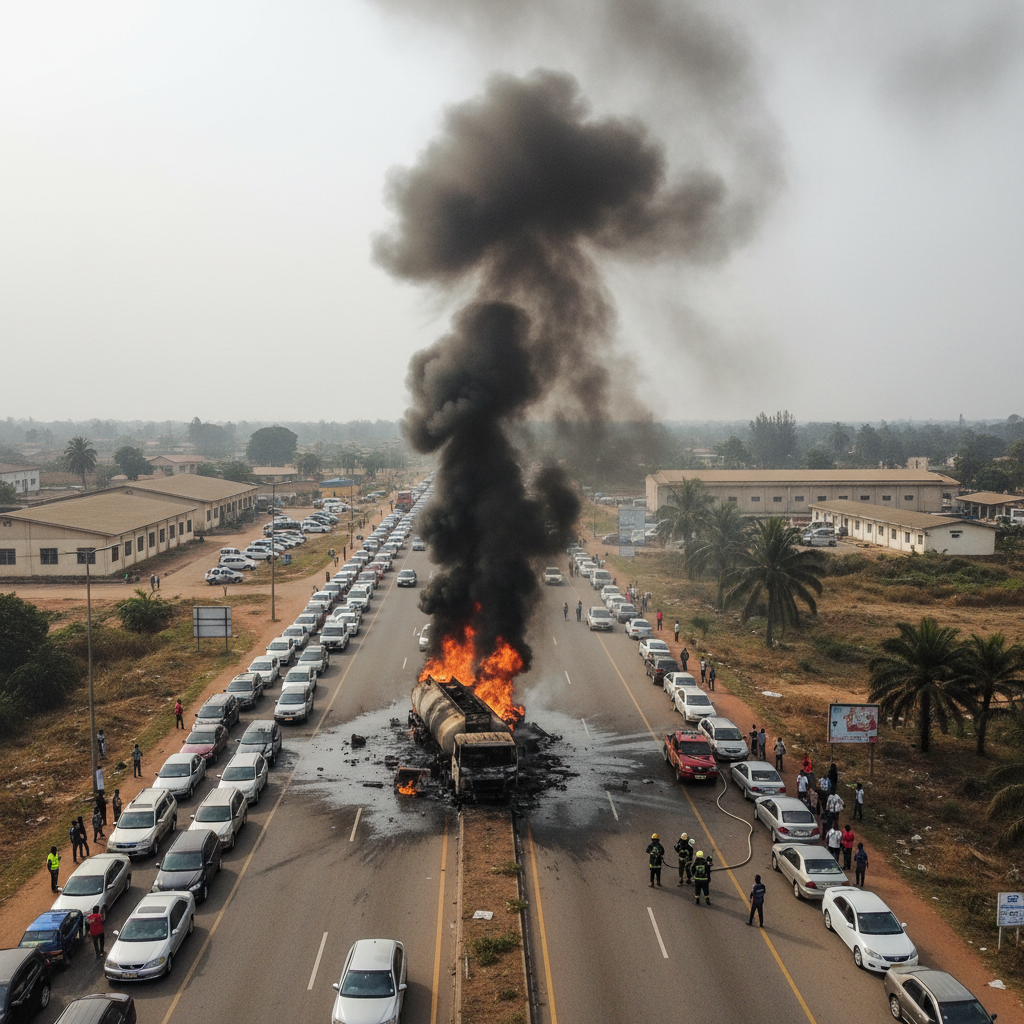
A fuel tanker explosion near Kpone Barrier on the Tema-Aflao Road has brought traffic to a complete standstill. The incident, involving a tanker with registration number GT 8261-23, occurred on July 20, 2026, after a front tyre burst, causing the vehicle to overturn and erupt into flames. The driver and his mate are feared trapped inside the burning vehicle.
This major incident has stranded hundreds of commuters on the vital Tema-Aflao Road, a key artery for trade and transportation in Ghana. Emergency responders are actively managing the situation, with personnel from the Ghana National Fire Service (GNFS) battling the blaze. Their immediate priority is to prevent the fire from spreading to the nearby Bulk Oil Storage and Transportation Company Limited (BOST) fuel storage facility, located approximately 200 metres away from the explosion site.
The Tema-Aflao Road is a critical economic corridor, connecting Ghana to neighbouring Togo and other West African countries. Disruptions on this road have significant implications for regional trade, supply chains, and the movement of goods and people. Previous incidents, such as a fuel tanker explosion at Potsin on the Kasoa-Winneba highway, have also caused extensive traffic delays and economic losses. The recurring nature of such events underscores the need for enhanced road safety measures and infrastructure maintenance.
Eyewitnesses reported that the fire spread rapidly after the tanker overturned. This rapid escalation raises serious questions about the safety protocols for transporting highly flammable materials on Ghana's roads. The Ghana National Fire Service is working to contain the fire. Authorities have not yet officially confirmed the cause of the explosion or provided details on potential casualties.
The economic implications of this incident are substantial. Prolonged closures of major roads like the Tema-Aflao stretch lead to increased transportation costs, delays in delivery of goods, and reduced productivity. Businesses relying on this route will face immediate financial losses. Furthermore, the proximity of the BOST facility highlights a critical national security and economic risk. An explosion at such a facility would have catastrophic consequences for Ghana's energy supply and infrastructure.
Decision-makers will closely monitor the investigation into the explosion's cause. This incident will likely prompt renewed calls for stricter enforcement of vehicle maintenance standards and improved emergency response capabilities. The government may also face pressure to accelerate ongoing infrastructure projects aimed at improving road safety and reducing congestion on key national highways. The long-term impact on trade and regional connectivity will depend on the swiftness of recovery and preventative measures implemented.
The incident serves as a stark reminder of the vulnerabilities within Ghana's transportation network. It emphasizes the need for continuous investment in road infrastructure and robust safety regulations. The public will await further details from authorities regarding the incident's full impact and the measures taken to prevent future occurrences on this vital economic route.