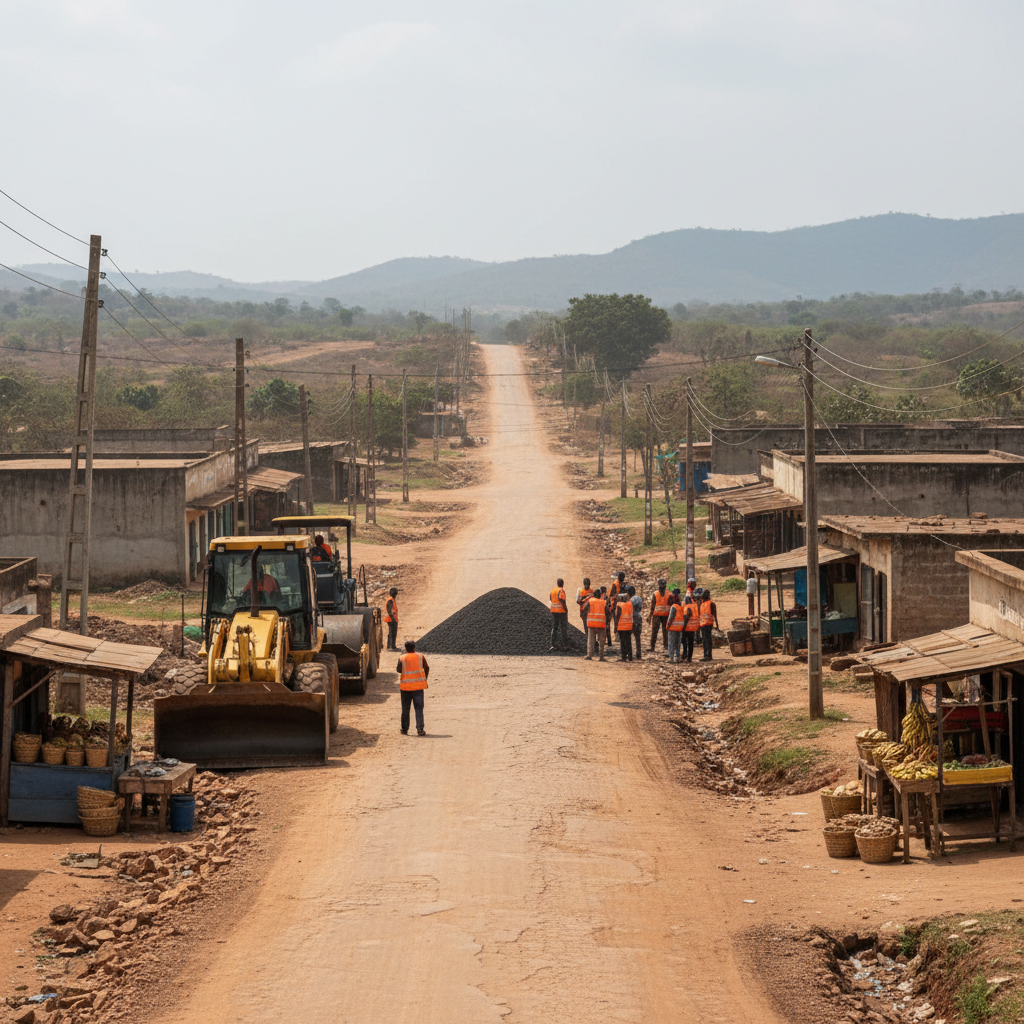
Ghana’s government will fully reconstruct sections of the Eastern Corridor Road with asphalt pavement. Roads and Highways Minister Kwame Governs Agbodza announced this shift on July 9, 2026. This comprehensive reconstruction replaces previous patch repair strategies on the existing surface-dressed road.
Technical assessments revealed the road has passed its design life. The Minister stated this necessitates a more permanent and durable solution. The decision means abandoning temporary fixes; instead, the government will replace the road base and apply a stronger asphalt surface. This initiative targets improved road safety, strengthened regional connectivity, and reduced long-term maintenance expenses.
This development fits into Ghana’s broader economic strategy of investing in critical infrastructure. The Eastern Corridor Road is a vital artery for trade and movement within the country. Its upgrade supports economic activities and improves the flow of goods and people. Reliable road networks are essential for agricultural supply chains and access to markets, which are key pillars of Ghana's economy. The previous reliance on temporary repairs led to recurring costs and disruptions, hindering economic efficiency.
Minister Agbodza elaborated on the government’s approach during an inspection. He observed the 46-kilometre rehabilitation project on the Dodo Pepesu–Nkwanta–Dambai Road. The project is underway by Growth 82 Global Limited. Mr. Agbodza emphasized, “We are changing the road base, applying the prime coat before laying the final asphalt surface.” He added, “This is not a repair of the existing surface dressing.”
This commitment to full reconstruction has significant implications for Ghana's infrastructure development. It suggests a move towards higher quality, more resilient public works. Businesses relying on the Eastern Corridor Road can expect more predictable transport times and lower vehicle wear and tear. This policy change will likely be monitored by investors and development partners. It signals Ghana's intent to build durable assets that support sustainable economic growth. Future government budgets will need to allocate substantial funds to such capital projects. This shift could set a precedent for other major road networks nearing the end of their design life.